Window treatments move slower than most interior trends because people replace them every decade or so rather than every season. That makes it worth separating what is genuinely current from what will look dated before the product wears out.
What is current
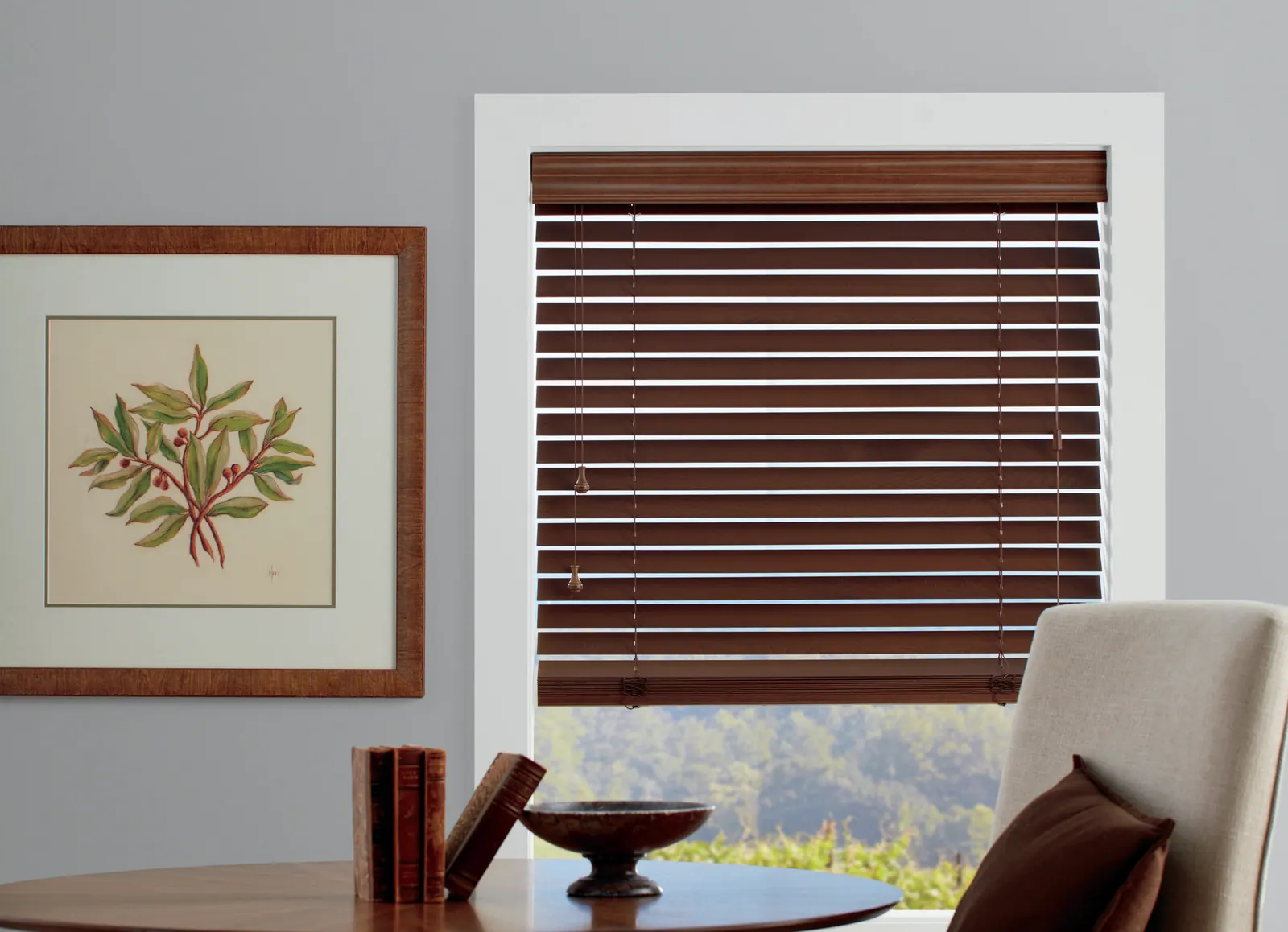
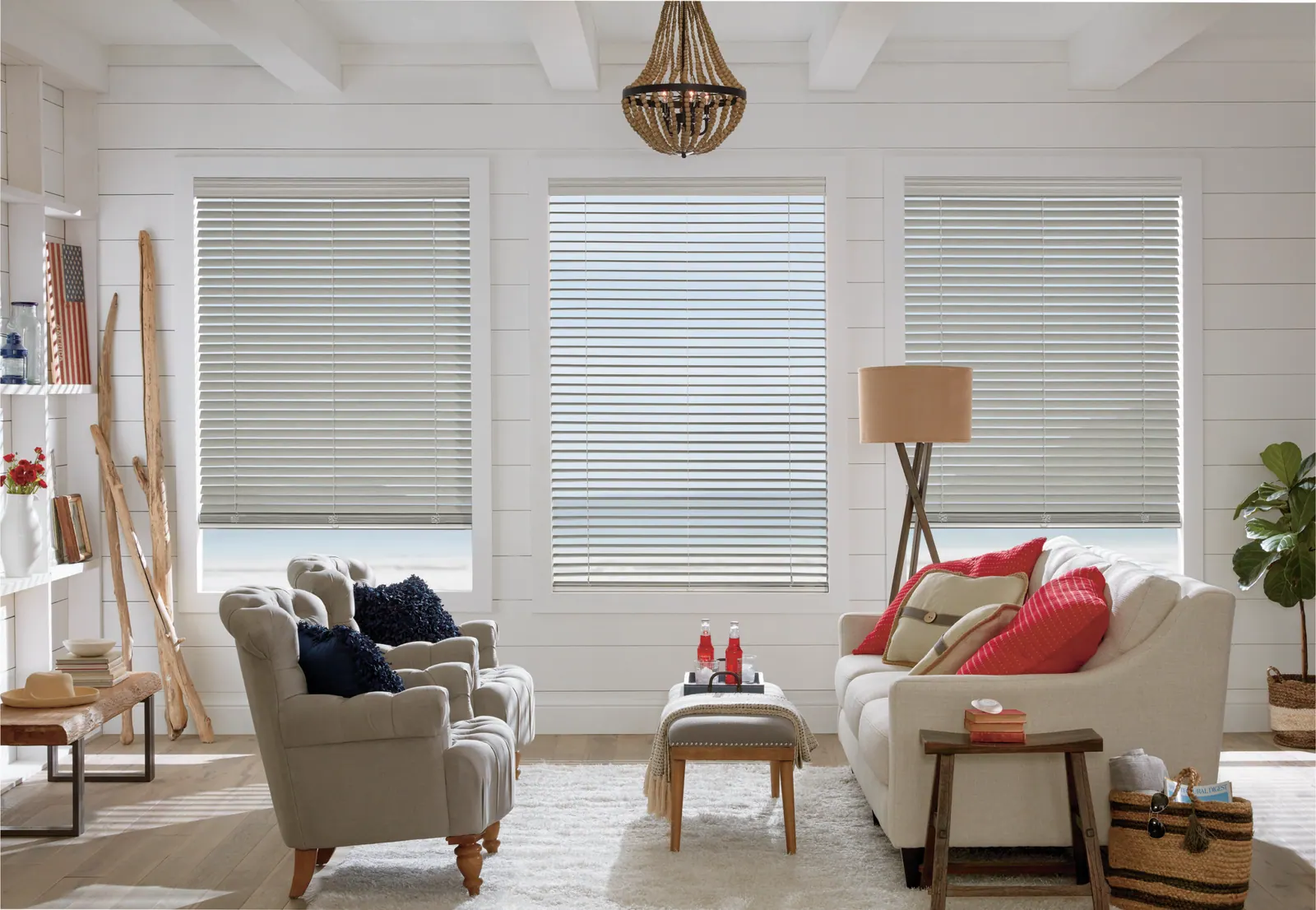
Wider slats and louvers. 2½-inch blind slats and 3½ or 4½-inch shutter louvers have largely displaced the narrower sizes. Fewer lines across the glass reads as cleaner and more contemporary, and it preserves more view.
Cordless everything. This started as a safety requirement and became an aesthetic preference. A window with nothing hanging beside it simply looks tidier, and the industry has moved decisively.
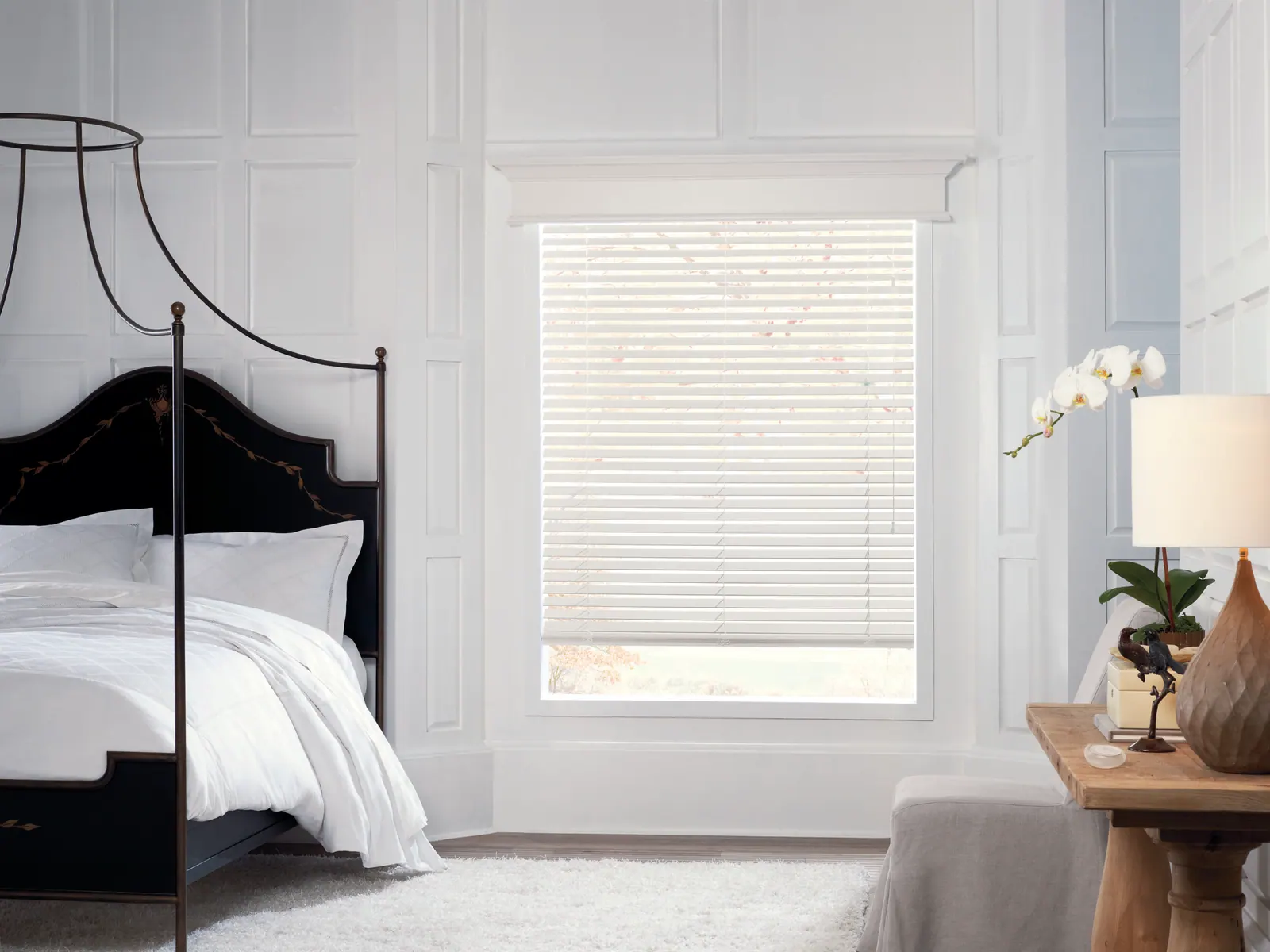
Warm neutrals over stark white. Greiges, warm whites, soft taupes and natural woven textures have replaced the bright white default. This tracks the broader move away from cool grey interiors.
Motorization. Once a luxury, now roughly the cost of a good shade. The look it enables, several windows all sitting at exactly the same height, is a subtle thing people notice without being able to name.
Layering. A functional hard treatment with stationary drapery panels framing the window. It gives precise light control and the softness fabric provides, and it is the most-requested configuration we install in newer homes.
What is fading
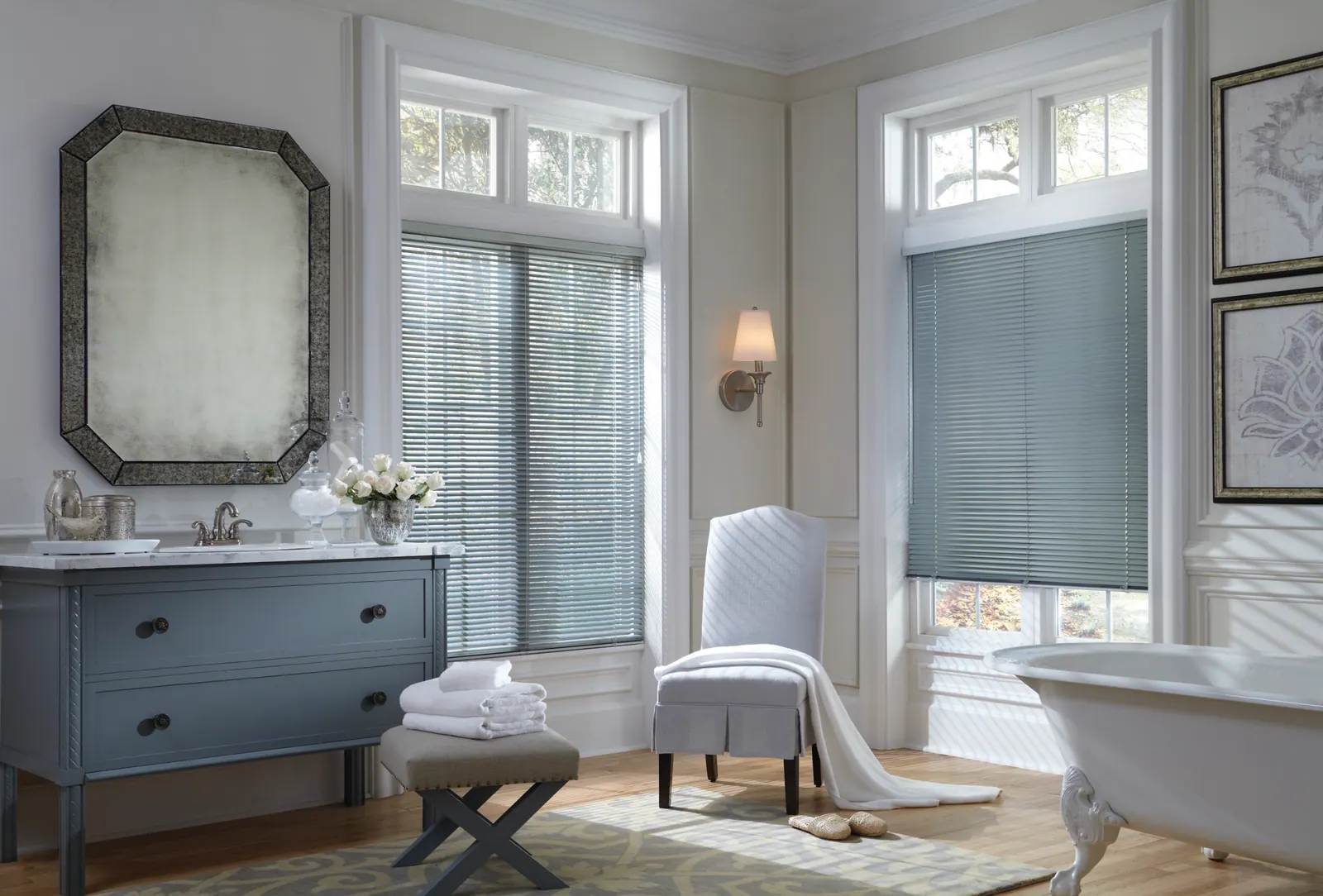
Heavy valances and swags, ornate cornice boards, vertical blinds on patio doors, and very narrow one-inch slats in primary living spaces. Bright cool-white finishes are also giving way to warmer tones.
None of these are wrong, a valance suits a genuinely traditional room, but they read as period-specific in a way that a plain wide-slat blind does not.
What has never gone out of style
Plantation shutters have been continuously fashionable for roughly two centuries, which is about as strong a signal as this category offers. Natural wood tones matched to trim. Simple Roman shades in a textured neutral. Clean roller shades in an unpatterned fabric.
The common factor is restraint. Treatments that read as architecture rather than decoration date slowly, because they are not making a statement that can go out of date.
Buying for a decade, not a season
Since you will live with these for ten years or more, a reasonable strategy is to keep the permanent elements neutral and put personality in the things you can change cheaply.
Shutters and blinds in a warm neutral, matched to your trim. Then colour and pattern in drapery panels, which are far less expensive to replace than remaking every shutter in the house.
In Colorado Springs there is a practical dimension too: strong colours fade unevenly under high-altitude UV. A saturated fabric on a west-facing window will not look the way it does today in six years, whereas a textured neutral ages gracefully.
Common questions
- Are wood blinds still in style?
- Yes, particularly in 2½-inch slats and warm natural stains. What has changed is the finish palette, warm neutrals and mid-tone stains have replaced both stark white and the orange-toned oaks of the 1990s.
- Are vertical blinds outdated?
- On patio doors they have largely been replaced by vertical cellular shades, panel tracks and bypass shutters, all of which look more current and insulate better. Verticals remain a practical, economical choice for very wide openings in rentals and commercial spaces.
- What colour blinds are most popular right now?
- Warm whites and soft greiges dominate, followed by mid-tone natural wood stains. Pure cool white has softened considerably, and true grey has faded along with the wider grey interior trend.