
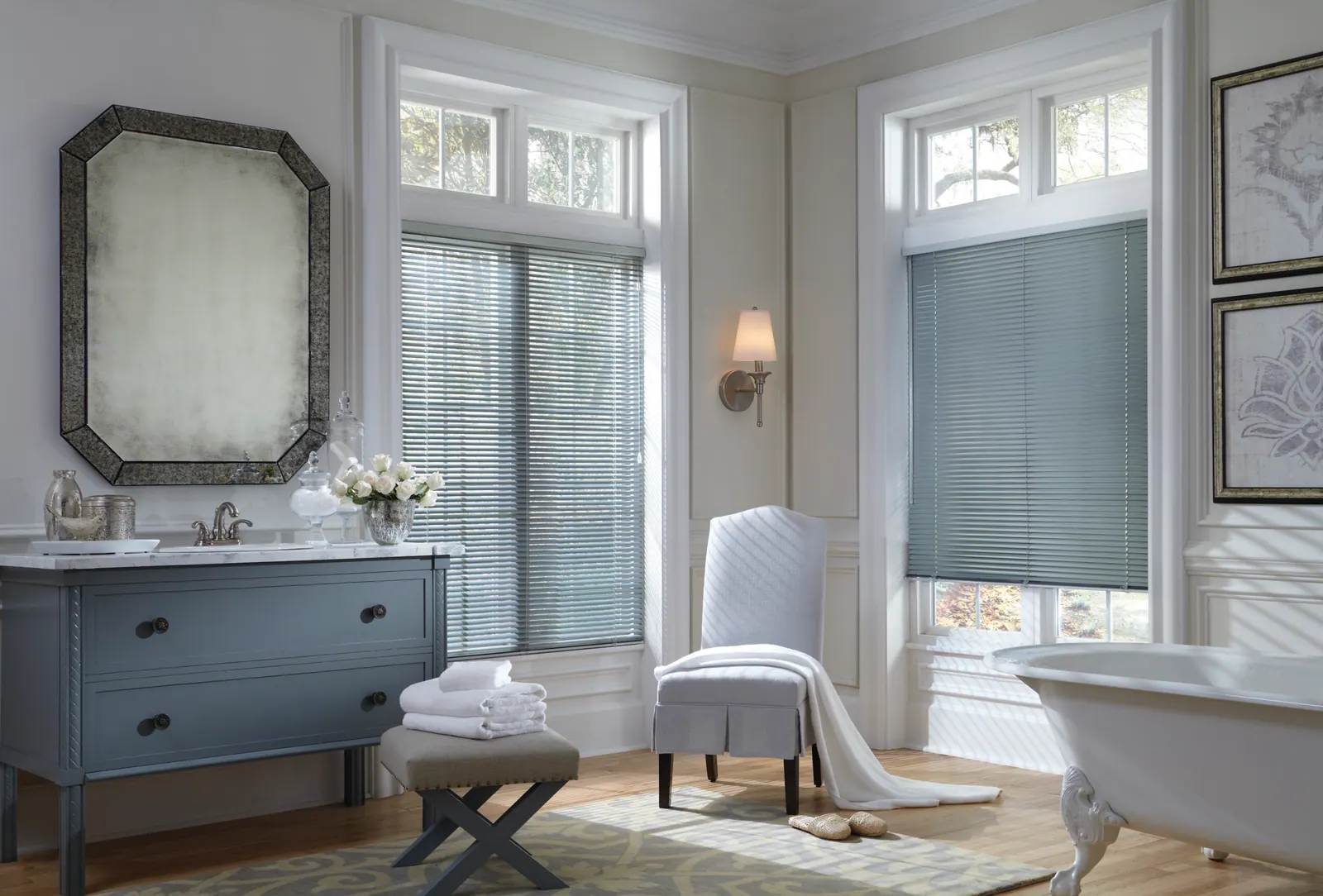
The case for aluminum
Aluminum is the most under-appreciated material in the category, largely because people associate it with the flimsy one-inch blinds sold in hardware stores. A properly specified aluminum blind (heavier gauge alloy, baked enamel finish, quality headrail) is a very different object.
It reflects heat. Metal bounces radiant energy back out through the glass rather than absorbing it and re-radiating it into the room the way a dark fabric does. On a south or west window in Colorado Springs, a light-coloured aluminum blind does measurable work against solar heat gain.
It is genuinely thin. An aluminum slat is a fraction of the thickness of wood or composite, so a raised blind stacks into a much smaller bundle at the top. On a short window, where a thick stack would eat a third of the glass, this matters a lot.
It does not care about anything. Water, steam, sun, temperature swings, time. There is no grain to move and no finish to lift.
One inch or two
One-inch slats are the traditional aluminum profile. They close tightly, give excellent privacy, and have the smallest possible stack. They read as functional and unobtrusive, which is exactly right in a utility space, a home office, or any window where you want the treatment to disappear. See mini blinds for more on this size.
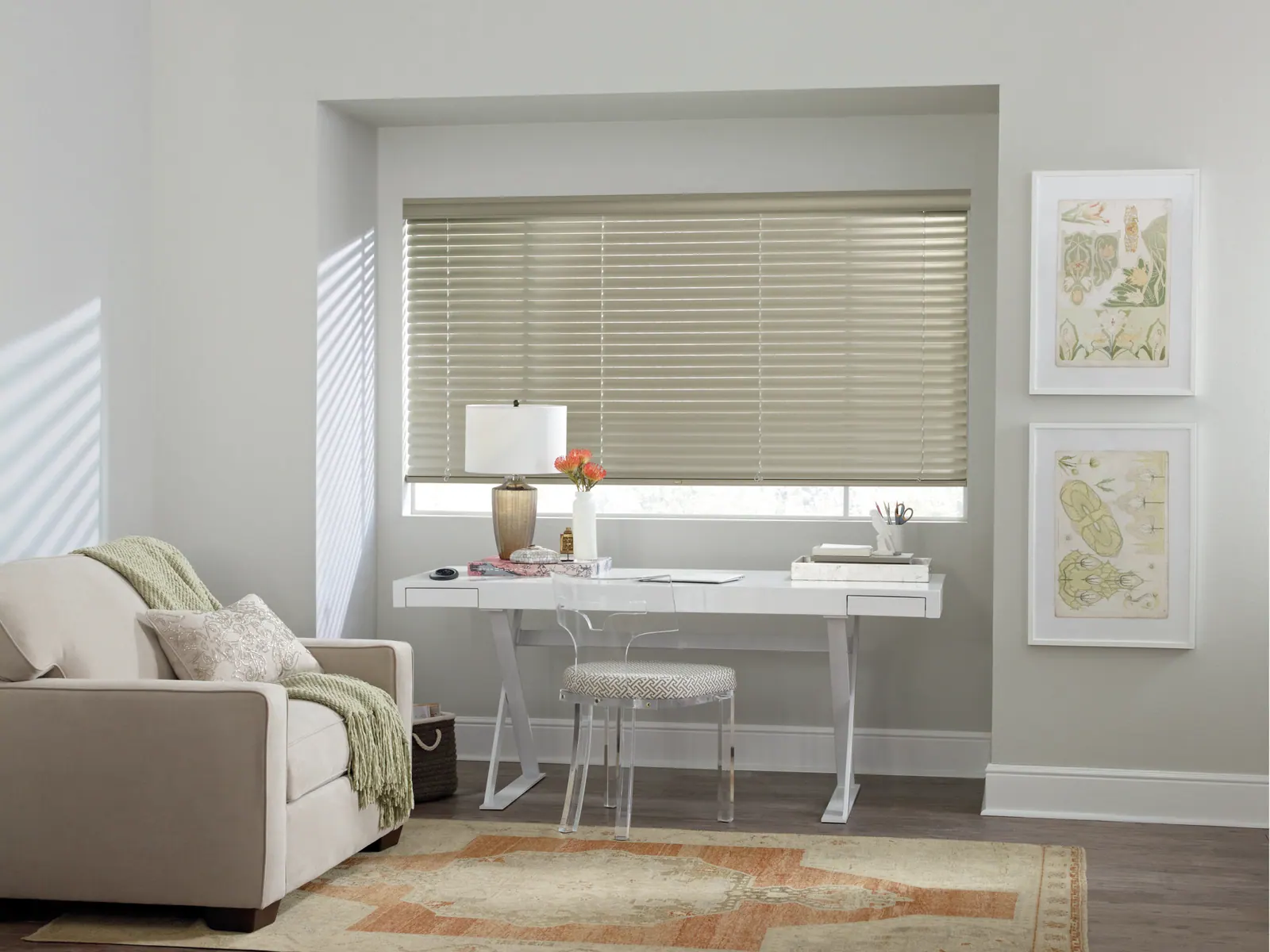
Two-inch slats give aluminum a more substantial, more designed presence. Fewer horizontal lines across the glass, a better view when open, and a look that holds its own in a living space. If you like the contemporary character of metal but want it to look considered rather than utilitarian, this is the size.
Colour changes the character as much as size does. Standard whites and off-whites are the volume sellers, but aluminum is the only material in the category available in true metallics, deep matte blacks and saturated colours. A matte black two-inch aluminum blind in a modern room looks genuinely sharp and costs a fraction of what a designer shade would.
Where aluminum blinds belong
- Bathrooms and laundry rooms. Impervious to steam. Easier to wipe down than any other blind.
- Home offices. The thin profile and precise tilt make them excellent at managing monitor glare, and they look appropriately businesslike.
- South and west windows. Heat reflection where it counts.
- Short or awkward windows. The minimal stack preserves glass area on transoms, basement hoppers and half-height windows.
- Modern interiors. Metal reads contemporary in a way that faux wood does not.
- Rentals and commercial spaces. Durable, inexpensive, easy to replace a single slat.
The place to avoid them is a traditional or formal room, where the metal can feel cold against warm woodwork. That is what wood blinds are for.
What to look for
The gap between a good aluminum blind and a bad one is wide, and most of it is in the gauge.
Slat gauge. Thin slats bend permanently the first time a pet pushes through them or a window slams. Heavier alloy resists that, and the difference in the hand is obvious once you have felt both.
Finish. A baked enamel finish bonds to the metal and survives cleaning. Cheaper painted finishes scratch to bare aluminum at the edges.
Headrail and mechanism. The headrail is where a cheap blind fails first. A steel headrail with a quality tilt mechanism is what makes the difference between a blind that still operates smoothly in year ten and one that binds in year two.
Bottom rail weight. A properly weighted bottom rail keeps the blind hanging straight. Light ones let the blind swing and rattle at an open window.
Common questions
- Are aluminum blinds durable?
- The material is. It does not warp, rot, fade or absorb moisture. The vulnerability is bending: a thin slat creases permanently if something pushes through it, and a crease cannot be straightened out. Specifying a heavier gauge alloy largely solves this, and it is the main thing separating a custom aluminum blind from a hardware store one.
- Do aluminum blinds help with heat?
- Yes, more than most people expect. Metal reflects radiant solar energy rather than absorbing it, so a light-coloured aluminum blind sends a good share of the heat back out through the glass. On a west-facing window at this altitude that is a real benefit. For winter insulation, though, a cellular shade is far better, aluminum conducts heat rather than resisting it.
- Are aluminum blinds noisy?
- They can rattle at an open window in a breeze, which is the one genuine complaint about them. A properly weighted bottom rail reduces it considerably, and hold-down brackets eliminate it on doors and windows that get a lot of airflow. In a closed room you will not notice.
- What is the difference between aluminum blinds and mini blinds?
- Mini blinds are aluminum blinds with one-inch slats, the term describes the slat size, not a different material. Aluminum blinds are also made in two-inch slats, which look considerably more substantial. So all mini blinds are aluminum blinds, but not all aluminum blinds are mini blinds.
- How do I clean aluminum blinds?
- Dust with a cloth or vacuum brush, tilting the slats each way to reach both faces. Aluminum tolerates a damp cloth with mild soap without any concern, which makes it the easiest blind to deep clean. For a very dirty blind, a kitchen or a rental turnover, they can be taken down and washed, which is not an option with wood.