
Historic windows need a different approach
Much of Manitou's housing stock dates from the 1880s through the 1920s: Victorian, Queen Anne, Craftsman and the vernacular cottages that filled in between. A great many of those windows are original or early replacements, and almost none of them are square.
We measure every opening at three points across the width and three down the height. On a modern window those six numbers are nearly identical. On a 1890s Manitou sash they can vary by half an inch or more, and a blind cut to the widest figure will not go in while one cut to the narrowest leaves visible gaps.
Where the variance is significant, an outside mount that overlaps the frame is usually the better answer. It hides the irregularity instead of drawing attention to it, and on a historic window it can look more appropriate anyway, closer to how a shade would have hung originally.
Scale matters too. These are generally smaller windows in rooms with tall ceilings and substantial trim. A 2½-inch slat that suits a modern slider overwhelms a Victorian sash; narrower louvers and slats suit the architecture far better.
Respecting the character without living in a museum
Most Manitou owners want treatments that suit the house without pretending it is 1895. In practice that usually means a couple of specific choices.
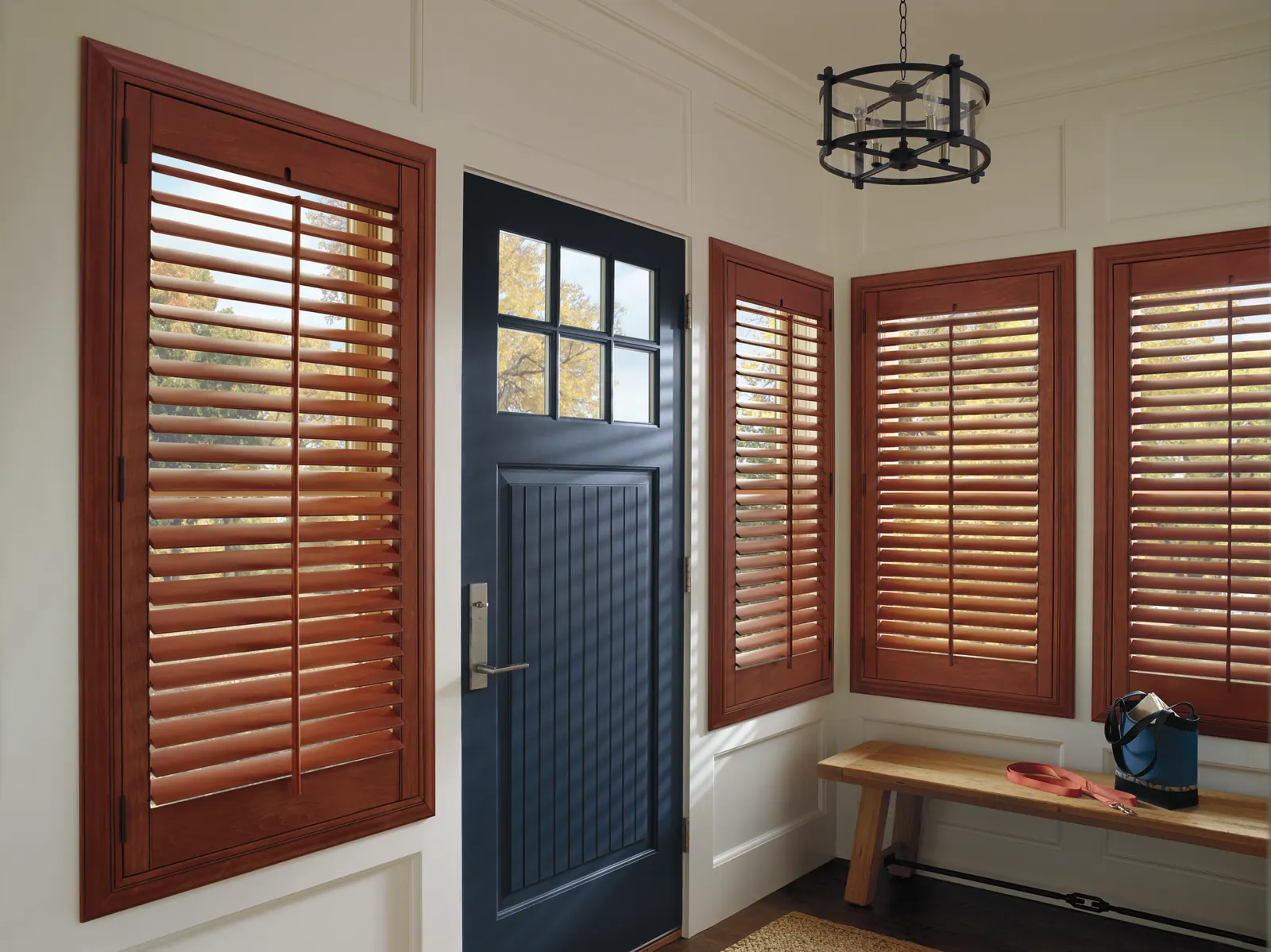
Shutters are the most historically appropriate hard treatment, and interior shutters were genuinely common in homes of this period. A 2½-inch louver in a painted finish reads correctly in a Victorian room. Plantation shutters in hardwood can also be stained to match original trim, which in a house with intact woodwork is worth doing properly.
Roman shades in a period-appropriate fabric work well in rooms where softness suits (parlours, bedrooms) and they read as furnishing rather than hardware.
Cellular shades are the pragmatic choice where a room is simply cold, which in a house with original single-glazed sash is most of them. They are not period-appropriate in any sense, but a cold room is not liveable, and a slim cellular shade in a neutral is about as unobtrusive as insulation gets.
Canyon light and the historic district
Manitou sits in a canyon, and the light is genuinely different from the open exposures elsewhere in the region. The canyon walls shade the sun early on some elevations and reflect it onto others. Two windows on the same house can have completely different sun profiles, and neither matches what a compass bearing would suggest.
We assess exposure per window rather than by orientation, because in Manitou the usual rules of thumb are actively misleading. A west window in shadow by three o'clock behind Red Mountain has a very different problem from a west window that takes it until sunset.
If your property is in the historic district or subject to design review, note that interior window treatments are generally outside the scope of exterior review, but anything visible from the street, and any exterior-mounted product, may not be. We can supply a written specification if your review board wants one.
Where we work in Manitou Springs
Neighborhoods
Manitou Springs · Crystal Hills · Manitou Historic District · Cave of the Winds area · Ruxton Canyon
ZIP codes served
80829
What we install in Manitou Springs
Manitou Springs questions
- Do you charge extra to come out to Manitou Springs?
- No. Manitou Springs is inside our regular service area, and the in-home consultation is free with no travel charge. We schedule Manitou Springs appointments in blocks so we can offer you a tighter arrival window rather than a half-day range.
- How long does an installation in Manitou Springs take?
- Most whole-home installations are done in a single day. A few large windows or specialty shutters can run into a second visit, and we tell you which applies before you order rather than on the day.
- What is the lead time from measurement to installation?
- Typically two to four weeks for blinds and shades, and four to six weeks for custom shutters. Specialty shapes and stained hardwood run longer. You get a real date at the point of order.
- Can you fit blinds to old Victorian windows that aren't square?
- Yes, and Manitou is where we do it most. We measure at three points across and three down every opening so we know exactly how the frame varies, then recommend inside or outside mount per window. Where the variance is significant, an outside mount that overlaps the frame gives a far cleaner result than trying to force an inside fit.
- What treatments suit a historic home?
- Interior shutters with a narrower 2½-inch louver are the most historically appropriate and were genuinely common in homes of this era. Roman shades in a period fabric suit parlours and bedrooms. Where a room is simply cold from original single glazing, a slim cellular shade in a neutral is the pragmatic answer, not period, but liveable.