
Drapes, curtains, and what the difference actually is
The terms get used interchangeably, but there is a real distinction worth knowing when you are being quoted.
Curtains are typically unlined or lightly lined, made from lighter fabric, and often sold in standard sizes. They filter light rather than blocking it and they hang more casually.
Draperies are lined, made from heavier fabric, and constructed to a specific window with proper hems, weights in the corners and a formal heading. They hang in defined folds rather than gathering loosely, and they block considerably more light.
What we make is drapery. Everything is cut and sewn to the measured window, with the fullness, heading and lining specified for the room. More on the distinction at Drapes vs Curtains.
Fullness is what separates custom from store-bought
This is the single most important technical decision and the one nobody asks about.
Fullness is the ratio of fabric width to window width. A panel made at 2× fullness uses twice as much fabric as the window is wide, which lets it hang in proper folds rather than stretching flat. 2.5× fullness is what we specify for most formal drapery, and the difference is immediately visible, the folds are deeper, more regular, and the fabric reads as luxurious rather than adequate.
Store-bought panels are frequently made at 1.5× or less, which is why they look thin when closed and never hang in even folds. It is also why they are cheap. If you have ever wondered why custom drapery costs what it does, fullness is most of the answer: you are buying substantially more fabric.
Headings and how they change the look
- Pinch pleat: the traditional heading, with fabric gathered into groups of two or three pleats at regular intervals. Formal, structured, and the most classic choice.
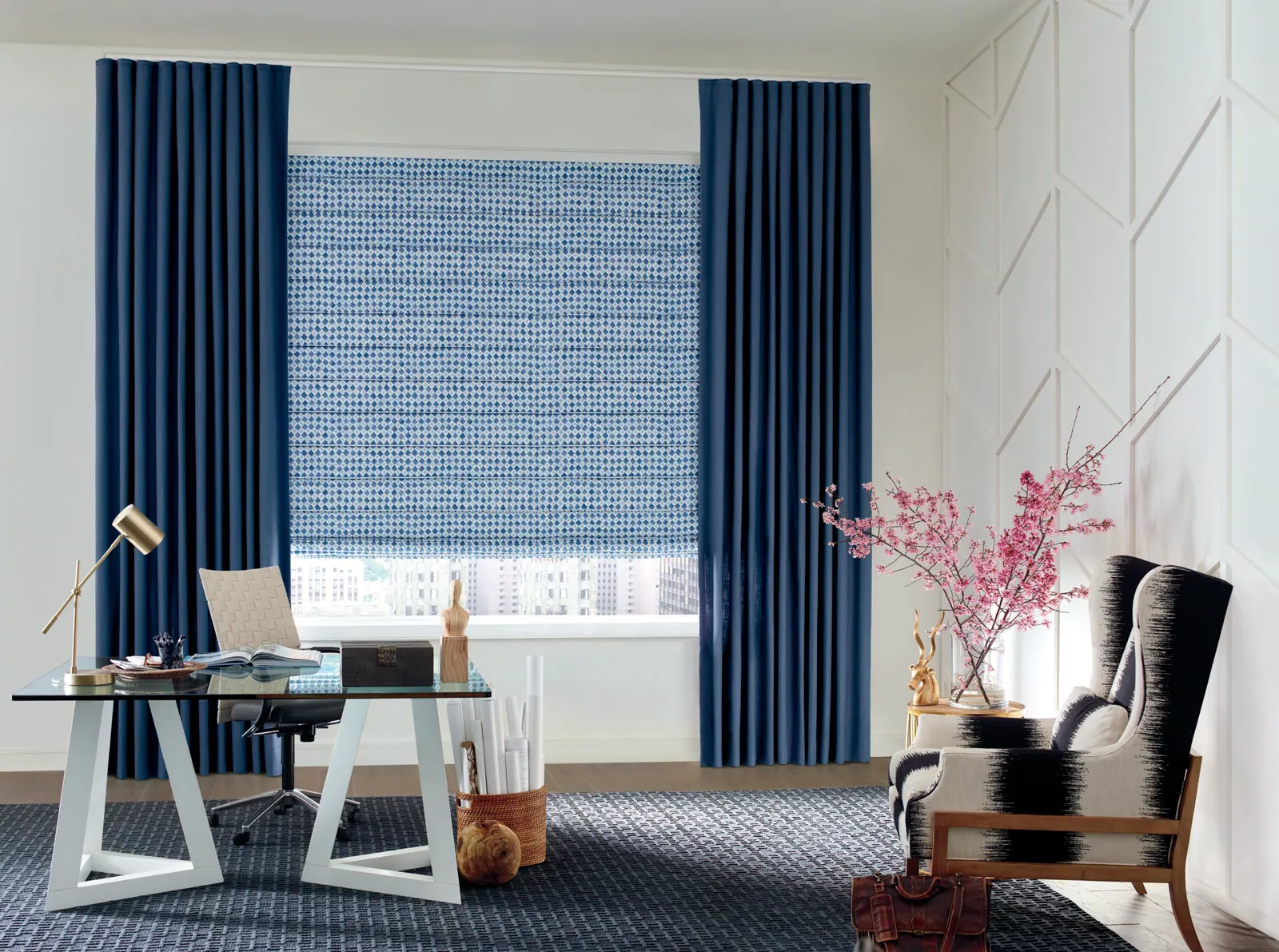
- Ripple fold: a continuous S-curve with no pleats, running on a track. Contemporary, clean, and the heading we specify most often in modern Colorado Springs homes.
- Grommet, large metal rings threaded onto a rod. Casual and contemporary, with wide soft folds. Simple to operate and popular in family rooms.
- Rod pocket, the fabric sleeve slides directly onto the rod. Softest and most casual; not suitable for panels you open and close daily, because the fabric drags on the rod.
- Tab top, fabric loops over the rod. Casual and informal, best on stationary panels.
Ripple fold and pinch pleat both work well motorised; grommet and rod pocket generally do not, because they need a rod rather than a track.
Lining is not optional here
At 6,035 feet with 300 sunny days a year, an unlined drapery panel on a sun-facing window will fade, and the fading will be uneven, worse at the leading edge where the fabric is exposed when open.
Standard lining protects the face fabric, improves how the panel hangs by adding weight and body, hides the construction from outside, and presents a consistent neutral colour to the street, which matters under most local HOA covenants.
Blackout lining adds an opaque layer. Combined with a wraparound track return and generous panel overlap, drapery can genuinely darken a bedroom, and it does it while looking considerably better than a blackout shade.
Interlining adds a soft flannel layer between face fabric and lining. It gives the most luxurious drape, adds real insulation value, and dampens sound noticeably. In a room with hard floors and high ceilings, very common in newer local construction, interlined drapery makes a genuine acoustic difference.
Layering drapery over hard treatments
The most common configuration we install is not drapery alone. It is drapery over a shade or blind. Each does what it is good at.
The hard treatment handles daily light control: tilt the blind, lower the shade, adjust through the day. The drapery panels are frequently stationary, framing the window, softening the corners and providing the fabric the room needs.
This has a practical advantage beyond aesthetics. Stationary panels use less fabric than operable ones, so a layered approach can cost less than fully operable drapery while looking richer. And you keep the precise light control of a hard treatment, which fabric alone cannot match.
For rooms where the drapery does need to close (bedrooms, media rooms) we specify a proper track with a wraparound return so the panel meets the wall and closes the light gap at the sides.
Common questions
- How much do custom draperies cost?
- Drapery is the most variable category we sell, because fabric price ranges enormously and fullness means you are buying a lot of it. A pair of lined panels in a mid-range fabric on a standard window is a meaningful investment; designer fabric, interlining and a motorised track on a large window is considerably more. We price fabric and labour separately so you can see the effect of a fabric change directly.
- How high should drapery be hung?
- Higher and wider than most people expect. Mounting the rod or track well above the window frame, often close to the ceiling, and extending it past the frame on each side makes the window look larger and lets the panels stack off the glass when open. Nearly every drapery installation we do goes higher than the client initially expected, and it is the change they comment on most.
- Can draperies be motorized?
- Yes, on a motorised track. It is particularly worthwhile on tall windows, wide spans and heavy interlined panels, all of which are tiring to operate by hand. Ripple fold and pinch pleat headings both work well on motorised tracks. See [motorization](/window-treatments/motorization/).
- How do I clean custom draperies?
- Vacuum with an upholstery attachment a few times a year and they will stay fresh for a long time. When they do need cleaning, use a dry cleaner experienced with drapery, lined and interlined panels can shrink unevenly if handled as ordinary garments. Never machine wash lined drapery.
- Do draperies help with insulation and noise?
- Yes, meaningfully, particularly interlined panels. The fabric layers add thermal resistance at the window and absorb sound in rooms with hard floors and high ceilings. In an open-plan great room with tile or hardwood, drapery is often the most effective acoustic improvement available short of a rug.