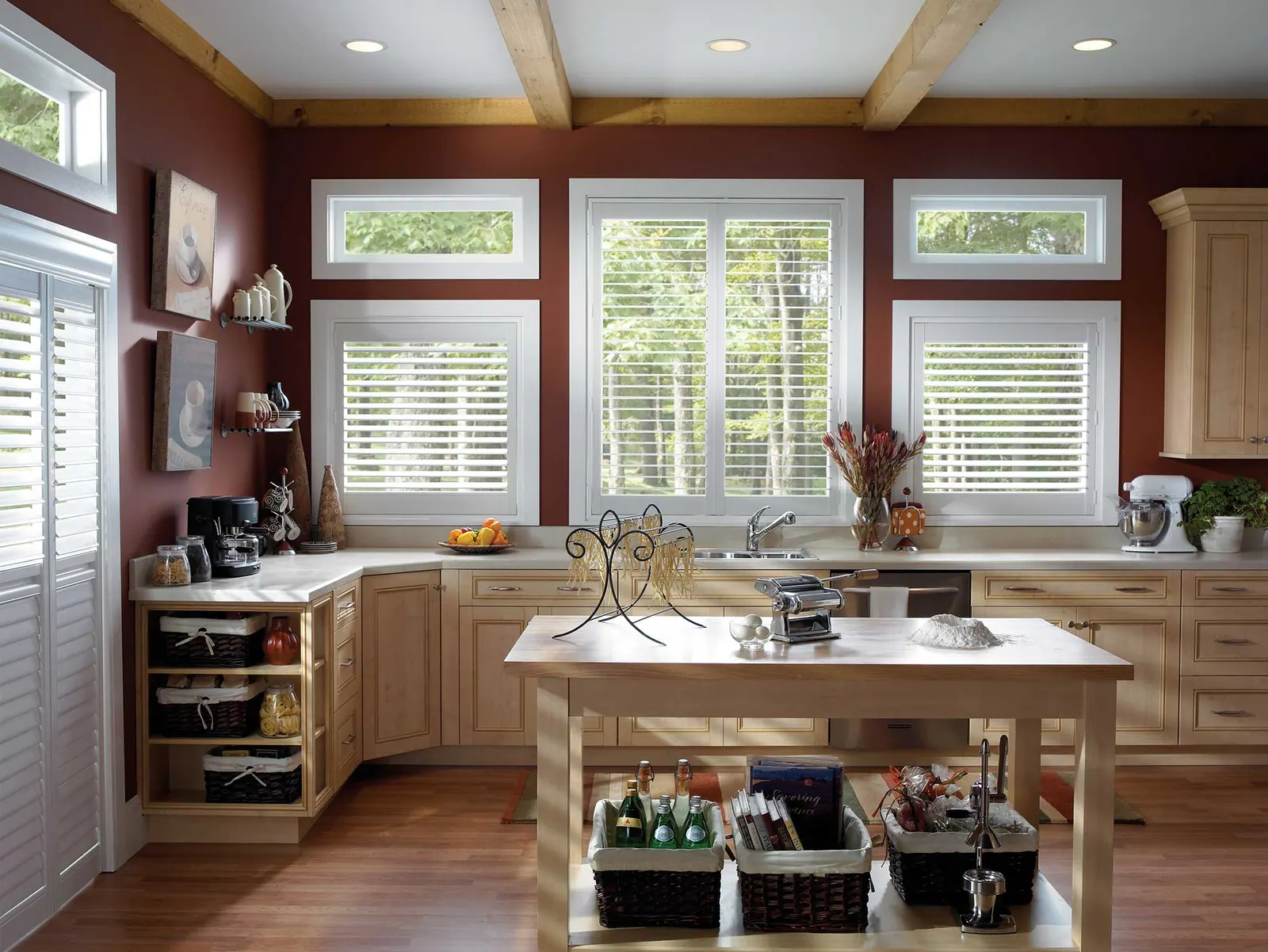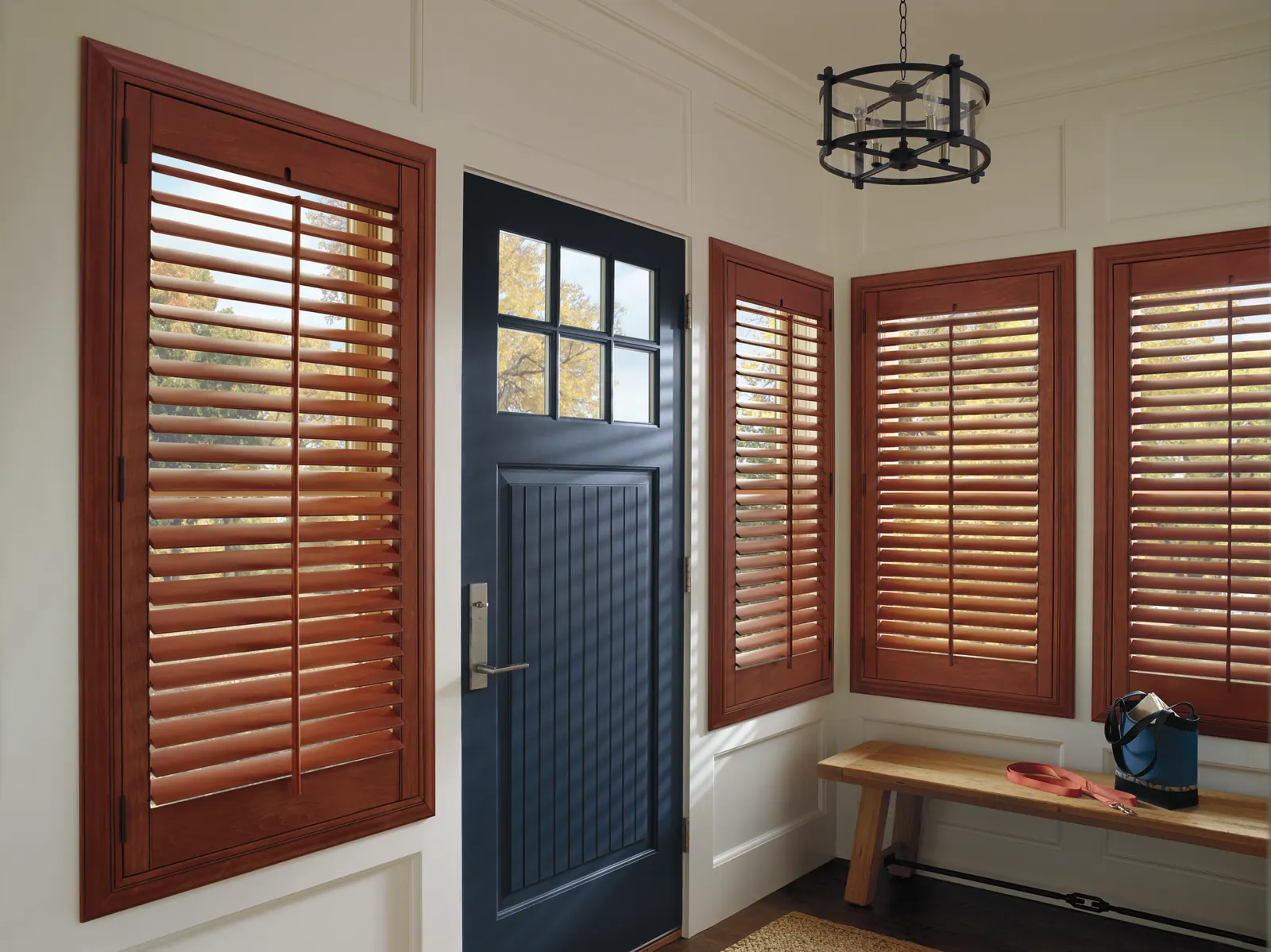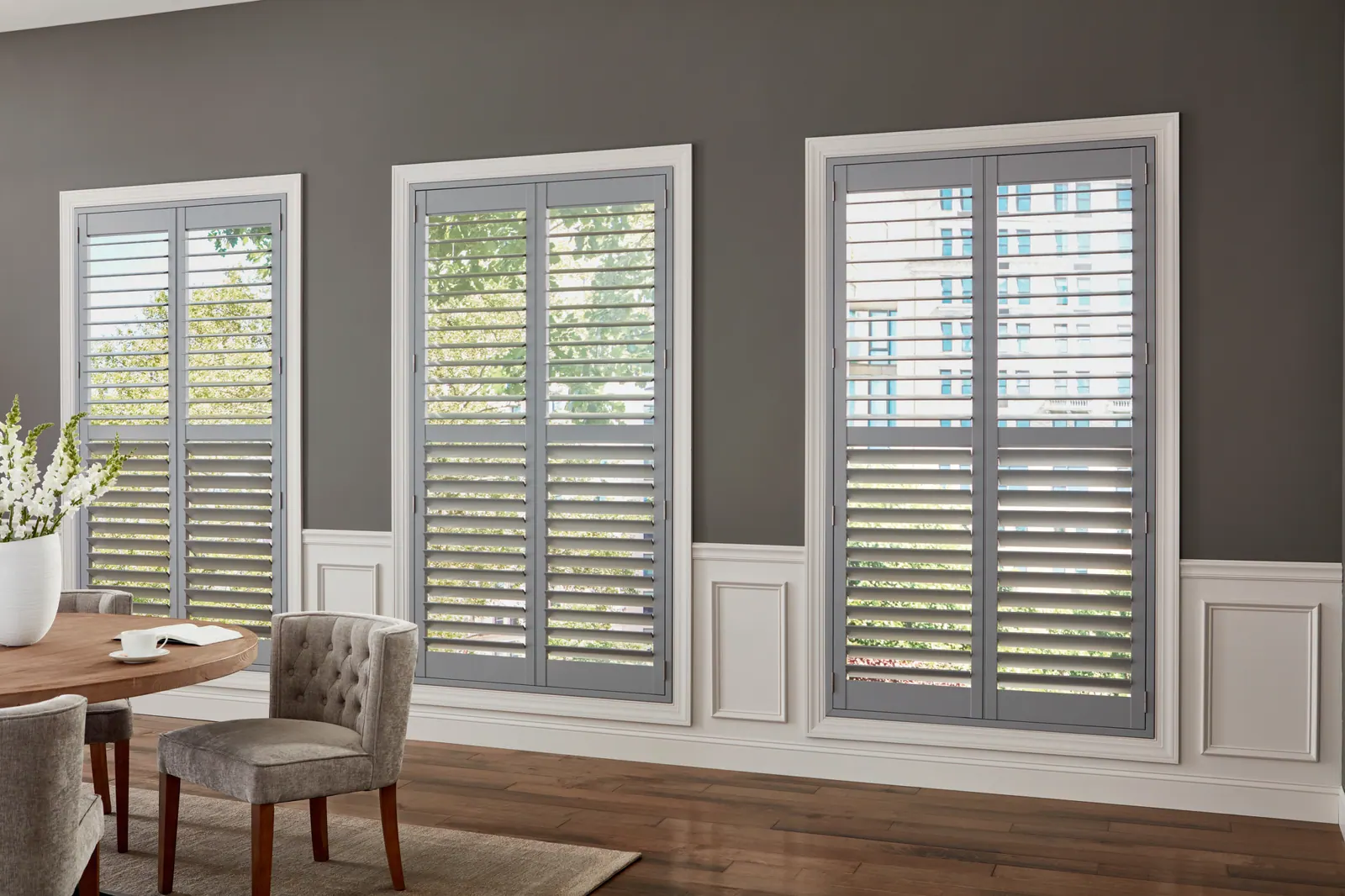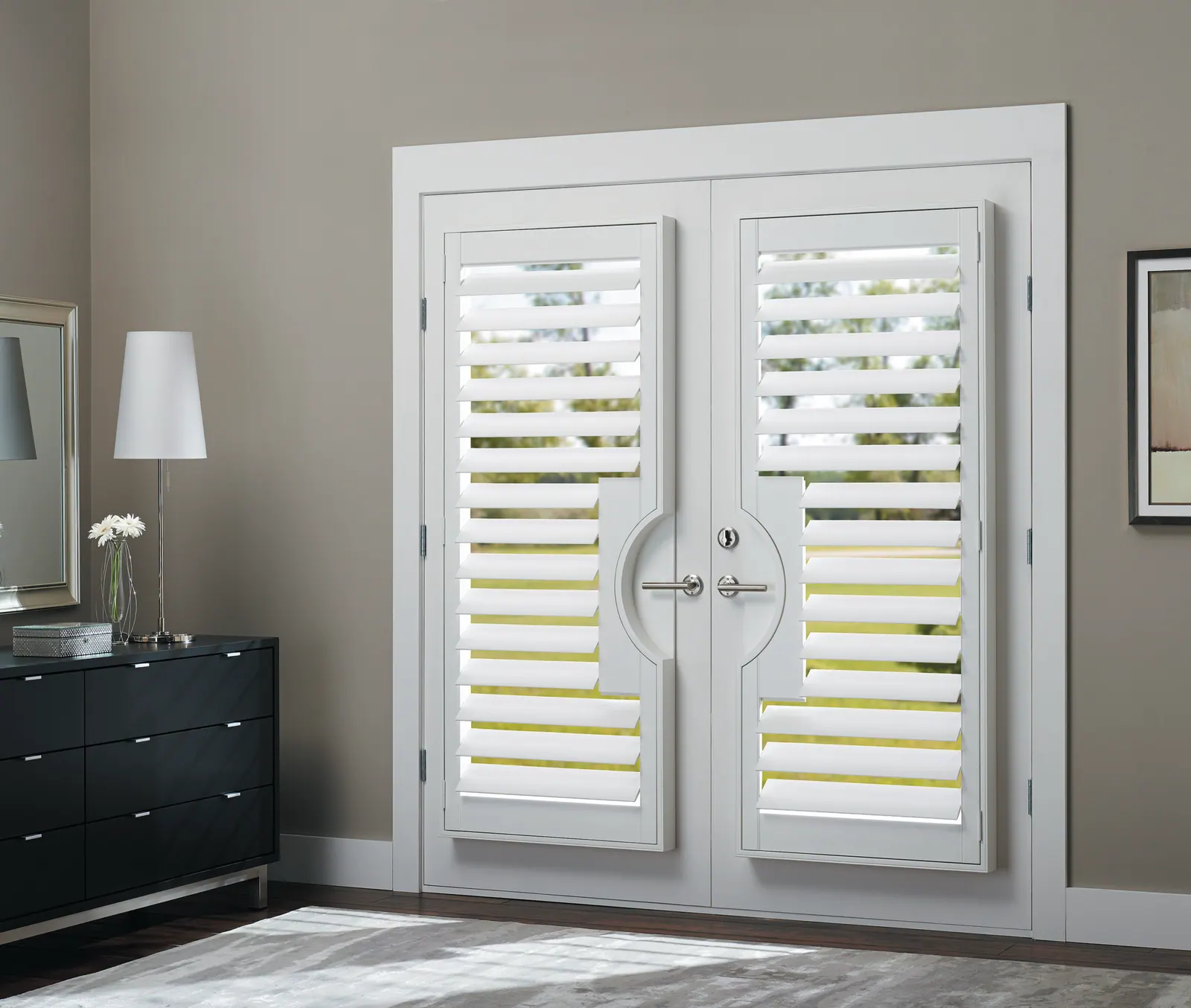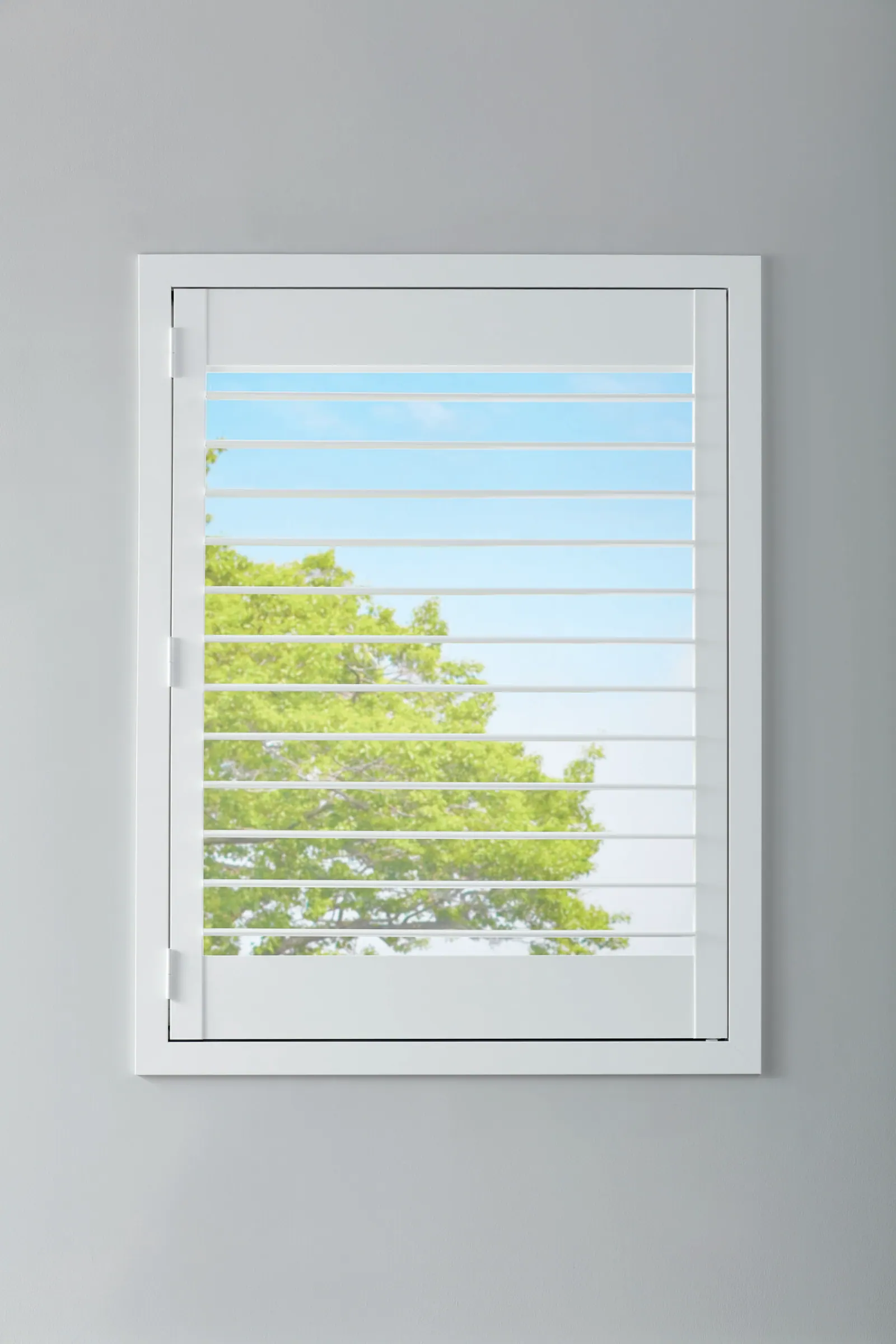
What composite actually is
There is a lot of loose terminology in this category, so it is worth being precise. A composite shutter has an engineered wood core (a dense fibreboard, considerably heavier and more stable than solid softwood) encased in a seamless polymer coating. It is not hollow vinyl, and it is not plastic. Hollow vinyl shutters exist, they are cheaper, and they sag on wide spans. We do not sell them.
The polymer skin is where the performance comes from. It is UV stabilised, so it does not yellow the way unprotected white vinyl does after a few Colorado summers. It is non-porous, so steam and splashes do not penetrate. And because the coating is applied to the assembled component rather than painted on afterwards, there is no film to chip off an edge.
The two rooms where composite is simply the right answer
Bathrooms
A shower puts warm, saturated air against a window several times a day. Hardwood in that environment eventually swells at the joints, and paint eventually lifts at the bottom rail. Composite does neither. If you are putting shutters in a primary bath or a kids' bathroom, this is not a close call, choose composite and stop thinking about it.
West and south-facing windows
Ultraviolet exposure in Colorado Springs is roughly a quarter more intense than at sea level, and a west-facing window in July takes several hours of direct low-angle sun. That combination of heat and UV is what warps a wood louver, the sun-facing side dries and shrinks faster than the shaded side, and the louver bows. Composite has no grain to move and a coating designed for the exposure.
The same reasoning applies to sunrooms, enclosed porches and any window above a dark-coloured deck that radiates heat back up at the glass.
Where composite has real limits
We would rather tell you the constraints up front than have you discover them.
- Weight. Composite is denser than basswood, so a panel can only get so wide before it needs a divider rail or an additional mullion post. On very wide openings, hardwood gives you a cleaner layout with fewer interruptions.
- Stain is not available. Composite comes in painted finishes: whites, off-whites, greys and a handful of woodgrain-look coatings. If you want a genuine stained finish that shows grain, you want hardwood.
- Specialty shapes are limited. Arches, eyebrows and circles are generally built in hardwood. Composite handles rectangles and simple angles well.
For most Colorado Springs homes none of these limits bite, because most people want white shutters on rectangular windows, which is exactly what composite does best and cheapest.
HOA compliance without thinking about it
Most of the newer Colorado Springs developments have covenants governing what your windows look like from the street. The common requirement is that window coverings visible from outside be white, off-white or a neutral. Composite shutters ship in exactly those colours as standard, and the polymer finish holds its colour rather than drifting yellow over time, which is the thing that eventually puts an ageing vinyl blind out of compliance.
If your HOA requires submission and approval before installation, tell us at consultation. We can provide finish samples and a written specification for your architectural review committee, and we have been through the process in most of the local associations.
Hidden tilt is worth it here
Composite shutters are usually specified in white, and a white panel with a white tilt rod down the middle has a strong vertical line through it. Moving to a hidden tilt, where the mechanism lives in the side stile, leaves an uninterrupted face and makes a modest window look larger.
It is the upgrade we recommend most often on composite, and it costs less than moving from composite to hardwood. If you are weighing where to spend on a shutter project, hidden tilt on composite tends to deliver more visible improvement per dollar than the material upgrade does.
Common questions
- Are composite shutters as good as wood?
- For painted finishes in ordinary rectangular windows, composite performs better than wood: it resists moisture, will not warp in hard sun, and costs less. Wood wins on stained finishes, very wide panels, and specialty shapes. The honest answer is that they are different tools, and roughly half the shutters we install are composite because half the windows suit it better.
- Do composite shutters look like plastic?
- Good ones do not. The polymer coating is applied over an engineered wood core, so the panel has the weight and solidity of wood and a smooth painted appearance. The products that look plastic are hollow vinyl shutters, which are a different and cheaper construction that we do not carry.
- Will composite shutters turn yellow?
- The finish is UV stabilised specifically to prevent that, which matters at this altitude more than it does at sea level. Untreated white vinyl does yellow, it is the most common complaint about bargain shutters, but a quality composite finish holds its colour for the life of the product.
- Can composite shutters go on a patio door?
- Yes, on a bypass or bi-fold track, provided the panel widths stay within the span limits. Because composite is heavier than basswood, wide door openings sometimes need an extra panel division. We work that out at measurement and show you where the posts will land before you order.
- How do I clean composite shutters?
- Dust with a dry cloth or a vacuum brush, and for anything greasier use a damp cloth with mild dish soap. The non-porous finish means you can be considerably less careful than with hardwood, no need to worry about a wet cloth. Avoid abrasive pads and solvent cleaners, which can dull the surface.