What faux wood is made of
Faux wood blinds are a PVC or PVC-and-wood-composite slat, moulded with a subtle grain texture and finished in a paint-like coating. The better products have a wood flour content that adds rigidity and gives the slat a more convincing weight and surface than pure vinyl.
The critical property is that the material is non-porous. Water does not penetrate it, so there is no swelling, no lifting finish, and no end-grain damage. Steam from a shower, splashes from a sink, condensation on a cold morning window, none of it registers.
The second property is UV stability. A quality faux wood slat is formulated for sun exposure and holds its colour. The bargain products are not, and after several Colorado summers they yellow and go chalky. This is the main quality difference in the category, and it is invisible at the point of sale.
The rooms it was made for
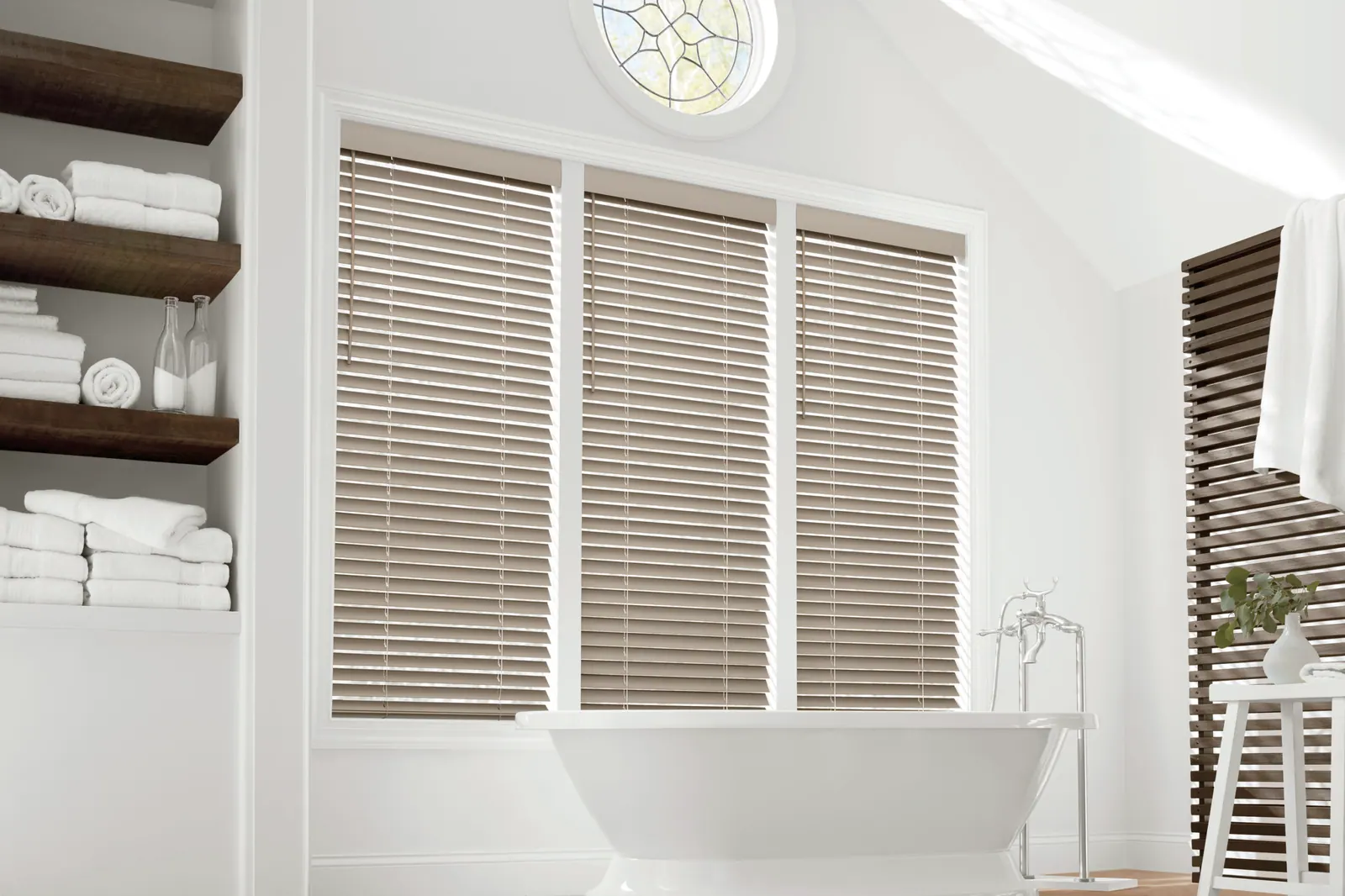
Bathrooms. This is the default recommendation. A faux wood blind above a bathtub will look the same in ten years as it does the day it goes up. Real wood in the same position will not.
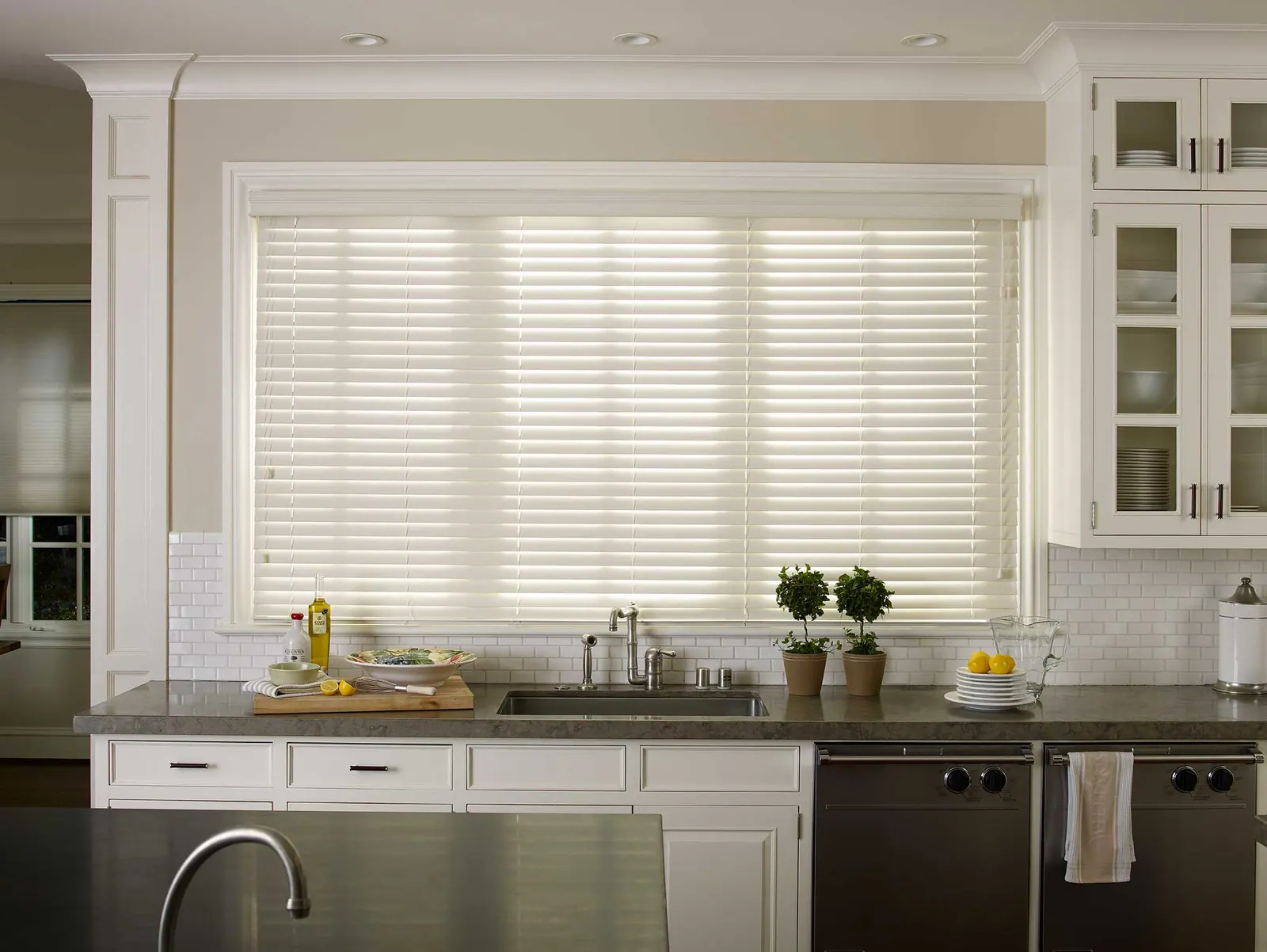
Kitchens. Steam, grease and splashes near the sink and the range. Faux wood wipes clean with a damp cloth and mild soap, which is not something you can do to a wood blind.
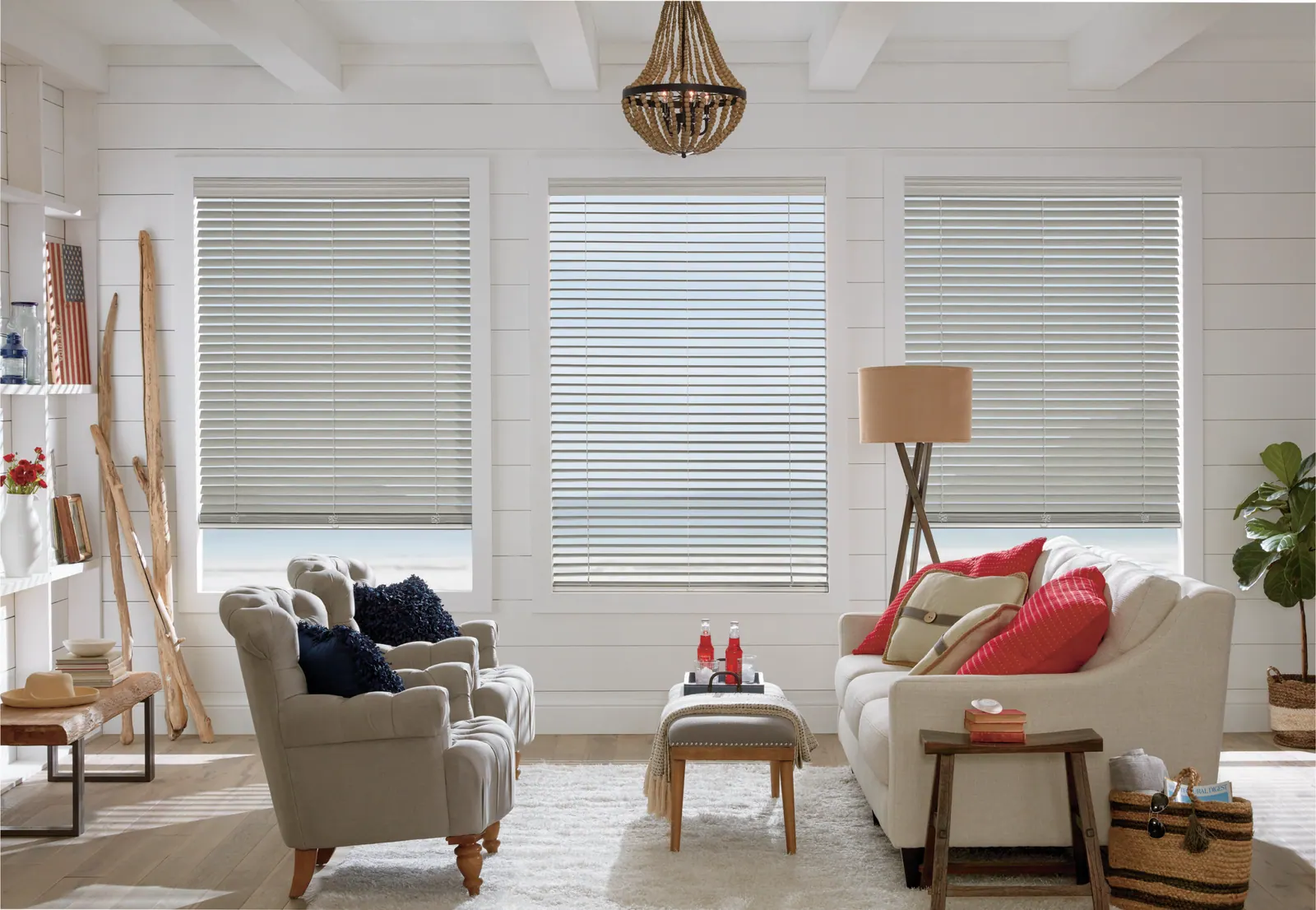
West and south-facing rooms. No warping in hard sun, and no fading if you buy a quality slat.
Basements and walk-outs. Cooler, damper, and often the room where condensation forms on the glass.
Rentals and second homes. Durable, inexpensive to replace a single slat, and forgiving of tenants.
In practice, in a typical Colorado Springs home we often specify faux wood throughout the wet and sunny rooms and real wood or shutters in the showpiece spaces, which is a sensible way to spend a budget.
The one real drawback: weight
Faux wood is heavier than basswood, and on wide windows that becomes noticeable. A 72-inch faux wood blind is a genuinely substantial thing to lift, and over years that weight also puts more strain on the lift mechanism.
There are three ways around it. Split the opening into two blinds on a single headrail, so each half lifts independently but the window reads as one unit. Choose a lightweight composite, which several manufacturers now offer specifically to address this. Or motorise it, which removes the issue entirely and is increasingly what we recommend on wide windows regardless of material.
On openings up to about 60 inches, none of this matters. Beyond that it is worth a conversation, and we will raise it at measurement rather than letting you discover it after installation.
Getting the look right
Faux wood has a reputation for looking cheap, which is earned by the cheap versions and not by the good ones. A few things make the difference:
- Choose 2½ inch slats where the window can take them. Wider slats read as more substantial and less like a builder-grade blind.
- Specify a proper valance with returns, so the brackets are hidden from the side.
- Avoid the most aggressive fake grain. The subtler textures look considerably more convincing than the deeply embossed ones.
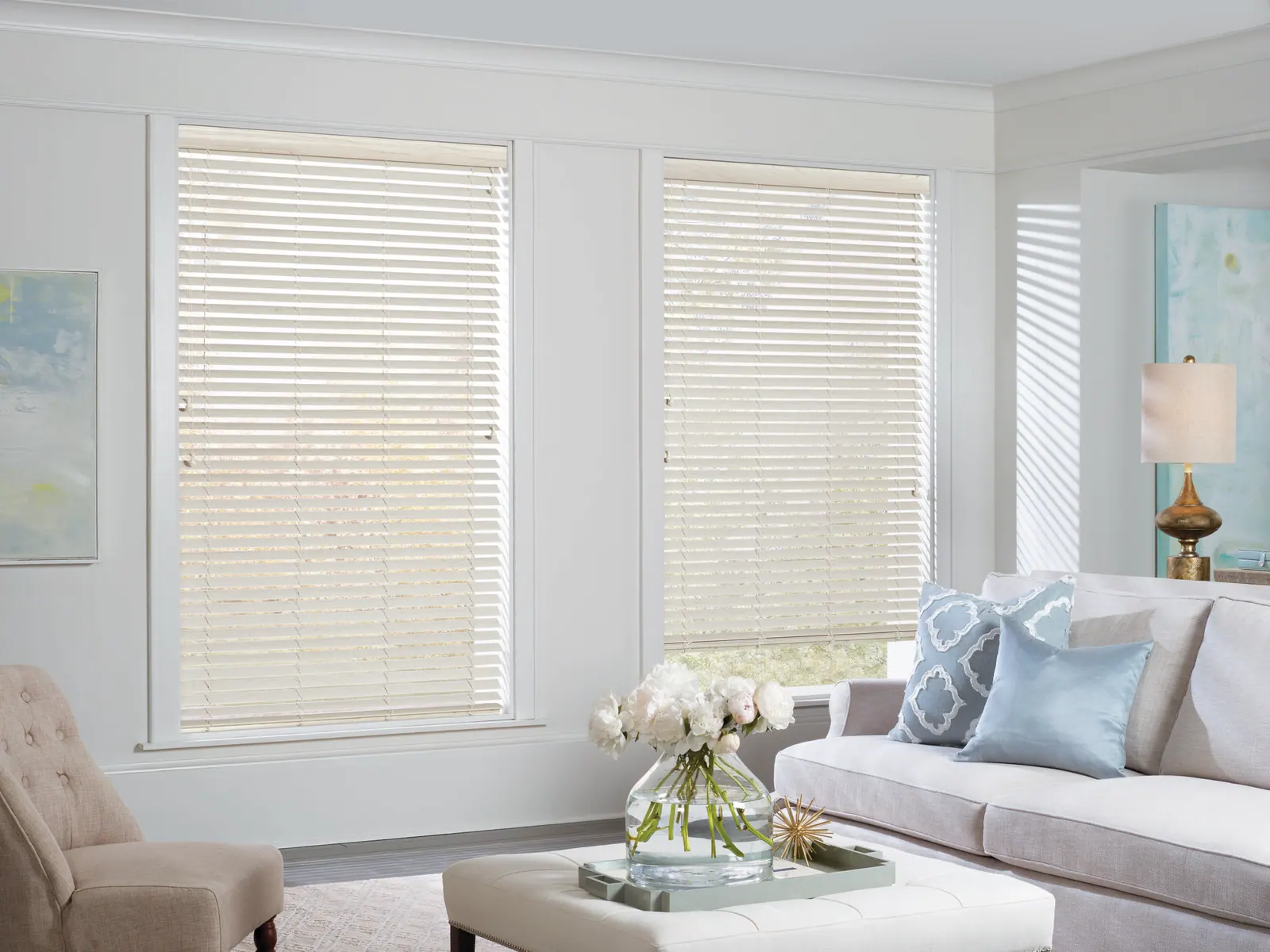
- Match the white to your trim. Bright white against a warm off-white trim looks wrong. We carry several whites for exactly this reason and will hold samples against your casing.
Done carefully, most people cannot tell a good faux wood blind from a painted wood one without touching it.
Common questions
- What is the difference between wood and faux wood blinds?
- Real wood is basswood: lighter, stainable, warmer looking, and vulnerable to moisture. Faux wood is a PVC composite: heavier, paint finishes only, moisture-proof, and less expensive. For a white blind in an ordinary room the visual difference is small; for a stained finish there is no comparison. Full breakdown at [Wood vs Faux Wood Blinds](/wood-vs-faux-wood-blinds/).
- Do faux wood blinds turn yellow?
- Quality ones do not, the material is UV stabilised for the exposure. Cheap ones absolutely do, and at this altitude they do it faster than they would elsewhere. This is the single biggest reason to buy a proper custom blind rather than a stock one from a big box store, and the difference is not visible until year three or four.
- Are faux wood blinds good for bathrooms?
- They are the standard recommendation. The material is non-porous, so shower steam and splashes have no effect, and they wipe clean with a damp cloth. Composite shutters are the other good bathroom option if you want something more permanent.
- How much do faux wood blinds cost?
- They sit in the middle of the blind range, more than aluminum mini blinds, less than real wood or shutters. Price scales with the size of the opening, so a bathroom window is inexpensive and a great room window is not. We quote per window after measuring so you can see exactly where the cost sits room by room.
- Can faux wood blinds be cut down to fit?
- Stock blinds from a store can be cut, and it is usually visible. We do not cut down: every blind we sell is manufactured to the measured size of your specific opening, which is why the fit is tight and the light gaps are minimal. It is the main practical difference between custom and off-the-shelf.