Three fold styles, three different personalities
Flat fold
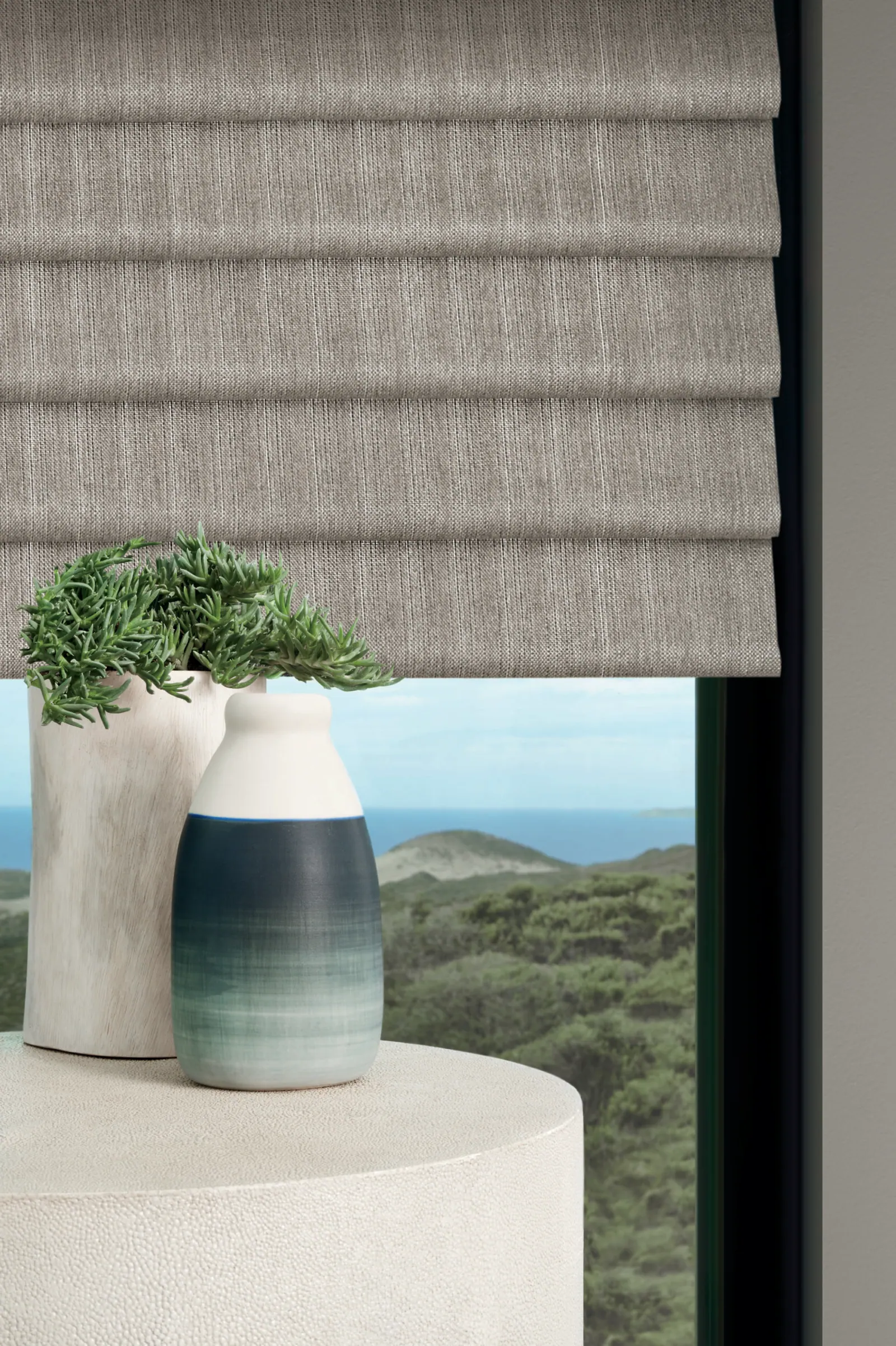
The fabric hangs smooth and flat when lowered, then folds into crisp horizontal sections as it rises. It is the most tailored and the most contemporary of the three, and it shows off a patterned fabric better than any other style because the pattern is not distorted by gathering. This is the style we install most often.
Relaxed
The bottom edge dips in a gentle smile between the outer cords. It is softer, less formal, and it suits kitchens, breakfast nooks and casual rooms. The curve reads as intentional rather than sloppy only if the shade is proportioned correctly, too wide and the swag looks slack.
Cascade or hobbled
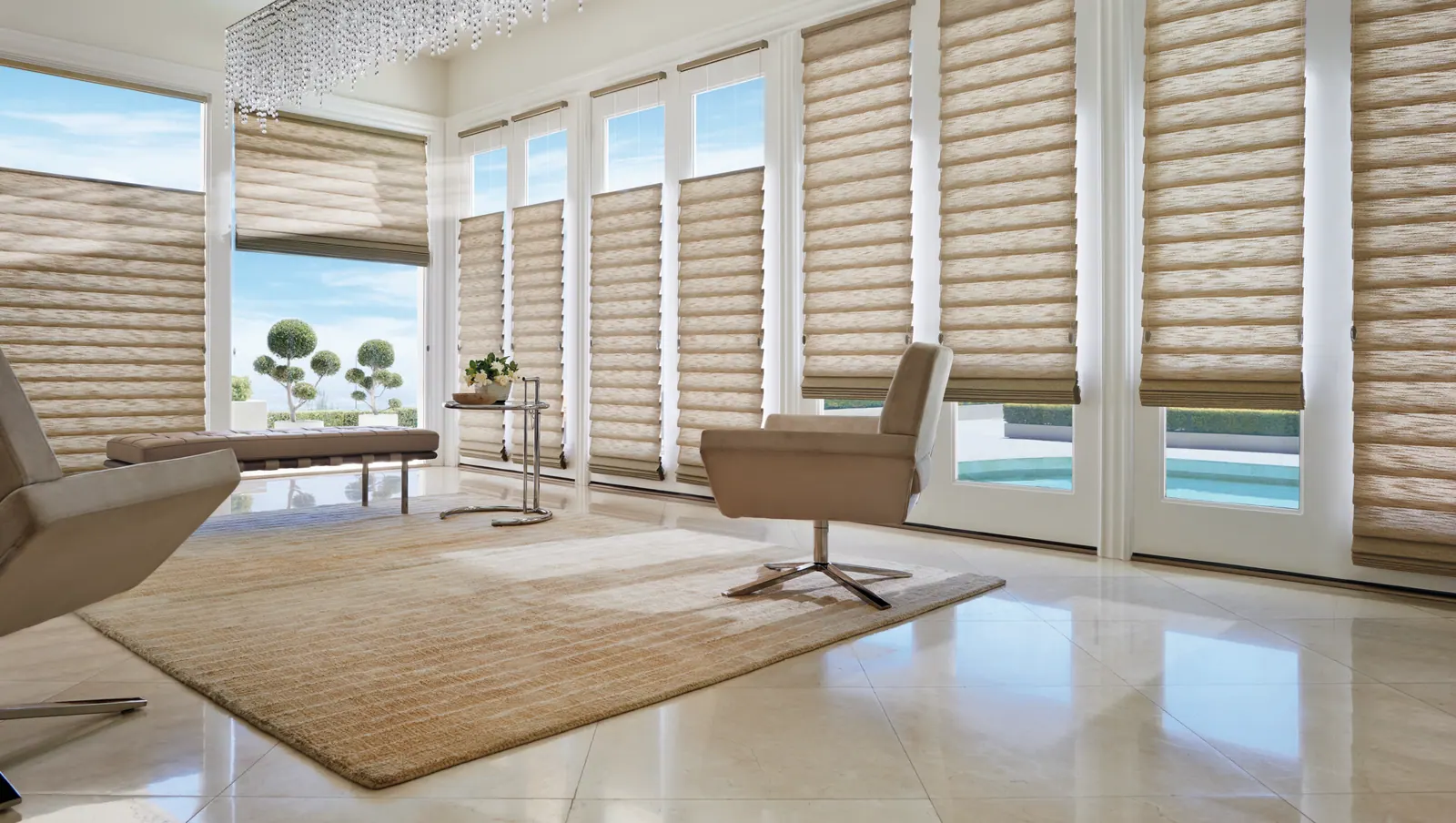
The fabric holds permanent soft folds even when fully lowered, giving a continuous waterfall of horizontal pleats. It is the most traditional and the most luxurious-feeling, it uses substantially more fabric, and it stacks deeper at the top. Beautiful in a formal dining room; overwhelming in a small window.
Lining is what separates a good Roman shade from a mediocre one
An unlined Roman shade lets light through the fabric and shows the cords and rings as shadows from outside. It is the cheapest construction and it looks it.
A standard lining adds an opaque backing that hides the mechanism, protects the face fabric from UV, gives the shade body so the folds hold their shape, and presents a consistent neutral colour to the street. On any window visible from outside (which in most Colorado Springs HOA neighbourhoods matters) a lining also keeps you compliant with covenants about what your windows look like from the road.
A blackout lining adds a light-blocking layer for bedrooms. Note that the fold structure means a Roman shade will never be as light-tight as a blackout roller in channels; the folds themselves let a little light through at the creases. For a nursery where absolute darkness matters, a Roman shade is the wrong tool no matter how good the lining.
Given the UV load at this altitude, we recommend lining on essentially every Roman shade. An unlined designer fabric on a west window will fade within a few seasons, and it is a genuinely expensive thing to have fade.
Choosing fabric
Roman shades are where fabric choice gets to matter, because the product is fundamentally a piece of textile on display. A few things we have learned installing them here:
- Weight matters more than pattern. A fabric with body folds cleanly and holds its stack. A limp fabric sags between the rings no matter how good it looks on the bolt.
- Large patterns need large windows. A repeat that reads beautifully across a 60-inch window can be unrecognisable across a 24-inch one.
- Linen and linen blends relax over time. That is part of their charm, but in Colorado's dry air natural linen can also become brittle at the fold creases over many years. Linen-look synthetics have got very good and hold up better.
- Solids and textures age better than prints. A textured neutral still looks current after a decade; a strong print is a bet on your own taste.
We bring full sample books to the consultation and leave swatches with you. Fabric is the one decision we actively encourage people to sit with for a few days, because it is the one you will look at every morning.
Where Roman shades work, and where they do not
They are at their best in living rooms, dining rooms, bedrooms and studies, rooms where softness is welcome and where the window is part of the décor rather than purely functional.
They are a poor choice above a kitchen sink or a cooktop, where fabric collects grease and moisture, and in bathrooms for the same reason. They are also not ideal on a window you operate several times a day, because a fabric shade lifted constantly will show wear at the folds sooner than a roller will.
For patio doors and very wide openings, the stack depth becomes a problem, a Roman shade on a 96-inch door stacks a substantial amount of fabric at the top and eats into the glass. Vertical honeycomb or draperies usually serve those openings better.
Common questions
- How do Roman shades work?
- Cords or a lift system run through rings sewn to the back of the fabric. As you raise the shade, the rings draw together and the fabric folds into horizontal pleats that stack at the top. In a cordless design the mechanism is spring-assisted and concealed in the headrail, so there is nothing hanging in the room. More detail at [How Roman Shades Work](/demystifying-how-do-roman-shades-work/).
- Are Roman shades expensive?
- They sit at the higher end of the shade category, above rollers and cellular shades, mainly because of fabric cost and the labour in construction. A cascade style uses the most fabric and costs the most. They are still typically less than custom draperies for the same window.
- Can Roman shades be cleaned?
- Routine care is vacuuming with a brush attachment on low suction. Beyond that, most Roman shades should be professionally dry cleaned rather than washed, the interlining, rings and cords do not survive a washing machine. Spot clean promptly with a barely damp cloth and blot rather than rub.
- Will a Roman shade block enough light for a bedroom?
- With a blackout lining they darken a room substantially, which is enough for most sleepers. They will not achieve total darkness, because light passes at the fold creases and around the edges. If someone in the house sleeps during the day, specify a blackout roller with side channels for that window instead.
- Do Roman shades come motorised?
- Yes, and they are a good candidate for it: a fabric shade lifted by hand several times a day wears at the folds, while a motorised lift raises it evenly every time. Motorisation also solves the reach problem on tall windows. See [motorization](/window-treatments/motorization/).