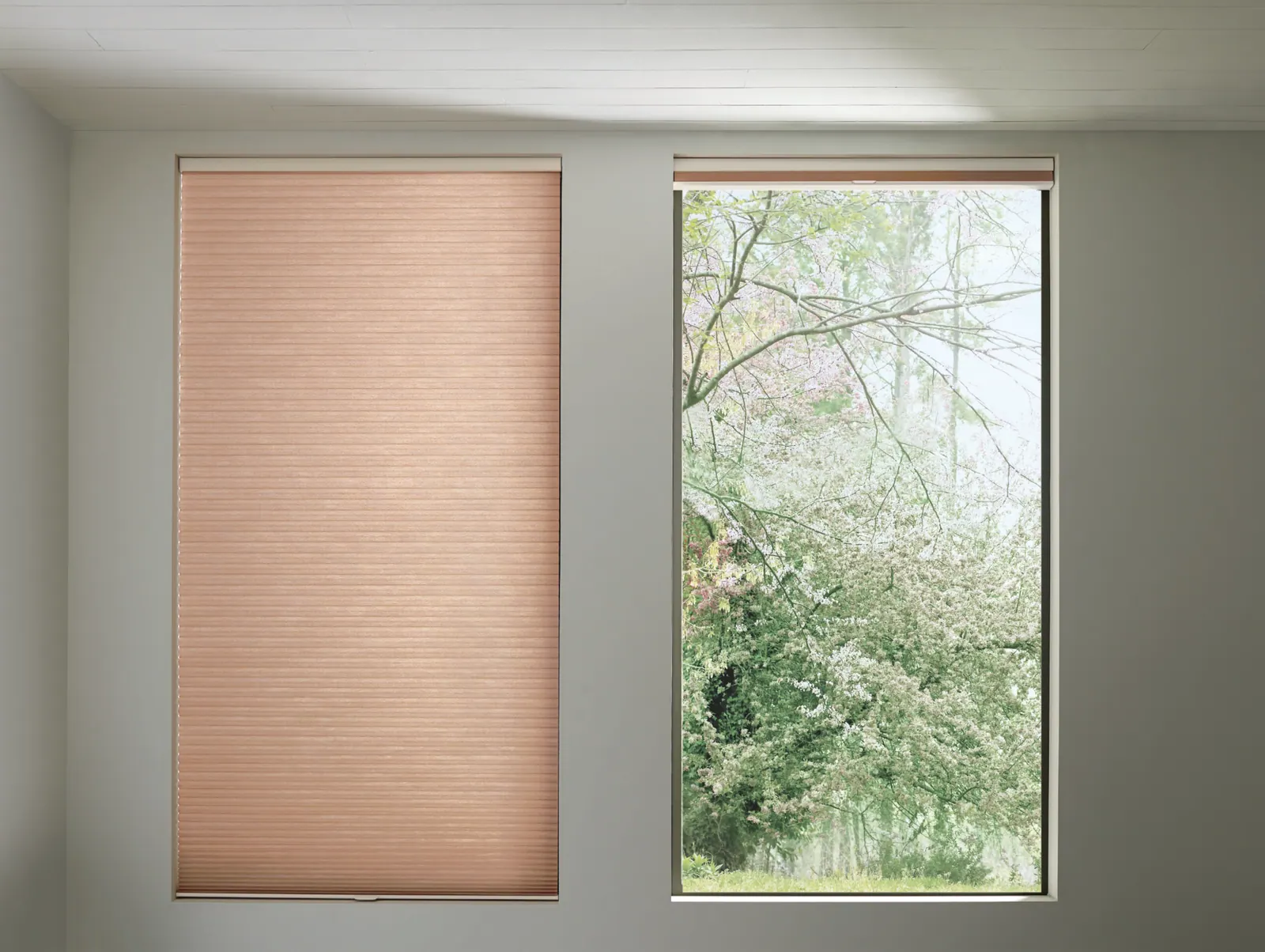
Five kinds of shade, five different jobs
The word 'shade' covers products that behave very differently. Choosing well is mostly a matter of naming the job you need done.
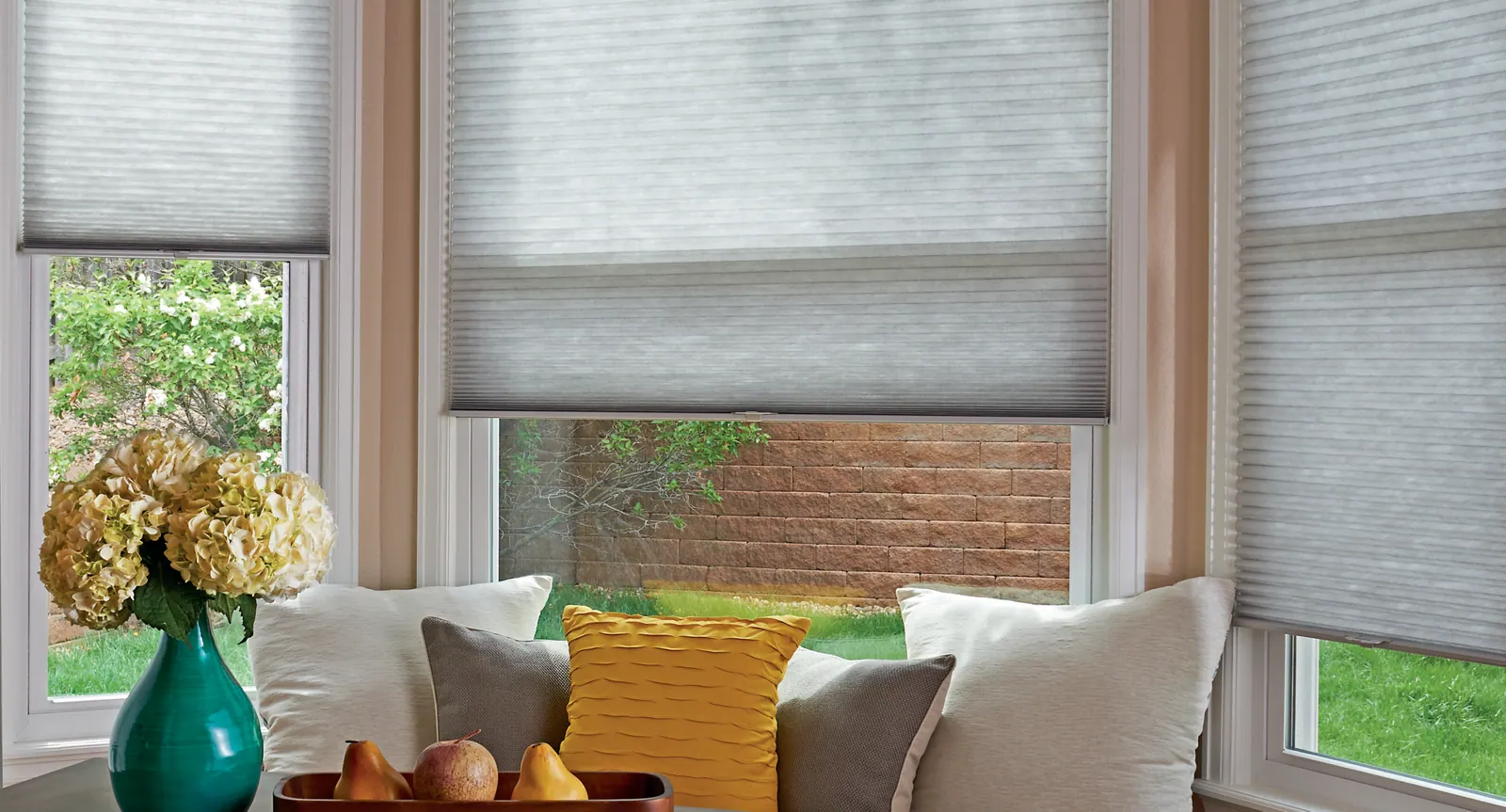
- [Honeycomb shades](/window-treatments/window-shades-company/honeycomb-shades/) trap air in cells and insulate. Best energy performance of anything we sell, and the right answer for cold north-facing rooms and Colorado winters.
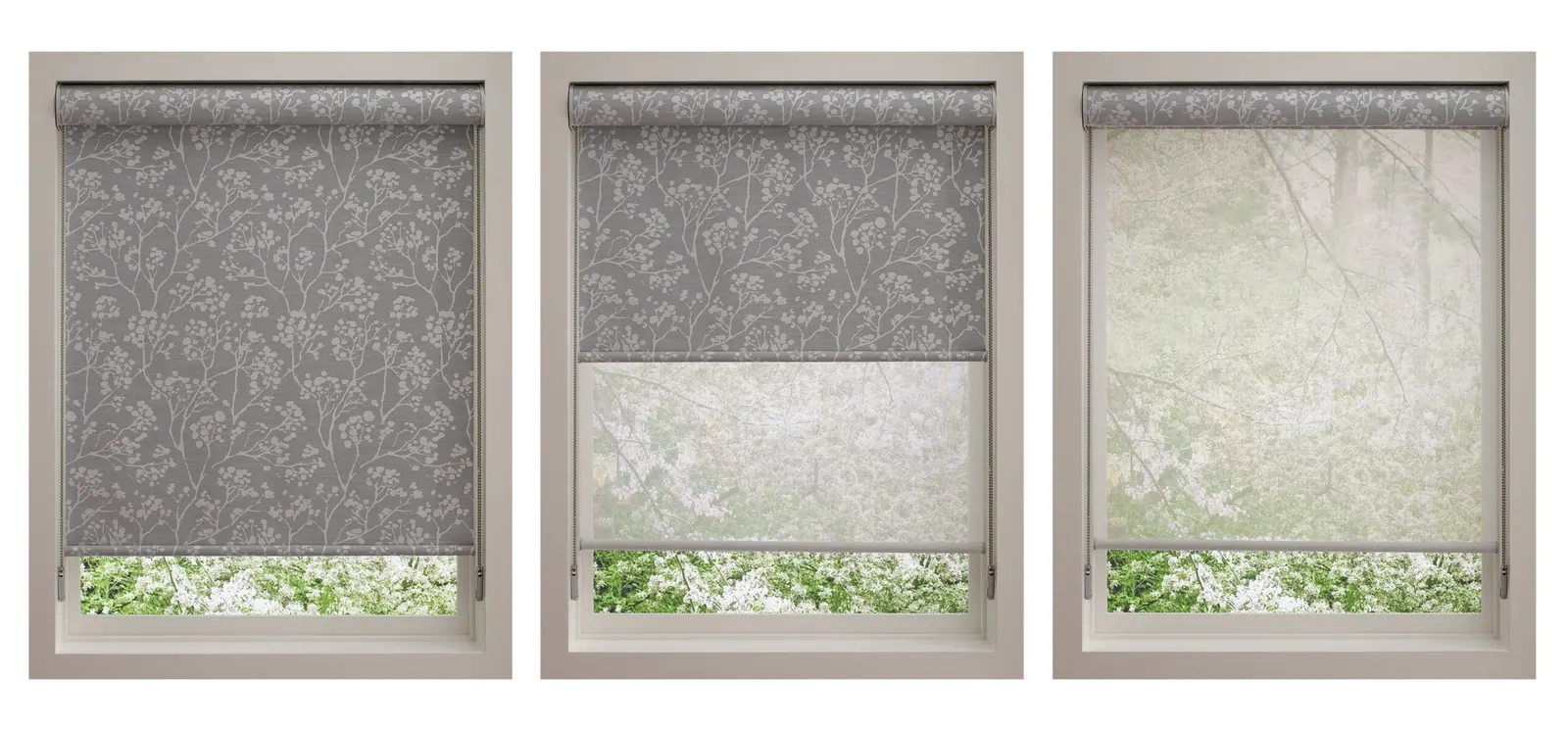
- [Roller shades](/window-treatments/window-shades-company/roller-shades/) roll onto a tube. The cleanest, simplest, most contemporary option, and available from sheer to blackout.
- [Solar screens](/window-treatments/window-shades-company/roller-screens/) are roller shades in an open-weave mesh. They cut glare and UV while you keep looking through them, the specialist for mountain views.
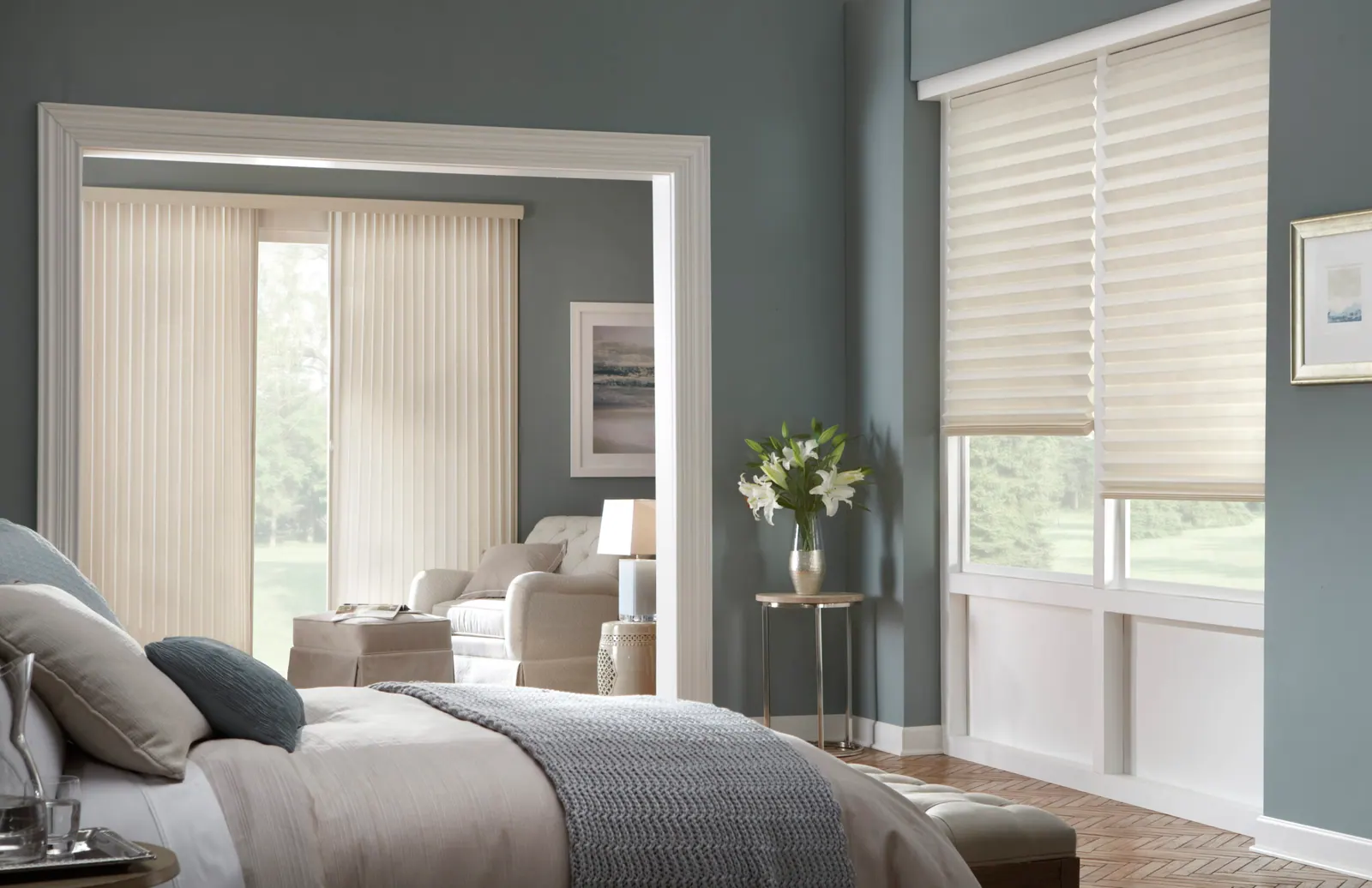
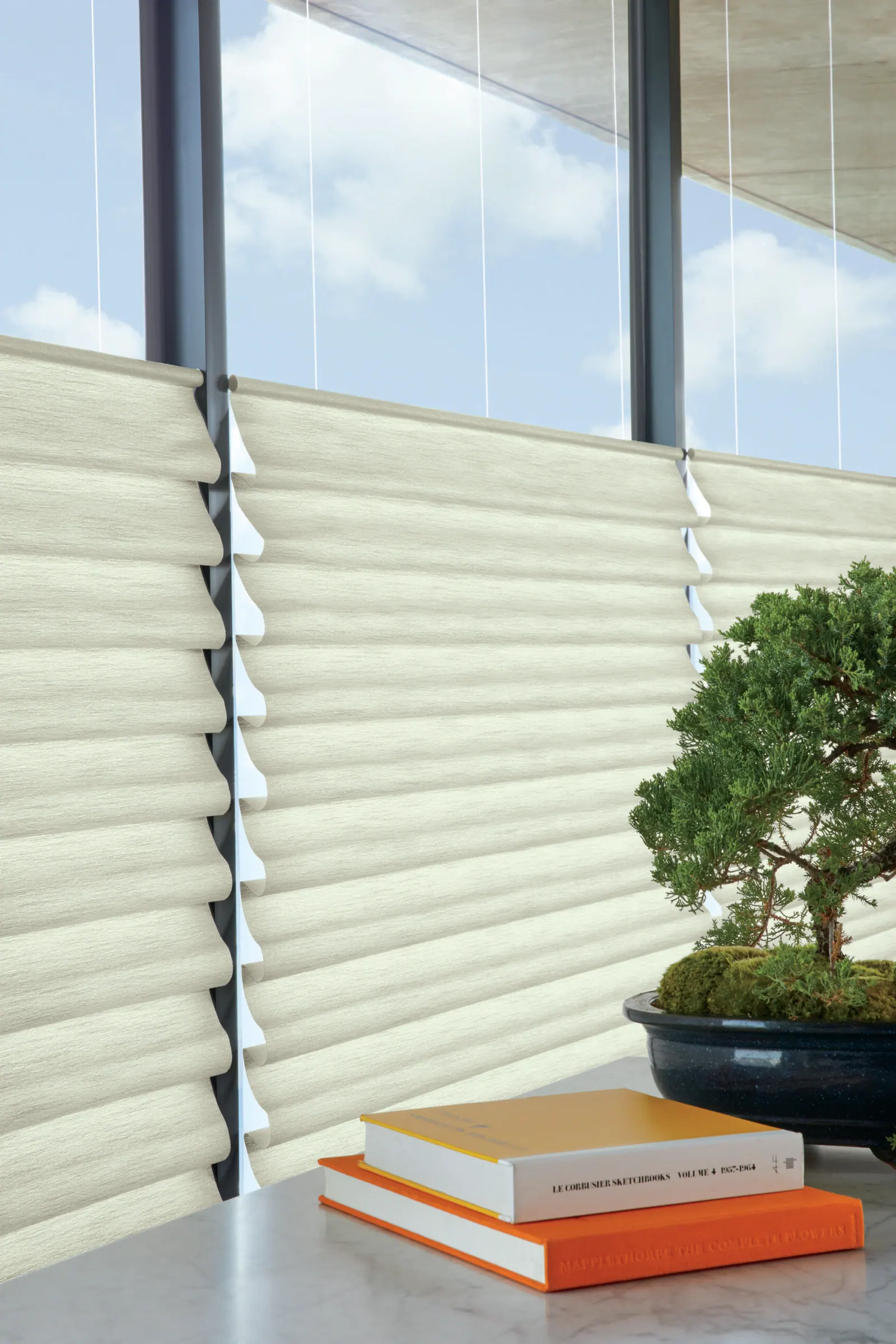
- [Roman shades](/window-treatments/window-shades-company/roman-shades/) fold into soft horizontal pleats. The most decorative choice, and the one that reads as a fabric furnishing rather than a functional covering.
- [Dual shades](/window-treatments/window-shades-company/dual-shades/) alternate sheer and solid bands, so you tune between view and privacy by nudging the fabric a few inches.
Opacity is the decision that actually matters
Homeowners tend to start with a shade type and finish with a fabric. It works better the other way around. Decide what you need the window to do at midday and at midnight, and the product type usually picks itself.
Sheer and light filtering
Softens light and gives daytime privacy while keeping the room bright. You can see shapes through it after dark from outside, so it is not a bedroom answer on its own. Ideal for living rooms, kitchens and anywhere the priority is glare without gloom.
Room darkening
Blocks most light but not all. There will be a halo at the edges where the fabric meets the frame. Fine for a guest room or a living room with a television. Not enough for a light sleeper.
Blackout
An opaque fabric, and for genuine darkness it needs side channels or a very generous outside mount to close the light gap at the edges. If you work nights, have a nursery, or are one of the many Colorado Springs households with someone on a shift schedule at Fort Carson, Schriever or Peterson, specify blackout with channels and do not compromise.
Cordless is standard, and that is a safety decision
Every shade we sell is cordless by default. Corded lifts on stock window coverings have been the subject of long-running child and pet safety concern, and the industry has moved decisively away from them. A cordless shade is lifted by hand and holds position anywhere; there is no loop, no pull, and nothing hanging within reach.
For tall or hard-to-reach windows (stairwell landings, great room clerestories, windows above a kitchen sink or a sofa) the alternatives are a continuous loop with a tensioned wall anchor, an extension wand, or motorisation. On anything above about eight feet we usually recommend motorising, because a shade you cannot comfortably reach is a shade that never gets adjusted.
Inside mount or outside mount
An inside mount sits within the window frame. It shows off the trim, gives a tailored built-in look, and is what most people want. It requires enough frame depth for the headrail, and it will always leave a small light gap at the sides, typically an eighth to a quarter inch.
An outside mount fixes to the wall or casing above the opening and overlaps the frame. It is the answer when the window is too shallow, when the opening is out of square, when you want to make a small window look larger, and when you need genuine darkness, the overlap is what kills the light gap.
We check depth and squareness at measurement and recommend one or the other per window rather than applying a single rule to the whole house. Older homes in Old Colorado City and the Broadmoor frequently have openings that are out of square by enough to make inside mount a poor choice on some windows and fine on others in the same room.
Fabric and the Colorado sun
Fabric is the component most affected by where you live. At 6,035 feet the ultraviolet load is materially higher than at sea level, and a south or west window delivers hours of it a day for most of the year. Cheap shade fabrics fade, and the fading is uneven, you see it first as a band where the shade sits half-raised.
We specify solution-dyed and UV-stabilised fabrics for high-exposure windows, where the colour is part of the fibre rather than applied to the surface. It costs a little more per shade and it is the difference between a shade that still matches in year eight and one that visibly does not.
The other local consideration is the dry air. Natural woven wood shades (bamboo, reed, grasses) are beautiful and we sell plenty, but natural fibres in sub-20% winter humidity can become brittle over years. If you love the look, we will point you at the composites within that range that hold up better here.
Common questions
- Which shade is best for insulation in Colorado?
- Cellular honeycomb shades, without much argument. The hexagonal cells trap a layer of still air against the glass, and a double-cell shade in a snug inside mount measurably slows heat loss through the window. In Colorado Springs, where a January night can sit well below freezing while the same day hits 50°F, that buffer earns its keep in both directions.
- Can I get a shade that gives privacy but keeps my view?
- Two options. A solar screen is an open-weave mesh you can see through from the inside during daylight while people outside mostly cannot see in. But that reverses after dark when your lights are on. A dual shade lets you align sheer bands for view or offset them for privacy in a single movement. For a room where you want both at different times of day, dual shades are the more flexible answer.
- How long do window shades last?
- Eight to fifteen years is typical, and the variable is almost entirely sun exposure. A north-facing bedroom shade can look new at fifteen years; a west-facing living room shade in a full-glass wall may show fading at seven. Mechanisms usually outlast fabric. Roller shades are the easiest to refresh because the fabric can often be replaced on the existing hardware.
- Are cordless shades harder to operate?
- No, most people prefer them within a day. You lift or lower the bottom rail by hand and it stays where you leave it. The only situation where cordless is awkward is a window you cannot reach, which is what motorisation and extension wands are for.
- Do you make shades for very wide windows?
- Yes, and there is a practical width limit per shade before the fabric can distort or the roll gets heavy. Beyond that we either split the opening into two shades on a shared headrail, so it operates as a pair but reads as one line, or move to a different product. We work this out at measurement and show you where any split will fall.