How the insulation actually works
A window is the weakest thermal point in almost any wall. Even a good double-glazed unit loses heat far faster than the insulated framing around it, and in a Colorado Springs January that loss is continuous through the night.
A cellular shade addresses it by adding a captive air layer. The hexagonal cells are closed at the sides, so the air inside them cannot circulate and carry heat away, it just sits there resisting conduction. Adding a second row of cells behind the first adds another air layer and another step of resistance.
The gain is real but it depends entirely on fit. A cellular shade with a half-inch gap at each side lets room air convect down the glass and around the shade, which bypasses the insulation you just paid for. This is precisely why we measure every opening rather than working from a homeowner's numbers, on this product, fit is the performance.
Single, double or triple cell
- Single cell: one row of cells. Lighter, stacks smaller, less expensive, and the cell interior is more visible when backlit. Good for moderate exposures and rooms where insulation is a bonus rather than the point.
- Double cell, two rows. Noticeably better insulation, a smaller cell size that reads finer from across the room, and the option we specify most often for Colorado Springs bedrooms and north-facing rooms.
- Triple cell, three rows. The most insulating configuration available, and the one worth considering for a room that has always been cold, a window wall that faces the mountains, or a home at higher elevation like Woodland Park or Palmer Lake.
Cell size interacts with this. A 3/8 inch cell gives a fine, tailored texture and a compact stack; a 3/4 inch cell has more presence and, in a single-cell shade, more trapped air. On a tall window a larger cell usually looks better proportioned.
Top-down bottom-up is not a gimmick
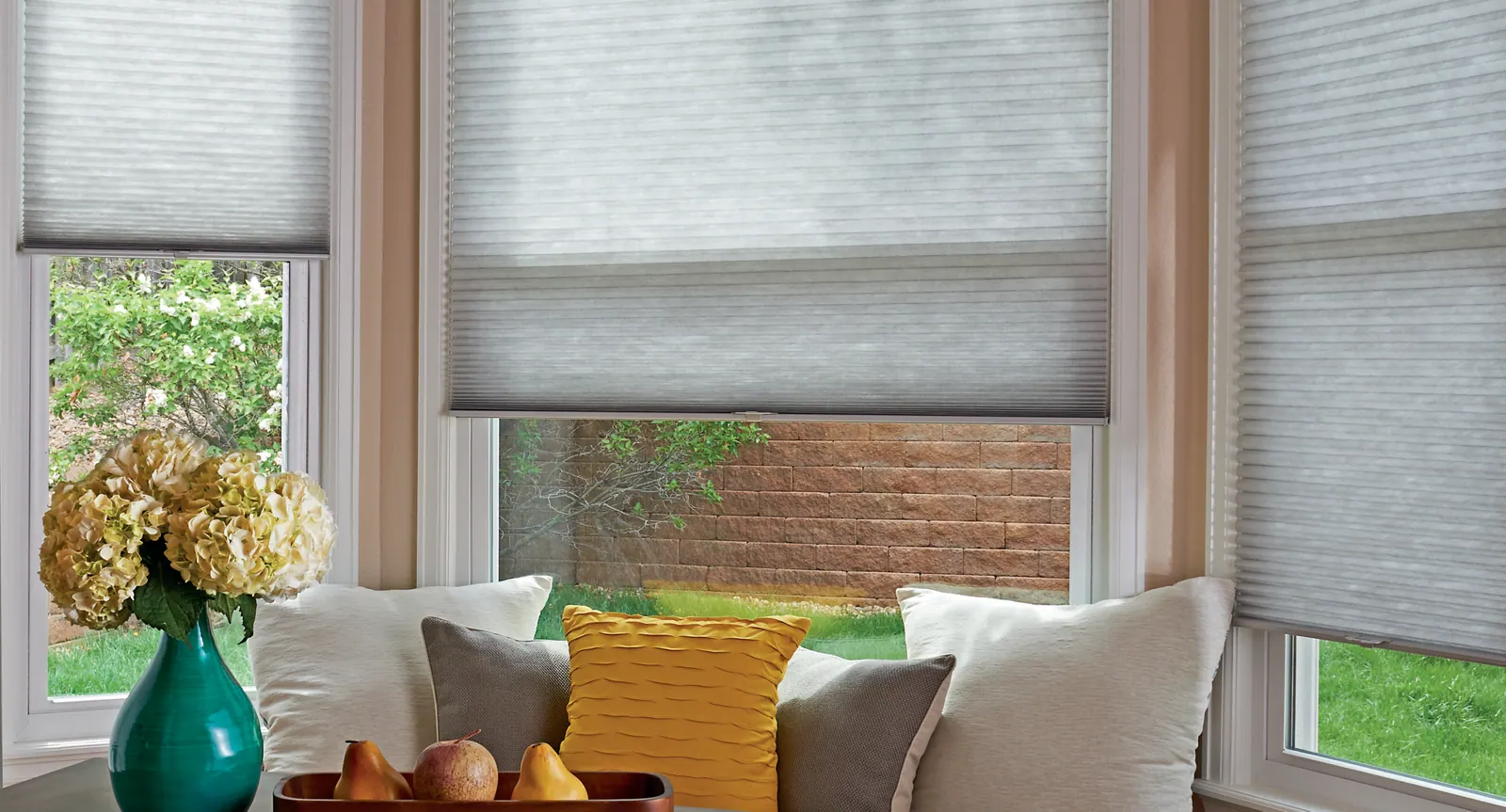
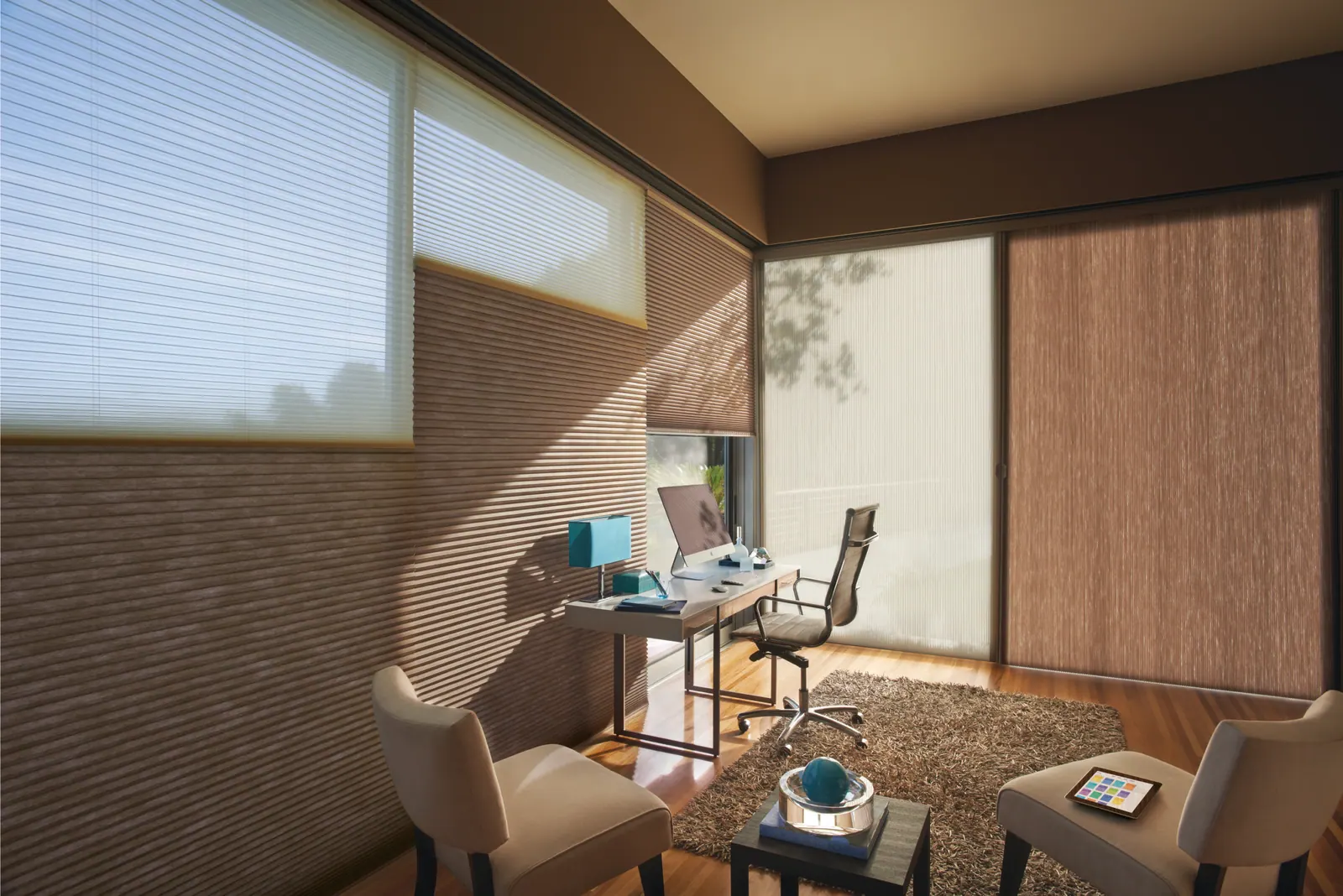
This option lets the shade open from the top as well as the bottom. Lower the top rail and you get daylight in through the upper part of the window while the lower part stays covered.
It solves a specific and very common problem: a street-facing room where you want light but not an audience. Front rooms in walkable neighbourhoods (Old Colorado City, Patty Jewett, downtown-adjacent streets) are the classic case. So are ground-floor bedrooms and any window that looks directly at a neighbour's.
It is also the best way to keep a mountain view usable while blocking low afternoon sun: drop the top rail to keep the upper sky and peak visible, raise the bottom to cut the glare coming in at eye level. It costs modestly more and it is the option customers thank us for most often.
Light control and blackout
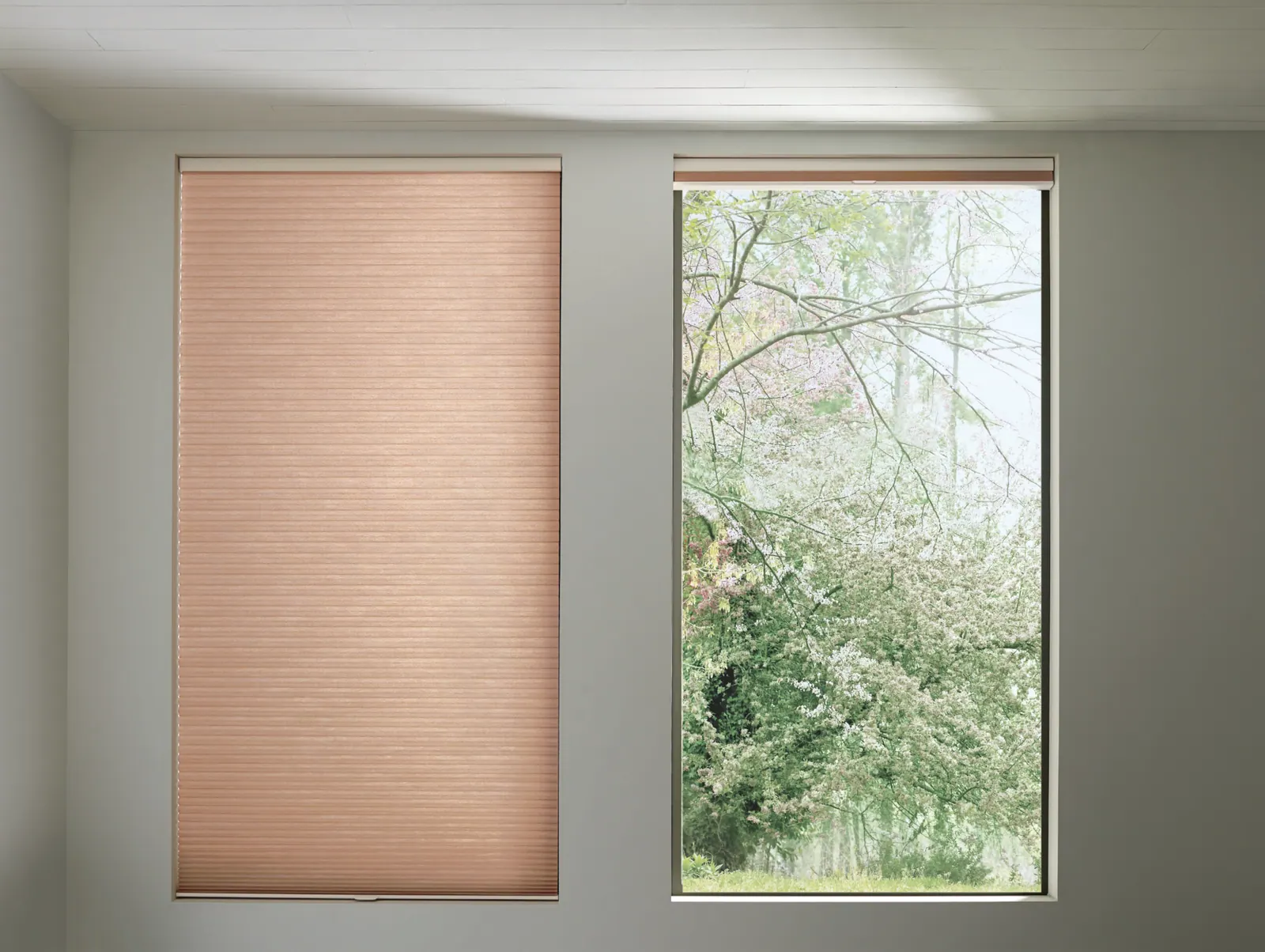
Honeycomb fabrics run the full range. Sheer cells glow and give a soft daytime privacy. Light filtering is the most common choice, letting the room stay bright without direct sun. Room darkening uses a denser fabric, and blackout adds an opaque liner inside the cells themselves.
Blackout honeycomb is a genuinely good bedroom product, because the liner is concealed within the cell structure: you get the insulation and the darkness in one shade, and from the room side it looks identical to a light-filtering version. Pair it with side channels if you need true darkness rather than merely dark.
One practical note: the pinholes where the lift cords pass through are visible as small points of light on some cordless designs. If total darkness is the requirement, ask us for a cordless design without through-cords, which eliminates them entirely.
Where honeycomb shades earn their place in a Colorado home
- North-facing rooms that never warm up. The insulation makes a room usable in winter that previously was not.
- Bedrooms, where blackout and insulation are both wanted and a single product delivers both.
- Patio doors, using a vertical honeycomb that stacks to one side and insulates a large expanse of glass.
- Basements and walk-outs, where the glass is cold and the room is already the coolest in the house.
- Homes above 7,000 feet (Woodland Park, Palmer Lake, the higher parts of Black Forest) where the winter temperature differential across the glass is larger and the insulation pays back faster.
The one place we would steer you elsewhere is a window whose whole purpose is a view. A honeycomb shade is opaque or translucent, never transparent; when it is down you are not looking through it. For view windows, see solar screens.
Common questions
- Do honeycomb shades really save on energy bills?
- They measurably slow heat transfer through the glass, and in a climate with Colorado's day-to-night swings that works in both directions, keeping heat in overnight in winter and solar heat out in summer. The size of the saving depends on how much glass you have, its orientation, and how snugly the shades fit. We would rather set the expectation as a comfort improvement you will definitely notice and a bill improvement that depends on your house.
- Are honeycomb shades outdated?
- The pleated fabrics of the 1990s have very little in common with what is available now. Current cellular shades come in fine cell sizes, textured and linen-look fabrics, top-down bottom-up operation and concealed cordless lifts. What has not changed is that nothing else insulates as well, which is why they remain the most-specified shade in cold climates. More on this at [Are Honeycomb Shades Outdated?](/are-honeycomb-shades-outdated/)
- What is the difference between cellular and honeycomb shades?
- Nothing. They are two names for the same product. 'Cellular' describes the structure and 'honeycomb' describes what the cells look like in cross-section. Manufacturers use both, sometimes in the same catalogue.
- How do you clean honeycomb shades?
- Vacuum gently with a brush attachment on low suction, or blow dust out with a hair dryer on a cool setting. Spot clean with a barely damp cloth and blot rather than rub, the pleats can crease if handled roughly. Never submerge them. If a shade has genuinely grimy cells, ultrasonic cleaning is an option and we can advise on it.
- Can honeycomb shades cover a sliding patio door?
- Yes, in a vertical configuration where the cells run vertically and the shade stacks to one side like a curtain. It is one of the better patio door solutions in a cold climate, because it insulates a very large area of glass that would otherwise be a significant heat loss point.