Where roller shades are the right call
Roller shades suit windows where you want the treatment to recede. Modern and transitional interiors, rooms with strong architecture you do not want to compete with, and any window where a stacked or slatted product would look busy.
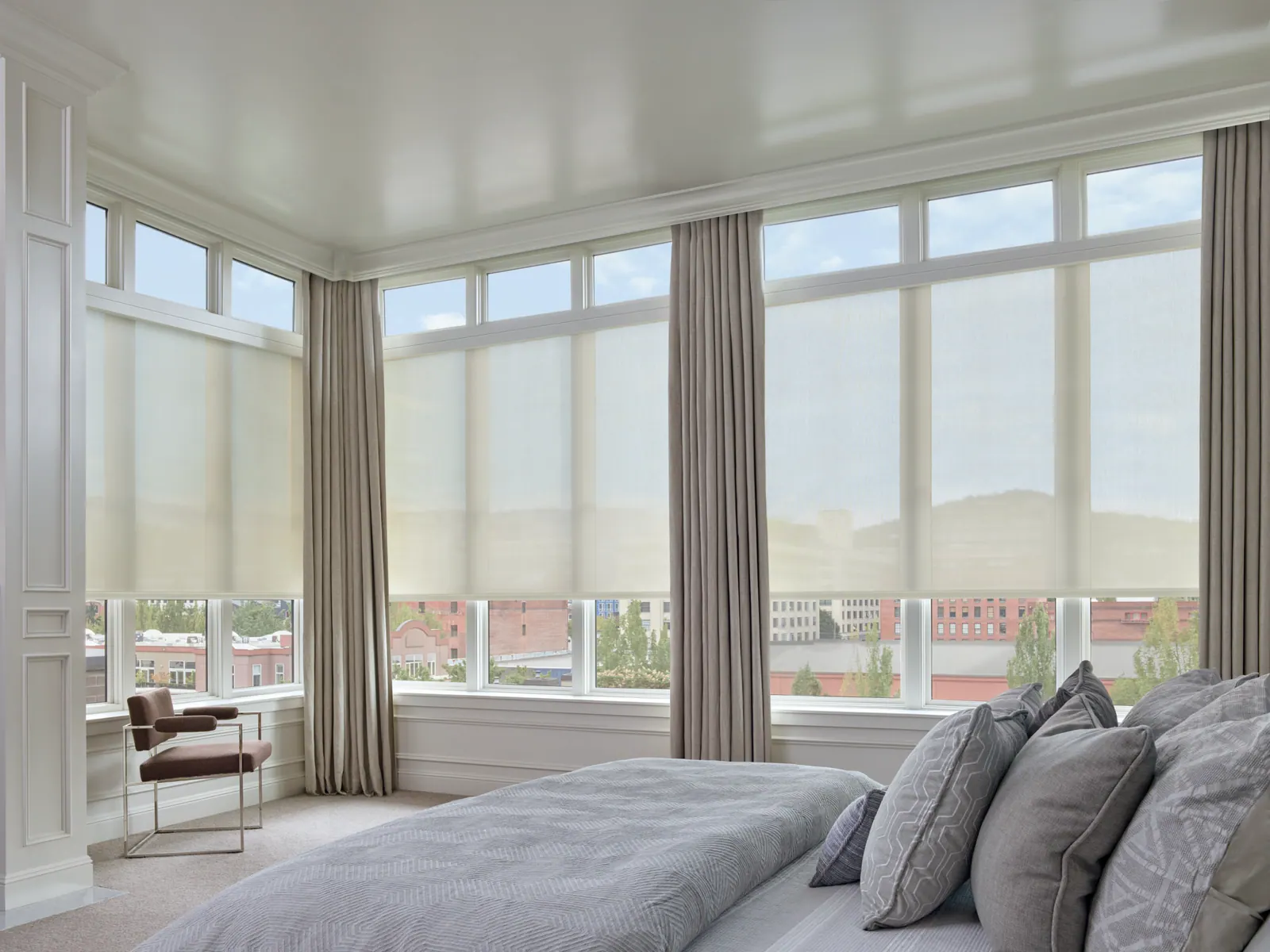
They also solve a problem specific to newer Colorado Springs construction: very large windows and full-height glass. A roller shade scales up better than almost anything else because the fabric is a single plane. There are no slats to sag and no folds to stack up and eat your view. In the great rooms and window walls common in Flying Horse and Wolf Ranch, a pair of wide rollers on a shared headrail often looks cleaner than any alternative.
The one place they are a weaker choice is a traditional or heavily decorated room, where the flatness can read as austere. That is what Roman shades are for.
Open roll or cassette
This is a small decision with a large visual effect, and it is worth understanding before you are asked.
An open roll leaves the fabric tube visible at the top. It is the most economical option and it has an honest, industrial simplicity that suits a contemporary room.
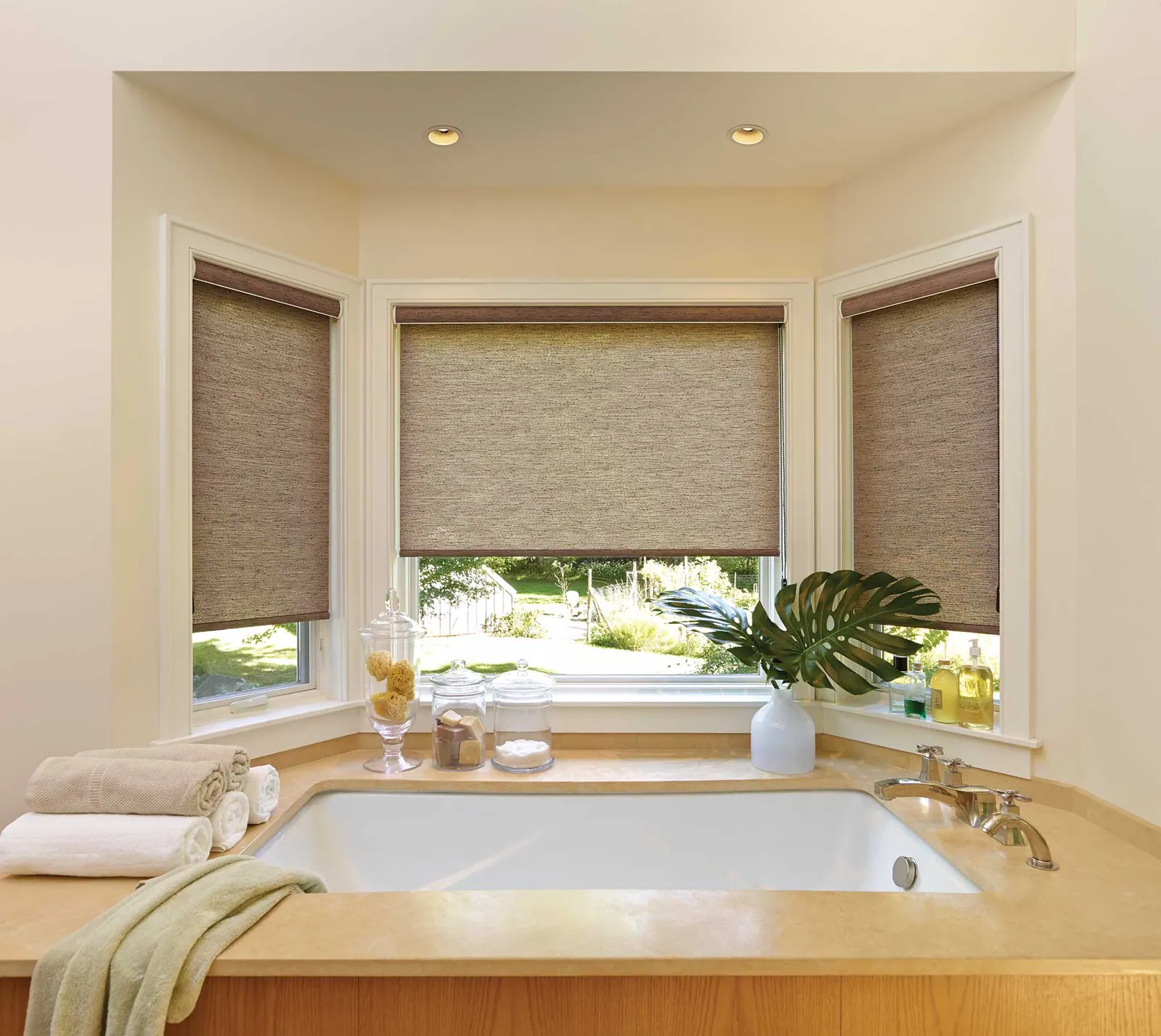
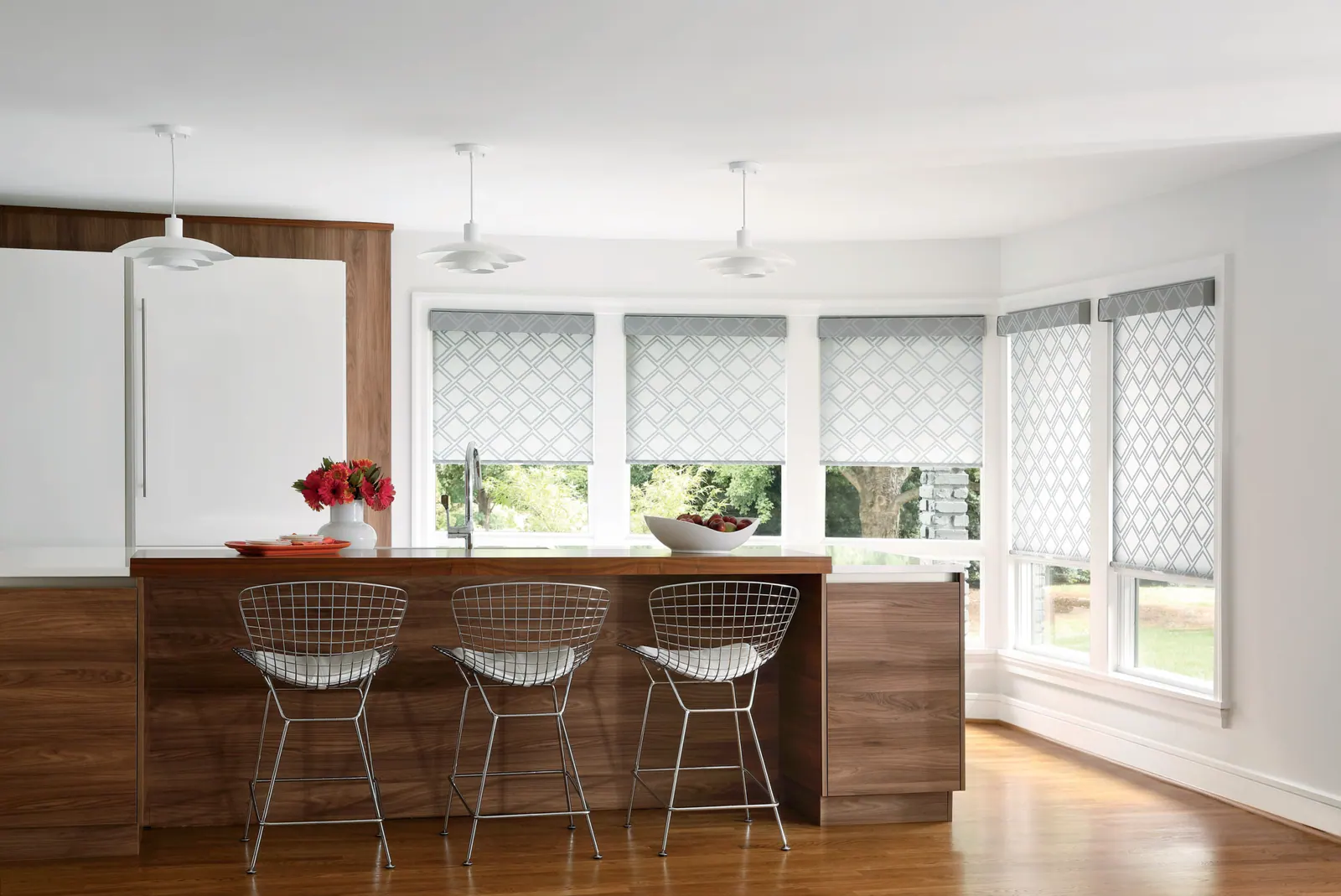
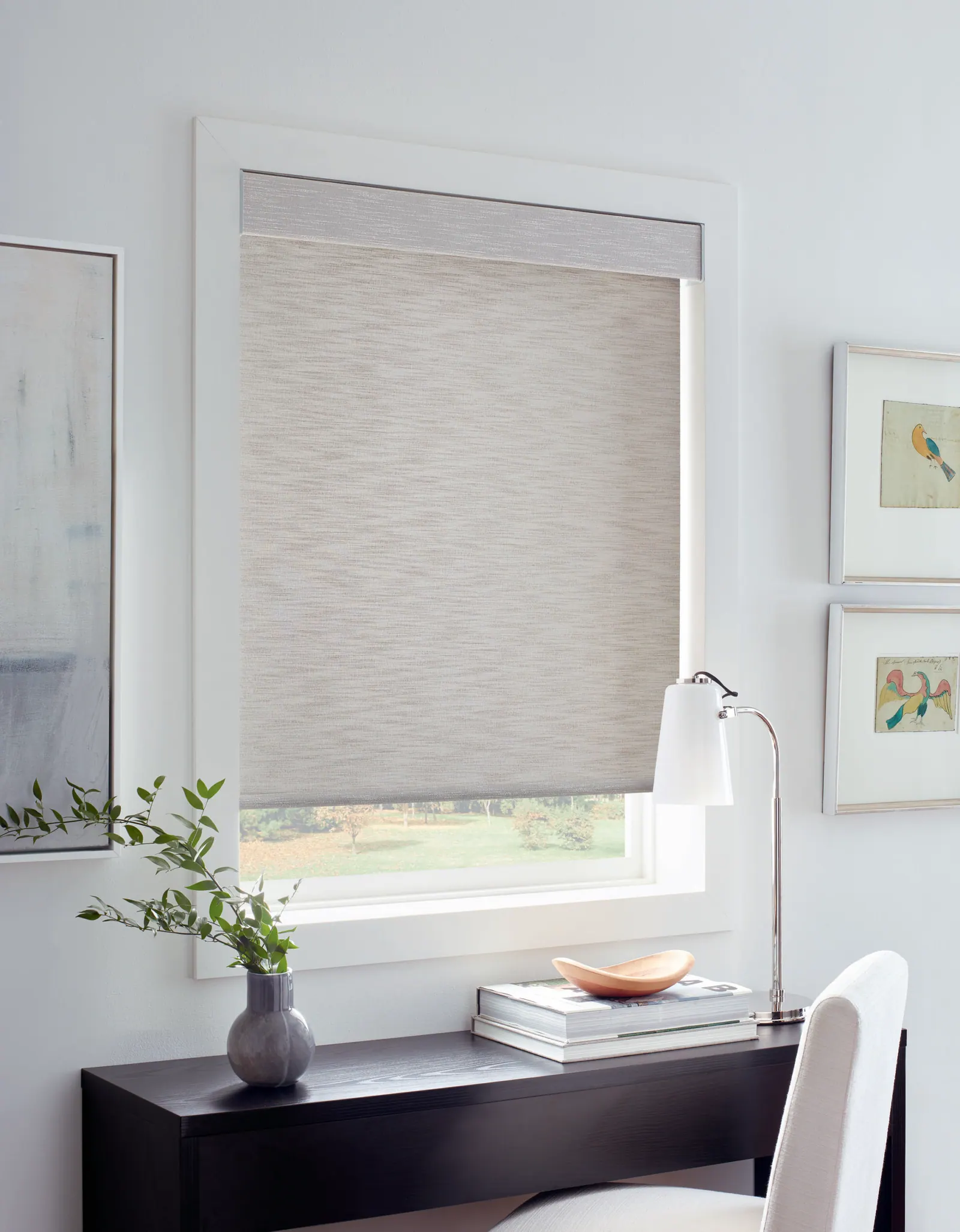
A cassette or fascia wraps the roll in a headrail. It hides the mechanism, gives a clean horizontal line across the top, and can be fabric-wrapped to match the shade. On a run of several windows in one room, a cassette makes the whole wall look intentional in a way that exposed rolls do not.
There is also a functional argument for the cassette on blackout shades: paired with side channels, it closes the light gap at the top, which is where most of the leak comes from.
Reverse roll and why it matters here
Fabric can come off the front of the tube or the back. Standard roll brings the fabric down the back, closest to the glass. Reverse roll brings it down the front, leaving a gap between fabric and glass.
Reverse roll is what you want when the window has a deep sill, a crank handle, or an obstruction the fabric would otherwise catch on: casement windows with cranks are common in Colorado Springs homes built through the 1990s and 2000s, and a standard roll will foul the handle every time.
Standard roll is what you want for light control, because the fabric sits tighter to the glass and leaks less at the edges. We specify per window rather than per order.
Fabric choice at altitude
Roller shade fabric takes the full force of the sun with nothing in front of it, which makes fabric selection more consequential here than in most markets. We steer high-exposure windows toward solution-dyed acrylics and vinyl-coated polyesters, where pigment is locked into the fibre rather than printed on it.
For south and west windows we also talk about openness factor, the percentage of the weave that is open. A 3% openness fabric cuts most glare while still giving a usable view; a 10% fabric preserves more view and blocks less. Below 1% you are into blackout territory, where nothing passes.
If your priority is protecting furniture and floors, note that even a light-filtering roller blocks the large majority of UV. Colorado Springs sun will fade a hardwood floor and a leather sofa faster than most homeowners expect, and a shade on the offending window is far cheaper than refinishing.
Motorising a roller shade
Roller shades are the easiest product to motorise well, because a single tube and a single fabric plane is exactly what a tubular motor is designed to drive. Battery motors fit inside the tube and recharge every year or two; hardwired motors are worth planning if you are still at the framing stage of a build.
The case for motorising is strongest on tall windows, on wide runs where you would otherwise be operating six shades individually, and on west-facing glass where the point is to close them before the afternoon heat arrives rather than after. Scheduled operation is genuinely useful in this climate, a shade that closes itself at 2pm in July does real work on your cooling bill.
See motorization for the full picture on motors, remotes and app control.
Common questions
- Are roller shades good for blocking heat?
- Yes for solar heat gain, which is the dominant issue in Colorado Springs. A light-coloured roller on a west window reflects a large share of the incoming solar energy before it becomes heat in the room. For winter heat retention a honeycomb shade insulates better, because trapped air is a better insulator than a single fabric layer.
- Can roller shades be truly blackout?
- The fabric can be fully opaque, but light will still leak around the edges unless you address them. For genuine blackout you want an outside mount with generous overlap, or an inside mount with side channels and a cassette. If a nursery or a shift worker's bedroom is the application, specify the channels, a blackout fabric alone will disappoint.
- How do I clean roller shades?
- Lower the shade fully and dust it with a vacuum brush attachment or a dry microfibre cloth, working top to bottom. Most vinyl and solution-dyed fabrics tolerate a barely damp cloth for spots; let it dry fully extended before rolling it back up. Our detailed guide is at [How to Clean Roller Shades](/how-to-clean-roller-shades/).
- What is the widest roller shade you can make?
- It depends on the fabric and tube, but wide shades eventually risk fabric deflection and a heavy roll. Past that point we split the opening into two shades on a shared headrail, which operates as a pair and still reads as a single clean line across the window. We show you exactly where the split falls before you commit.
- Do roller shades work on skylights or angled windows?
- On skylights yes, with a tensioned track system that holds the fabric against gravity. This is a specialist install and we quote it individually. On angled or rake-top windows a roller is generally not the right product, because the roll has to be square to the tube; shutters or a fixed panel usually suit those openings better.