Four materials and how to pick between them
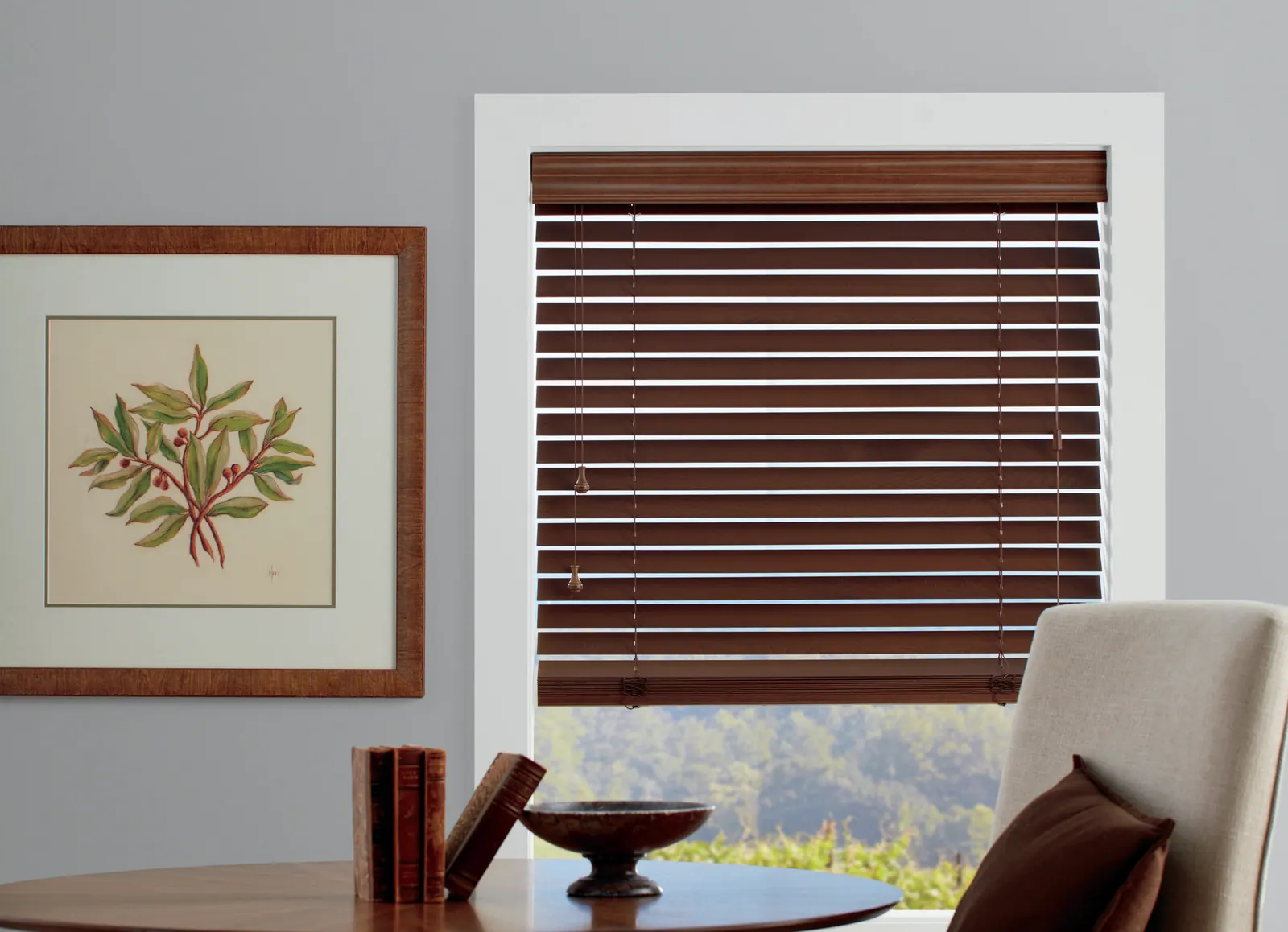
- [Real wood](/window-treatments/window-blinds-company/wood-blinds/): the warmest look, the lightest weight, and the only option that takes a genuine stain. Best in living rooms, bedrooms and studies. Not for bathrooms.
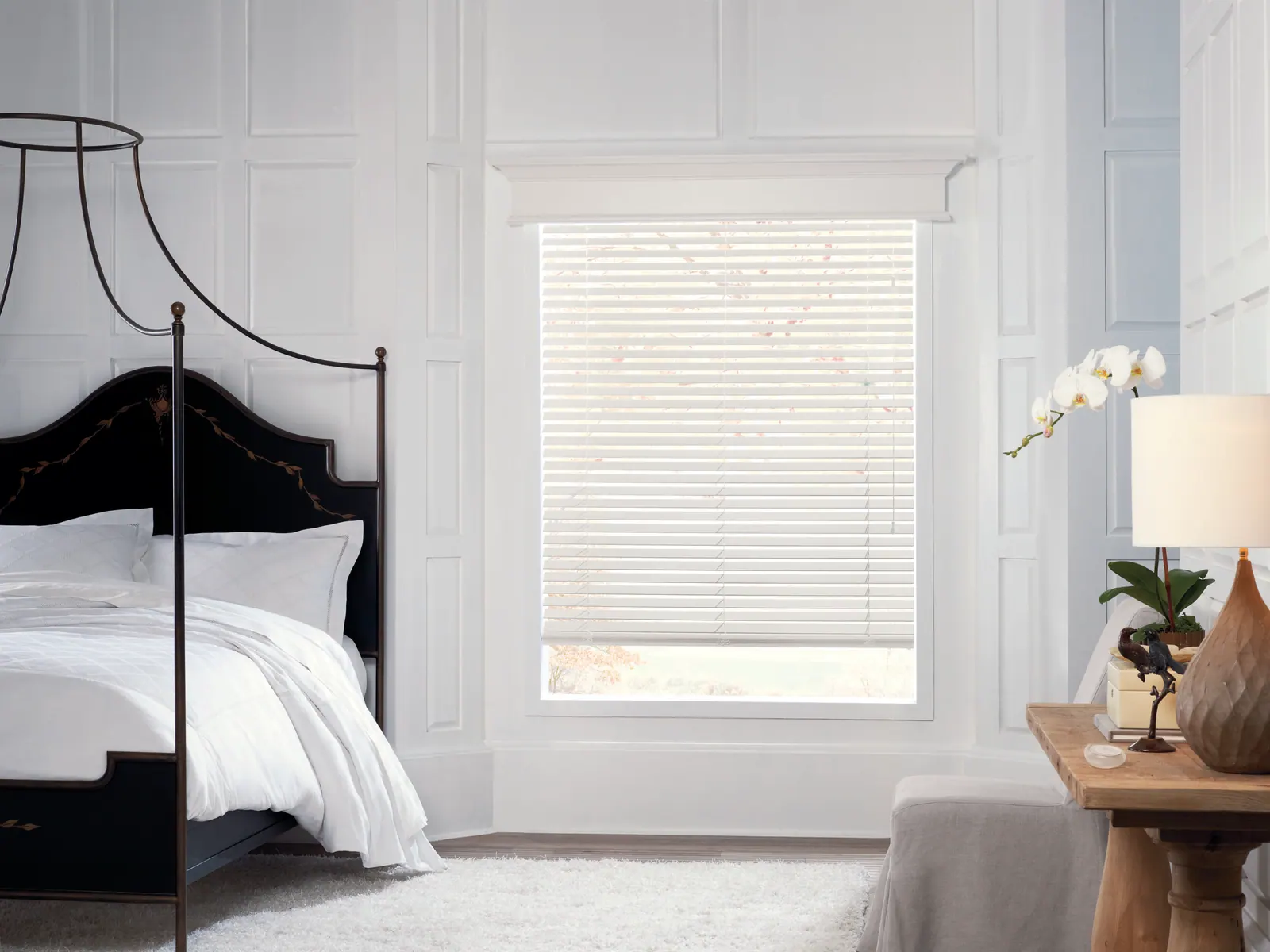
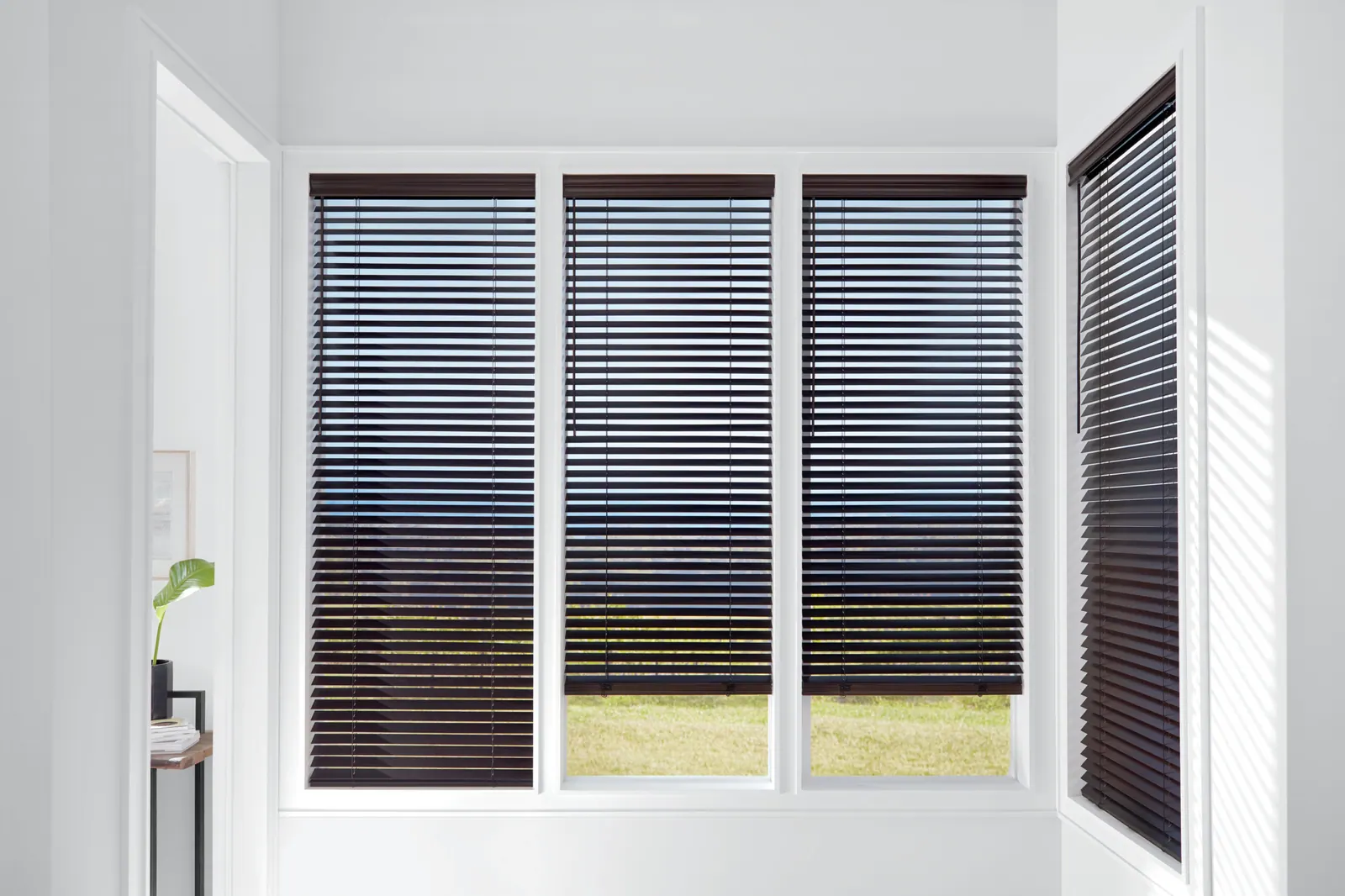
- [Faux wood](/window-treatments/window-blinds-company/faux-wood-blinds/), a composite that looks like painted wood and ignores moisture entirely. The workhorse of the category, and the right answer for most Colorado Springs homes.
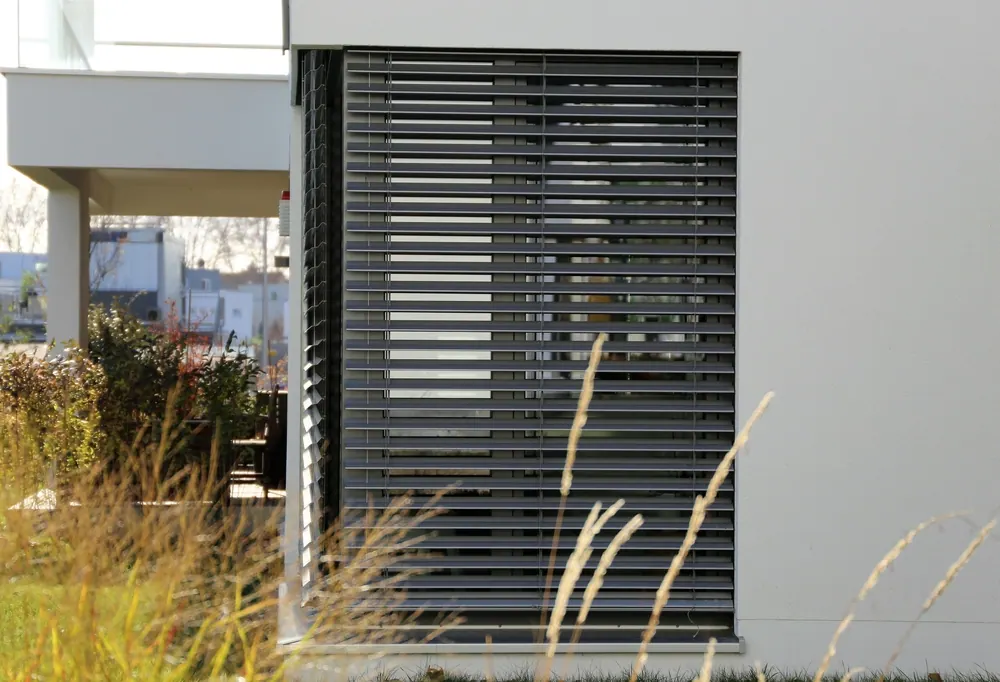
- [Aluminum](/aluminum-blinds/): thin metal slats, the slimmest profile available, and the most heat-reflective. Contemporary, durable, and inexpensive.
- [Mini blinds](/window-treatments/mini-blinds/), one-inch aluminum slats. The most economical window covering that still works properly, and a sensible choice for rentals, basements, garages and utility spaces.
Roughly speaking: choose real wood when the room is a showpiece, faux wood when it needs to survive, aluminum when you want minimal, and mini blinds when you want inexpensive.
Slat size changes everything
The width of the slat is as consequential as the material, and it is where most people default without thinking.
One inch is the classic mini blind slat. It gives the tightest closure and the most privacy, and it is available in aluminum and in some composites. It reads as functional rather than decorative.
Two inch is the most common size for wood and faux wood, and it is the sensible default. Enough presence to look substantial, enough slats to close down tightly.
Two and a half inch gives the widest view when open and the fewest horizontal lines across the glass. It suits large windows and contemporary rooms, and it is what we specify when the window frames a view. It stacks deeper at the top when raised, which is worth knowing on a short window.
Wider slats also mean fewer of them, which means less dusting, a small practical advantage that matters more than people expect.
Why blinds still make sense in the age of shades
Shades have taken a lot of market share, and there are windows where a roller or a cellular shade is clearly the better product. But the tilt function remains genuinely useful, and it is the reason blinds have not gone anywhere.
Consider a home office with a west-facing window. A roller shade gives you two useful states: up and down. Up means glare on your monitor from two o'clock onward; down means you have shut out the daylight and are working under lamps. A blind gives you a third state: slats tilted up, direct sun blocked, ceiling-bounced daylight filling the room, and the screen readable. That third state is the whole argument.
The same logic applies to kitchens, where you want light on the counter but not in your eyes, and to any room used through the whole arc of the day.
Cordless, and what to do about tall windows
Every blind we sell is cordless as standard. There is no cord loop, no cleat, and nothing hanging within reach of a child or a pet. You lift the bottom rail by hand and it holds anywhere; the tilt is operated by a wand.
For windows out of comfortable reach (stairwell landings, clerestories above a great room, anything over about eight feet) the options are an extension wand, a motorised tilt, or full motorisation of both lift and tilt. A blind that is awkward to reach is a blind that gets left in one position forever, which defeats the point of buying an adjustable product.
How we measure and install
Every opening is measured at three points across the width and three down the height. Windows are rarely perfectly square (in older Colorado Springs homes they are frequently a quarter inch out or more) and a blind cut to the widest measurement will not fit while one cut to the narrowest leaves a gap.
We also check the things that cause installation-day surprises: frame depth for an inside mount, window cranks and handles, alarm contacts, tile or stone returns, and drywall-wrapped openings with no casing to screw into. Anything that needs a different mount or a build-out gets identified at consultation, not on the day.
Installation is professional and, for most whole-home projects, finished in a single day.
Common questions
- How much do custom blinds cost in Colorado Springs?
- It spans a wide range. Aluminum mini blinds on a standard window are among the least expensive window coverings available; premium stained hardwood blinds on a large opening cost several times that. Faux wood sits in between and is where most of our volume lands. We quote per window after measuring, with a line-item breakdown rather than a single total, so you can see where the money is going and adjust room by room.
- How long do blinds last?
- Eight to twenty years depending on material and exposure. Aluminum and faux wood in a moderate exposure last a long time; anything in a full west-facing window works harder. The usual failure is the tilt mechanism or the lift, not the slats, and both are often repairable. More at [How Long Are Blinds Supposed to Last?](/how-long-are-blinds-supposed-to-last/)
- What is the difference between blinds and shades?
- Blinds have individual slats that tilt, so you control the angle of light. Shades are a continuous piece of material that raises and lowers, so you control how much of the window is covered. Blinds give finer light control; shades give a cleaner appearance and, in the case of cellular shades, far better insulation.
- Can blinds be repaired rather than replaced?
- Often, yes. Broken slats can be swapped, tilt mechanisms and lift cords can be replaced, and a restring is usually far cheaper than a new blind. It is worth asking before you replace, bring us a photo and we will tell you honestly whether it is worth repairing.
- Do you install blinds in new construction?
- Regularly. We work with homeowners and builders across the northern Colorado Springs developments and can measure from plans at rough-in, then confirm on site before ordering. If you are building, talk to us before drywall if you want hardwired motorisation, running low-voltage at that stage is far easier than retrofitting.