
Higher, colder, windier
Monument sits around 7,000 feet, roughly a thousand feet above central Colorado Springs. That difference is not trivial. Winter nights run colder, the temperature differential across a pane of glass is larger, and heating costs are correspondingly higher.
It is the reason we specify more cellular honeycomb shades in Monument than almost anywhere else we work. The trapped-air insulation does more here because there is more heat trying to escape. On north-facing rooms and walk-out basements we routinely recommend double or triple cell rather than single.
The Monument Hill area is also genuinely windy. That matters for anything mounted outside (exterior solar screens need robust housings and tracks here) and it matters for interior blinds at an open window, where a properly weighted bottom rail is the difference between a treatment that hangs still and one that rattles all afternoon.
The housing here favours shutters and big shades
Much of Monument's residential stock is newer custom and semi-custom homes on larger lots (Jackson Creek, Woodmoor, Kings Deer, Higby Estates) with the tall entries, vaulted great rooms and large view-oriented glass that came with that era of building.
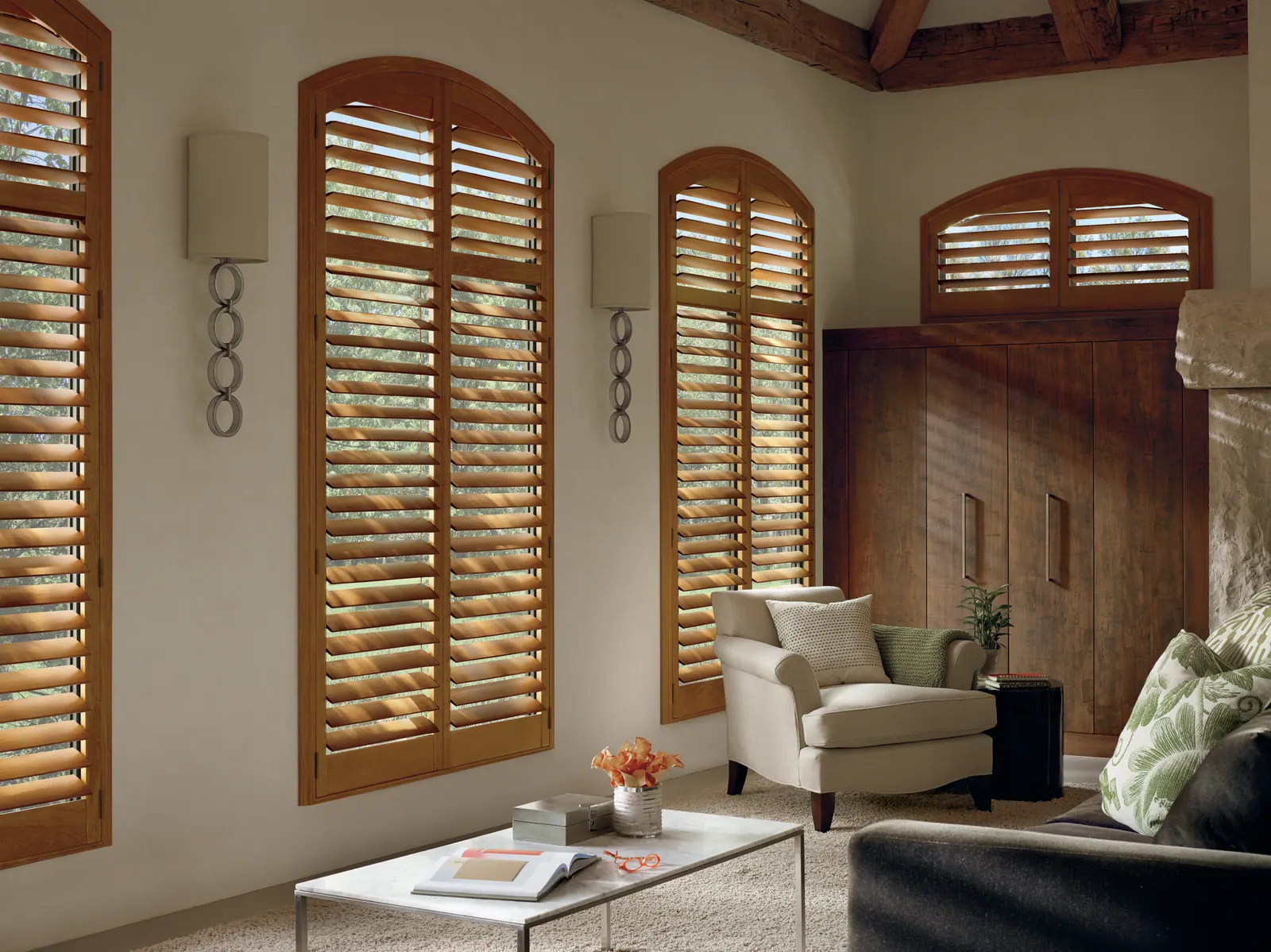
Two consequences. First, a lot of windows are simply out of reach, which puts motorisation on the table more often than it would be elsewhere. Second, many of these homes have deliberate view corridors toward Pikes Peak or the Palmer Divide, and the treatment choice needs to protect that view rather than fight it: wider louvers on shutters, and solar screens rather than opaque shades on the windows that matter.
The mature ponderosa and scrub oak on many Woodmoor lots also changes the calculation. A window shaded by trees has a very different sun problem from one on an open lot in Jackson Creek, and we specify per window rather than per house.
Fire-conscious material choices
Monument and the surrounding Palmer Divide have real wildfire exposure, and it comes up in consultations more than it used to. Interior window treatments are not a fire mitigation measure in any meaningful sense, but two related things are worth knowing.
Smoke seasons mean windows stay closed for weeks at a time, which makes interior air quality and easy-to-clean surfaces more relevant: composite and aluminum wipe down, fabric holds odour. And for homes with defensible-space landscaping that has removed shade trees, the sun load on the glass can increase substantially after mitigation work, which sometimes prompts a treatment upgrade on the newly exposed side of the house.
Where we work in Monument
Neighborhoods
Jackson Creek · Woodmoor · Kings Deer · Higby Estates · Red Rock Ranch · Monument Ridge · Sanctuary Pointe
ZIP codes served
80132 · 80921
What we install in Monument
Monument questions
- Do you charge extra to come out to Monument?
- No. Monument is inside our regular service area, and the in-home consultation is free with no travel charge. We schedule Monument appointments in blocks so we can offer you a tighter arrival window rather than a half-day range.
- How long does an installation in Monument take?
- Most whole-home installations are done in a single day. A few large windows or specialty shutters can run into a second visit, and we tell you which applies before you order rather than on the day.
- What is the lead time from measurement to installation?
- Typically two to four weeks for blinds and shades, and four to six weeks for custom shutters. Specialty shapes and stained hardwood run longer. You get a real date at the point of order.
- Which window treatments are best for Monument's elevation?
- Cellular honeycomb shades, more often than anywhere else we serve. At roughly 7,000 feet the winter heat loss through glass is greater than it is down in the city, and trapped-air insulation does proportionally more work. For view windows we pair that with solar screens rather than covering the view with something opaque.