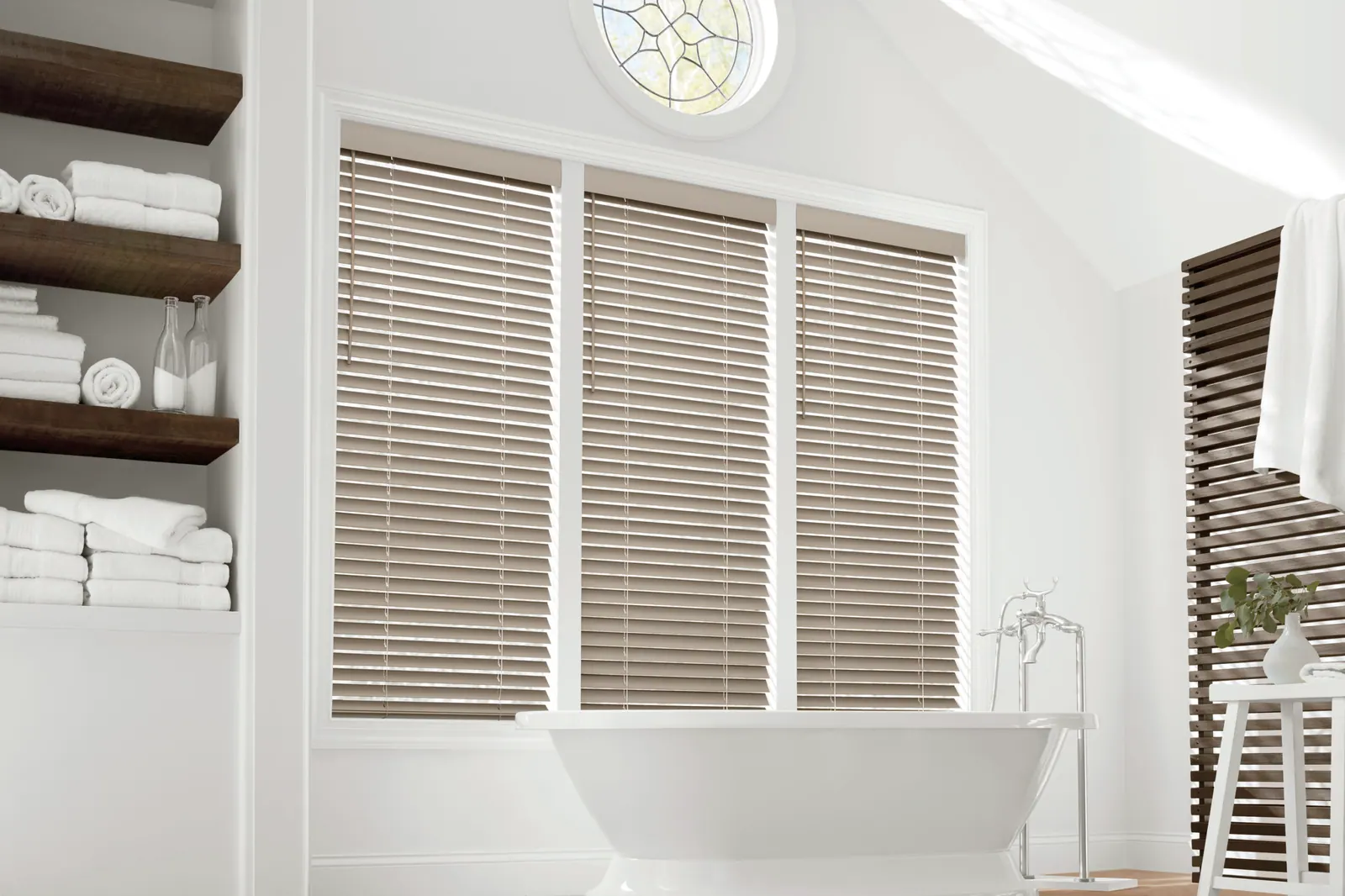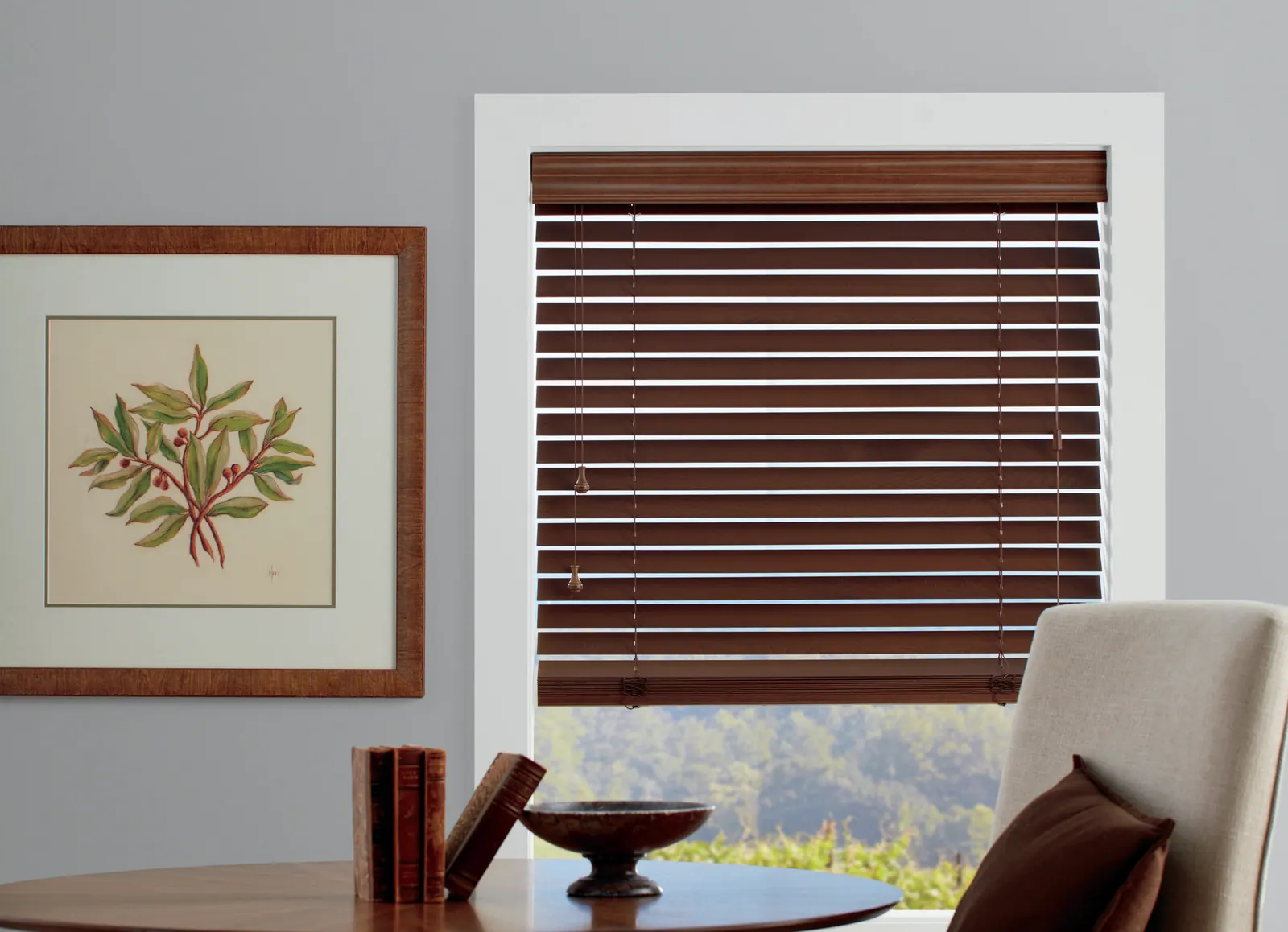
A wood blind does two independent things: it tilts and it lifts. Understanding that those are separate mechanisms explains almost everything about how blinds behave, what they cost, and what eventually goes wrong with them.
The tilt mechanism
Slats sit in a ladder: two parallel cords or fabric tapes connected by rungs, with one slat resting on each rung. When you rotate the tilt wand, a worm gear in the headrail shortens one side of the ladder and lengthens the other, which tips every rung and therefore every slat in unison.
This is why slats move together rather than individually, and why a blind with a damaged ladder has slats that hang at inconsistent angles. It is also why a wood blind can hold any angle you set, the gear does not spring back.
Cloth tapes are the decorative version of the same ladder. They hide the route holes down the front of the blind, block a little more light when closed, and give a more traditional appearance.
The lift mechanism
Lift is separate. Lift cords run from the bottom rail up through holes routed in each slat and over pulleys in the headrail. Pulling them gathers the slats into a stack at the top.
In a corded blind, a cord lock clamps the cords when you pull them sideways. In a cordless blind (which is what we sell, and now the industry standard) a spring mechanism in the headrail balances the weight of the slats, so the blind stays wherever you leave it with nothing hanging in the room.
Cordless is a genuine safety improvement, not a styling change. Corded lifts on window coverings were the subject of long-running child and pet safety concern, and the industry moved away from them deliberately.
Route holes and light gaps
The holes the lift cords pass through are called route holes, and they are the main reason a closed blind still lets light through, each hole is a small point of daylight.
Cheaper blinds have larger holes. Better ones minimise them, and routeless designs move the lift cords into the back edge of the slat entirely, eliminating the pinholes. If you are trying to darken a room, this detail matters more than the fabric or finish.
What actually fails
In our experience the slats almost never fail. What fails is:
- The tilt gear, usually from being forced past its stop. Rotating the wand hard when the louvers are already fully closed is what does it.
- Lift cords, which abrade where they pass through route holes over years of use.
- The ladder, if a slat is pulled or a pet pushes through it.
All three are repairable, and a restring is typically far cheaper than a new blind. It is worth asking before you replace, send a photo and we will tell you honestly whether it is worth fixing.
Common questions
- Why won't my blinds tilt anymore?
- Usually a stripped tilt gear in the headrail, most often caused by forcing the wand past its stop. The gear is replaceable without replacing the whole blind.
- Which way should blind slats face?
- Tilting the curved side up bounces light onto the ceiling and gives better privacy from the street, because someone looking up from outside sees the slat face. Tilting down directs light toward the floor and gives a clearer view out at eye level.
- How do cordless blinds hold their position?
- A spring mechanism in the headrail is calibrated to balance the weight of the slat stack, so the blind stays where you leave it. There is no cord lock and no hanging cord.