Aluminum is the most underrated material in the blind category, largely because people associate it with the flimsy one-inch blinds sold in hardware stores. A properly specified aluminum blind is a very different object, and for some windows it is straightforwardly the best answer.
It reflects heat rather than absorbing it
This is the benefit most people do not expect. Metal bounces radiant solar energy back out through the glass, rather than absorbing it and re-radiating it into the room the way a dark fabric does.
On a south or west window in Colorado Springs, where the sun is intense and afternoon heat gain is the dominant summer problem, a light-coloured aluminum blind does measurable work. It is not an insulator (metal conducts, so aluminum does nothing for winter heat retention) but for summer solar rejection it performs better than its price suggests.
It stacks smaller than anything else
An aluminum slat is a fraction of the thickness of wood or composite. Raised fully, an aluminum blind gathers into a bundle a couple of inches deep where a faux wood blind of the same size might take four or five.
On a short window that difference is significant. Basement hoppers, transoms, half-height bathroom windows and the small high windows common in laundry rooms all lose a meaningful share of their glass to a thick stack. Aluminum preserves it.
It is completely indifferent to moisture
No grain to swell, no finish to lift, no substrate to absorb water. Aluminum blinds can be wiped with a damp cloth without any care at all, and for a really dirty blind they can be taken down and washed, which is not an option with wood.
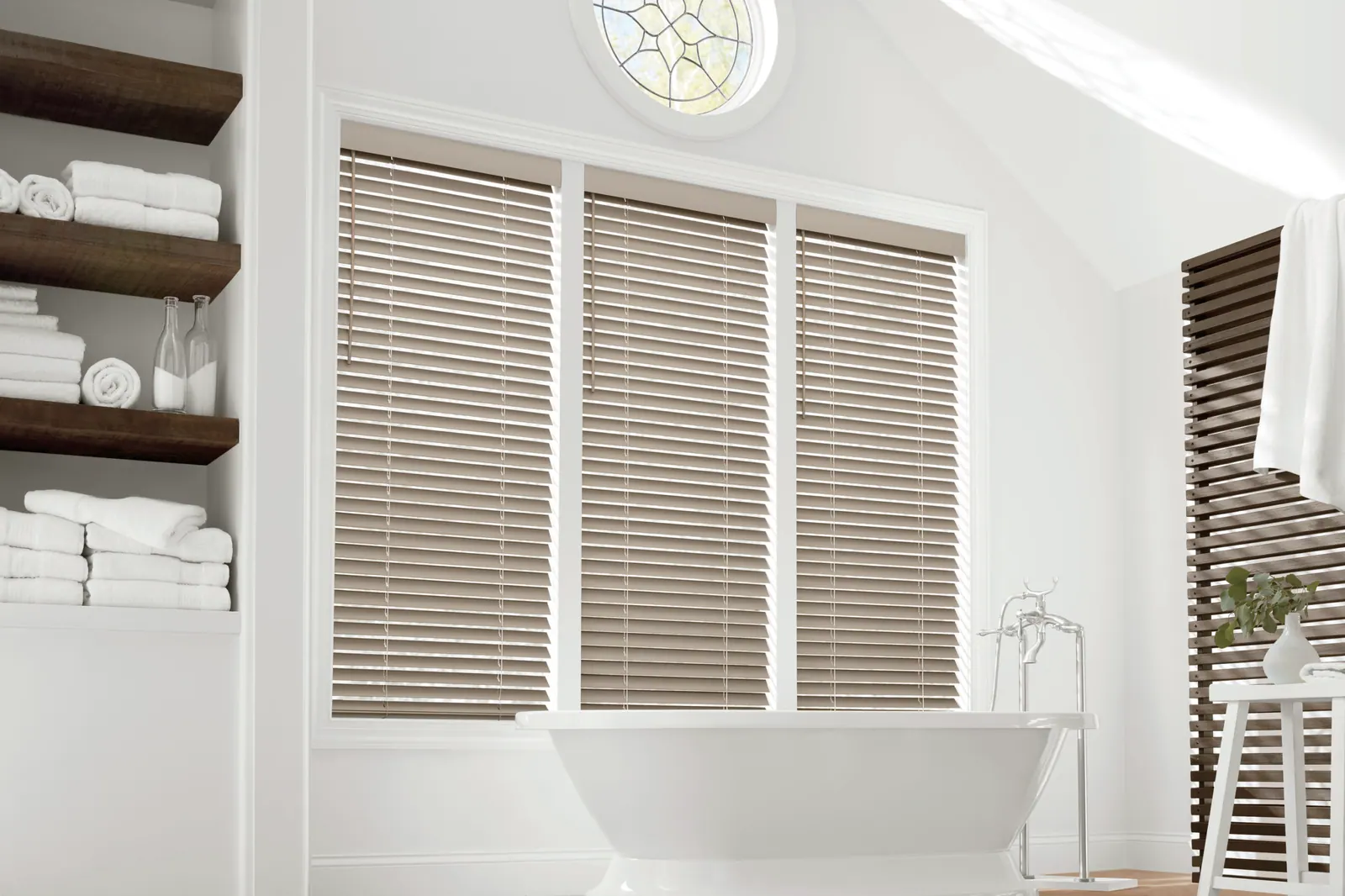
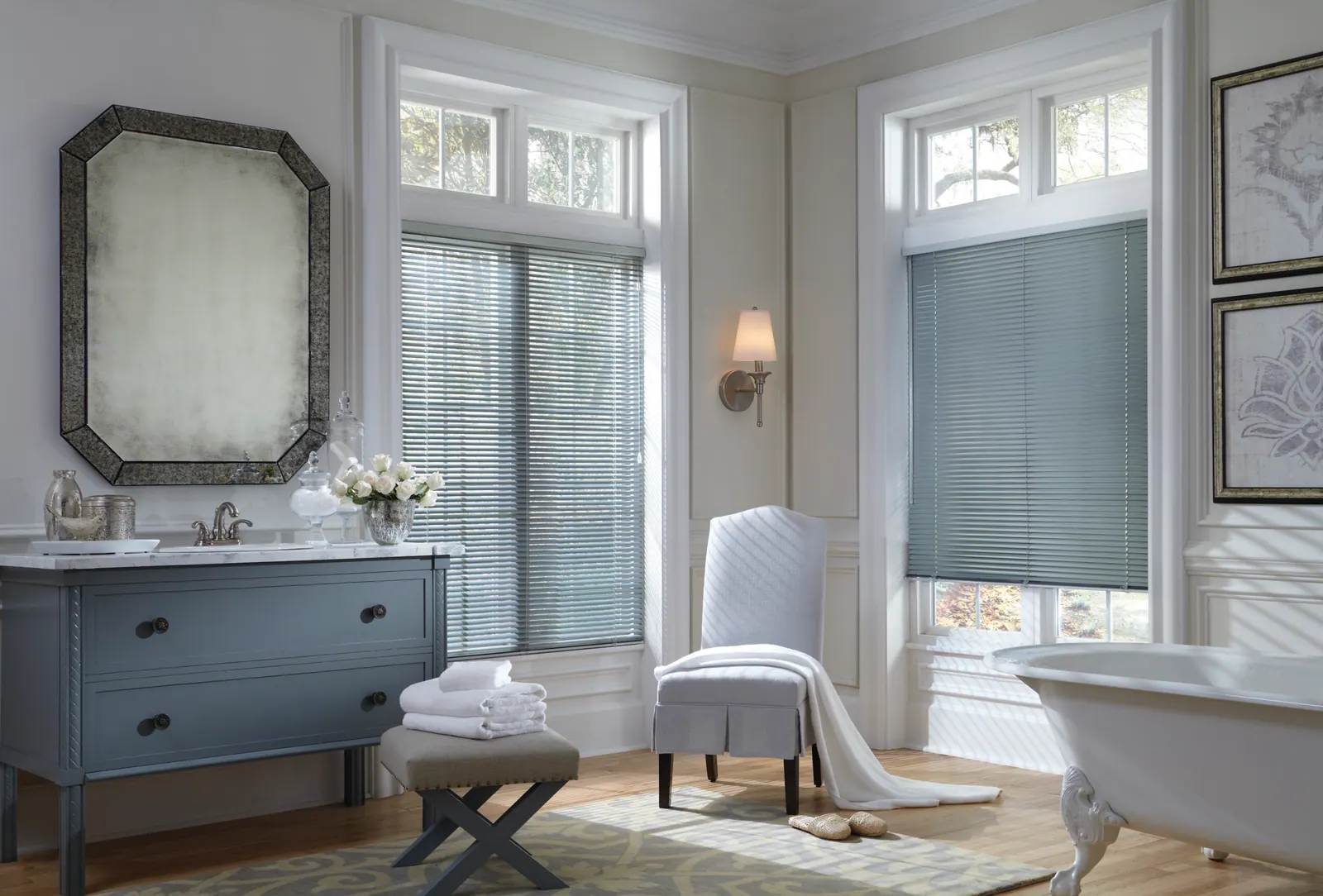
This makes them one of the best bathroom and laundry room options available, and a sensible choice for rentals where turnover cleaning matters.
The colour range is genuinely wide
Aluminum takes finish well, so this is the only material in the category available in true metallics, deep matte blacks and saturated colours alongside the standard whites.
A matte black two-inch aluminum blind in a modern room with black-framed windows looks sharp and costs a fraction of what a designer shade would. Because the product is inexpensive, it is a low-risk place to make an interesting choice.
One caveat: darker colours absorb more solar heat than light ones. On a south or west window, white or light metallic performs better against heat gain however good the black looks.
Where to choose something else
Formal or traditional rooms: metal can read cold against warm woodwork. Wood blinds or shutters suit better.
Cold rooms: aluminum conducts heat and provides essentially no insulation. A cellular honeycomb shade is the answer.
Windows with a view: one-inch slats put a lot of horizontal lines across the glass. A wider slat or a solar screen preserves far more of what you are looking at.
Anywhere a pet or child pushes at the window: thin slats crease permanently. Specify a heavier gauge, or choose a different product.
Common questions
- Are aluminum blinds durable?
- The material is. It does not warp, rot, fade or absorb moisture. The vulnerability is bending: a thin slat creases permanently if something pushes through it. Specifying a heavier gauge alloy largely solves this, and it is the main difference between a custom aluminum blind and a hardware store one.
- Do aluminum blinds rattle?
- They can at an open window in a breeze, which is the one genuine complaint. A properly weighted bottom rail reduces it considerably, and hold-down brackets fixed to the sill eliminate it entirely.
- Are aluminum blinds and mini blinds the same thing?
- Mini blinds are aluminum blinds with one-inch slats, the term describes the size, not a different material. Aluminum is also made in two-inch slats, which look considerably more substantial.