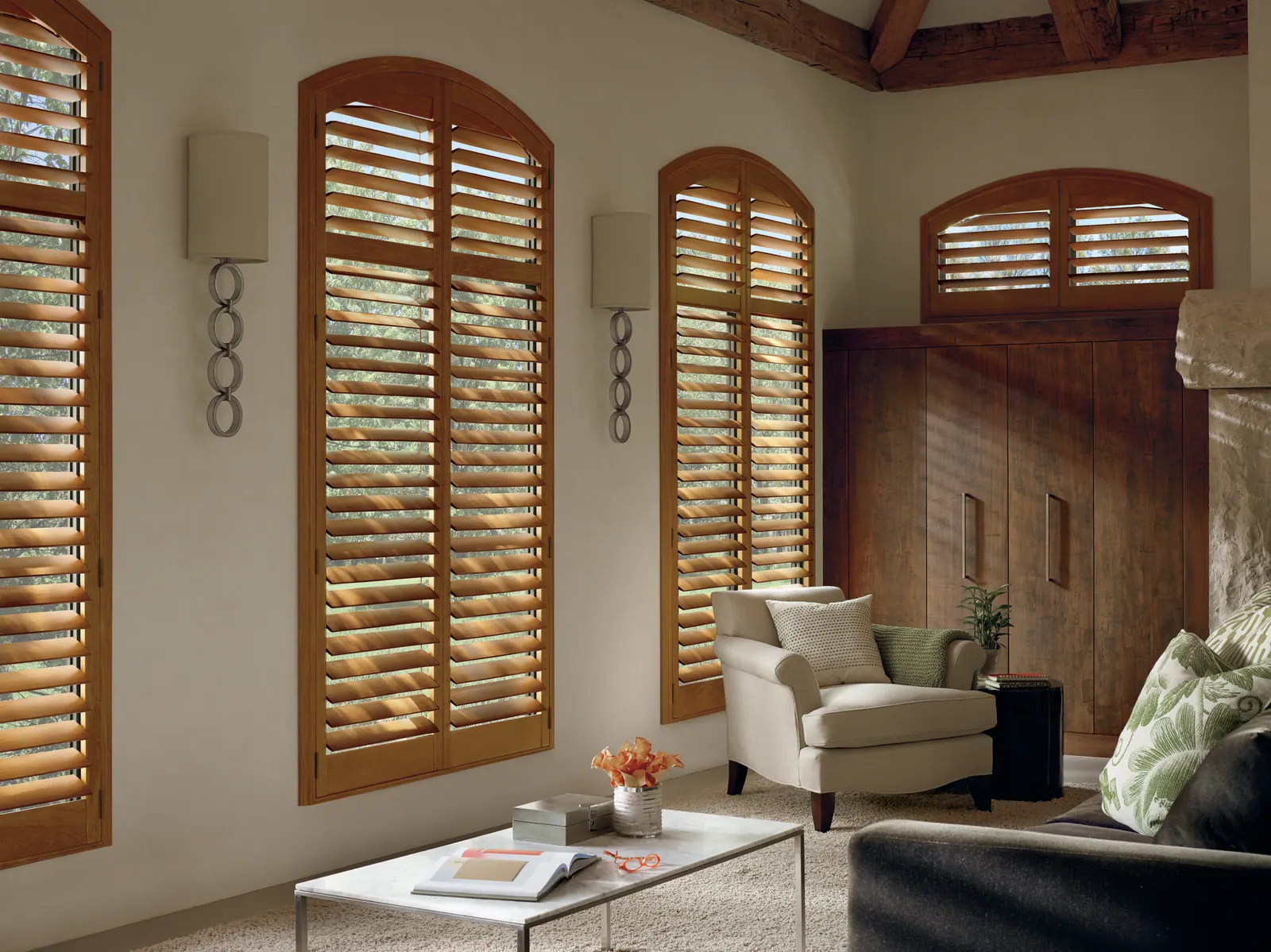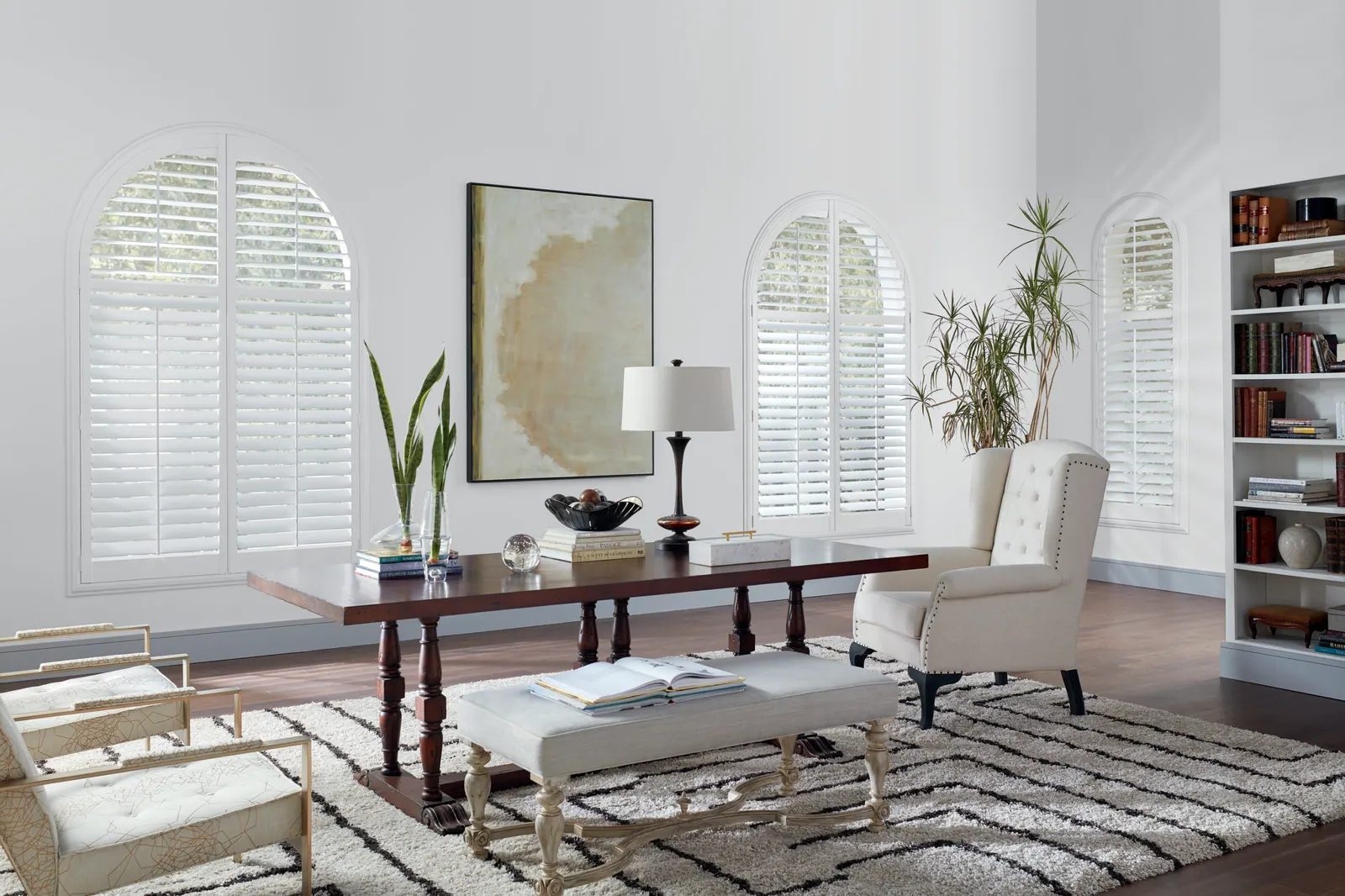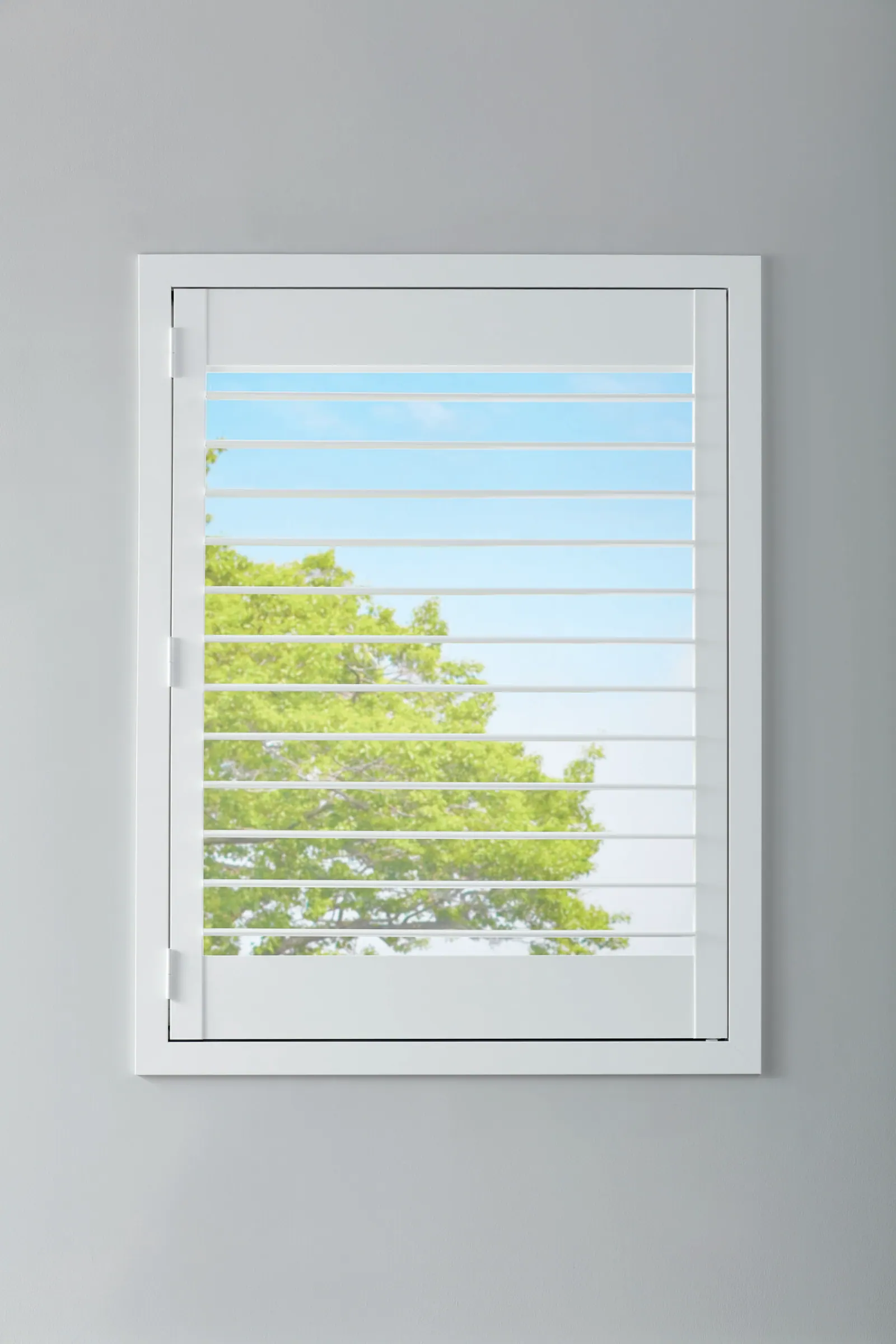
A composite shutter is built from an engineered wood core encased in a hard polymer coating. From a step away it looks like a painted hardwood shutter. In a bathroom or a west-facing window, it substantially outperforms one.
Composite is not vinyl
The terminology in this category is loose, so it is worth being precise. A composite shutter has a dense engineered wood substrate (considerably heavier and more stable than solid softwood) with a seamless polymer skin bonded over it.
Hollow vinyl shutters are a different and cheaper product. They have no wood core, they sag on wide spans, and they are what people are describing when they say composite shutters look like plastic. If a quote seems unusually low, this is usually why.
The polymer skin is where the performance comes from. It is UV-stabilised so it does not yellow, non-porous so moisture cannot penetrate, and applied to the component rather than painted on afterwards, so there is no film to chip off an edge.
Where composite clearly wins
Bathrooms. A shower puts warm saturated air against the window several times a day. Hardwood eventually swells at the joints and lifts paint at the bottom rail. Composite does neither. This is not a close call.
West and south-facing windows. UV intensity rises roughly 4% per 1,000 feet of elevation, so a Colorado Springs west window at 6,035 feet takes a genuine beating. That heat and UV combination is what bows a wood louver, the sun-facing side dries and shrinks faster than the shaded side. Composite has no grain to move.
HOA-governed exteriors. Most newer Colorado Springs developments require white or neutral coverings as seen from the street. Composite ships in exactly those colours and holds them, which is what eventually puts an ageing vinyl blind out of compliance.
Where it has real limits
- No stain. Composite comes in painted finishes only. If you want a genuine stained finish showing grain, you want hardwood.
- Weight. Composite is denser than basswood, so panels can only get so wide before needing a divider rail or extra mullion post.
- Specialty shapes. Arches, eyebrows and circles are generally built in hardwood. Composite handles rectangles and simple angles well.
For most homes none of these bite, because most people want white shutters on rectangular windows, exactly what composite does best.
The hidden tilt upgrade
Composite is usually specified white, and a white panel with a white tilt rod down the centre has a strong vertical line through it. Moving the mechanism into the side stile, a hidden tilt, leaves the face uninterrupted and makes a modest window look larger.
It is the upgrade we recommend most often, and it costs less than moving from composite to hardwood. If you are deciding where to spend on a shutter project, hidden tilt on composite usually delivers more visible improvement per dollar than the material upgrade does.
Common questions
- Are composite shutters as good as wood?
- For painted finishes on rectangular windows, they perform better: moisture-proof, warp-resistant and less expensive. Wood wins on stained finishes, very wide panels and specialty shapes. They are different tools rather than better and worse.
- Will composite shutters turn yellow?
- Quality composite has a UV-stabilised finish that holds its colour. Untreated white vinyl does yellow, which is the most common complaint about bargain shutters and the main reason to check what you are actually being quoted.
- Can composite shutters be used on patio doors?
- Yes, on bypass or bi-fold tracks, provided panel widths stay within span limits. Because composite is heavier than basswood, wide door openings sometimes need an extra panel division.