This is the decision most shutter projects come down to, and the honest answer is that neither material wins outright. They fail in different places, and the right choice depends on which failure mode your window is likely to trigger.
The short version
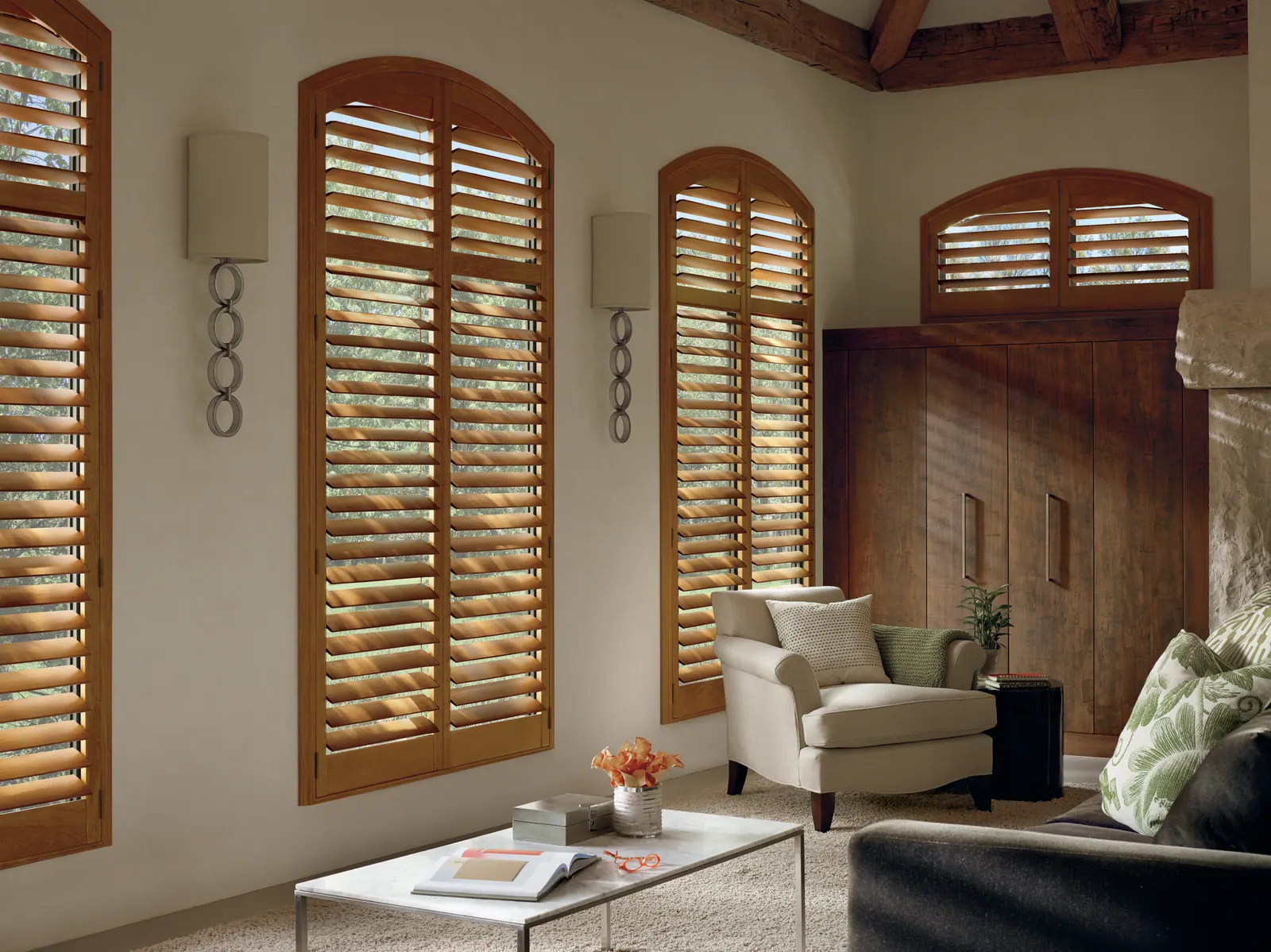
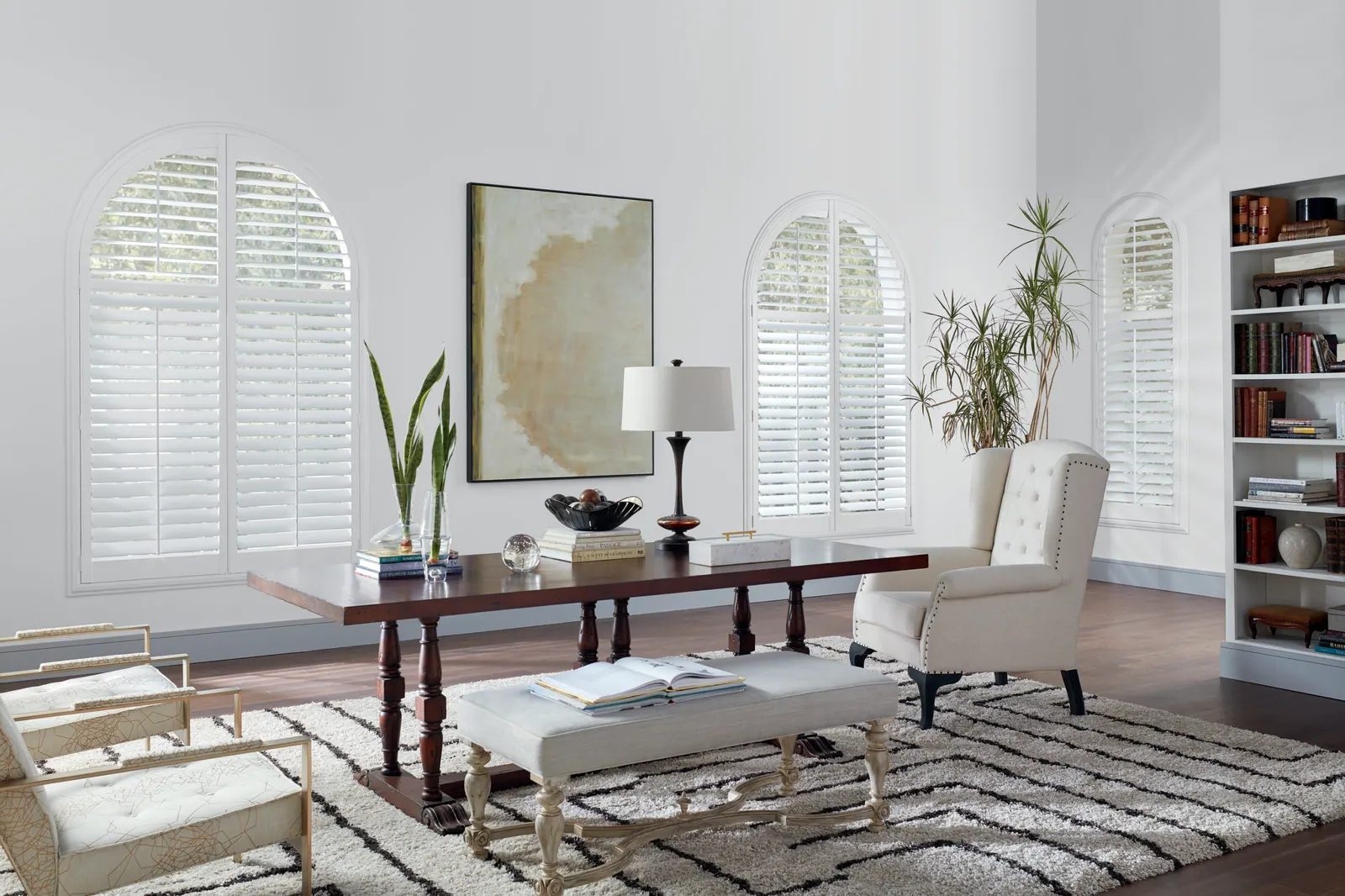
Choose hardwood if the finish will be stained, if the panels are very wide, or if the window is arched, angled or otherwise not a rectangle.
Choose composite if the finish will be painted white or a neutral, if the room gets wet, or if the window takes hard afternoon sun.
In practice that means most bathrooms, kitchens and west-facing rooms get composite, and most stained-trim living rooms and specialty windows get hardwood. Roughly half our installations are each.
Durability in a dry, high-UV climate
This is where Colorado changes the calculation relative to most of the country. Winter humidity here regularly sits below 20%, then monsoon moisture arrives in July. Wood moves through that cycle. Kiln-dried basswood with finger-jointed stiles moves considerably less than cheaper species, which is why quality shutters are built that way. But it still moves.
Composite does not move, because there is no grain. It also does not care about the UV load, which at 6,035 feet is roughly a quarter more intense than at sea level.
Where this shows up in practice: a hardwood louver on a west-facing window can bow over several summers as the sun-facing face dries faster than the shaded face. A bowed louver never closes flat again. We have replaced enough of them to specify composite on hard western exposures as a default.
Appearance
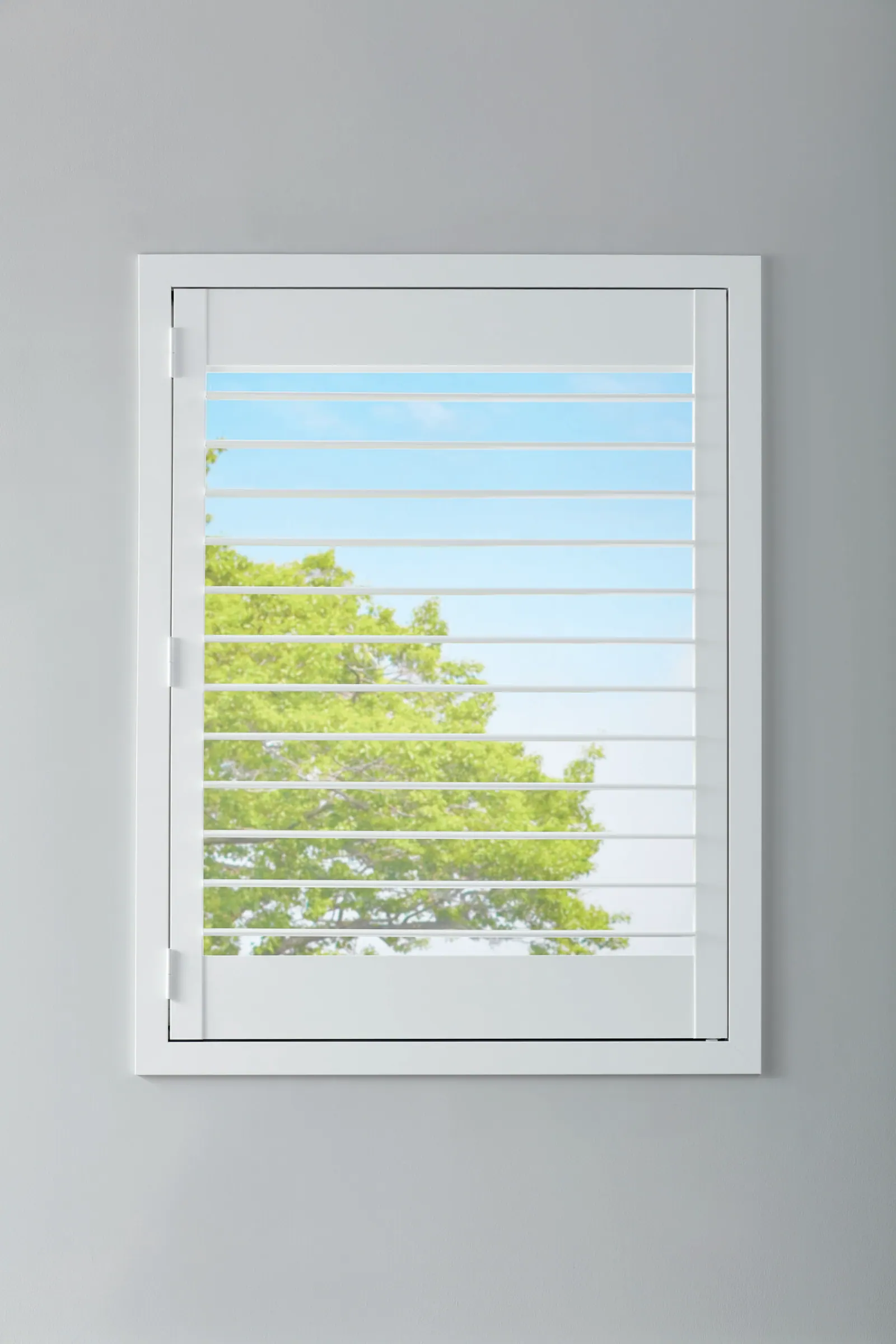
Painted white, the two are difficult to tell apart at conversational distance. Up close, hardwood has a slightly finer edge and a smoother finish, and it is lighter in the hand.
Stained is where they diverge completely. Composite woodgrain coatings have improved but they do not read as real wood to anyone paying attention. If you have alder or knotty pine trim you want matched, hardwood is the only option. And it can be custom matched to a physical sample of your casing.
Cost and weight
Composite typically runs 15–25% less than hardwood in the same configuration. On a whole-home project that difference is substantial enough to fund upgrades elsewhere: hidden tilt across every panel, for instance, or better treatments in the rooms that matter most.
Weight runs the other way. Basswood is lighter, so a hardwood panel can span wider before it needs a divider rail or a mullion post. On a very wide great room window that can mean one fewer vertical interruption across the glass, which is worth having.
A sensible strategy
Rather than choosing one material for the whole house, specify per room. Composite in the bathrooms, the laundry, the kitchen and anything facing west. Hardwood in the stained-trim rooms, the specialty windows and the wide spans.
That is what we quote by default, and it usually costs less than an all-hardwood job while performing better than an all-composite one.
Common questions
- Which lasts longer, wood or composite shutters?
- In a dry, climate-controlled room they are comparable, both are 20-plus year products. In a bathroom or on a hard west-facing window, composite lasts considerably longer because moisture and UV are what degrade wood.
- Is composite cheaper than wood?
- Typically 15–25% less in the same configuration. The gap widens on larger openings and narrows on small ones.
- Can you mix wood and composite shutters in one house?
- Yes, and we recommend it. Painted white in both materials looks near-identical from across a room, so you can put composite in the wet and sunny rooms and hardwood where you need stain or wide spans without any visual inconsistency.