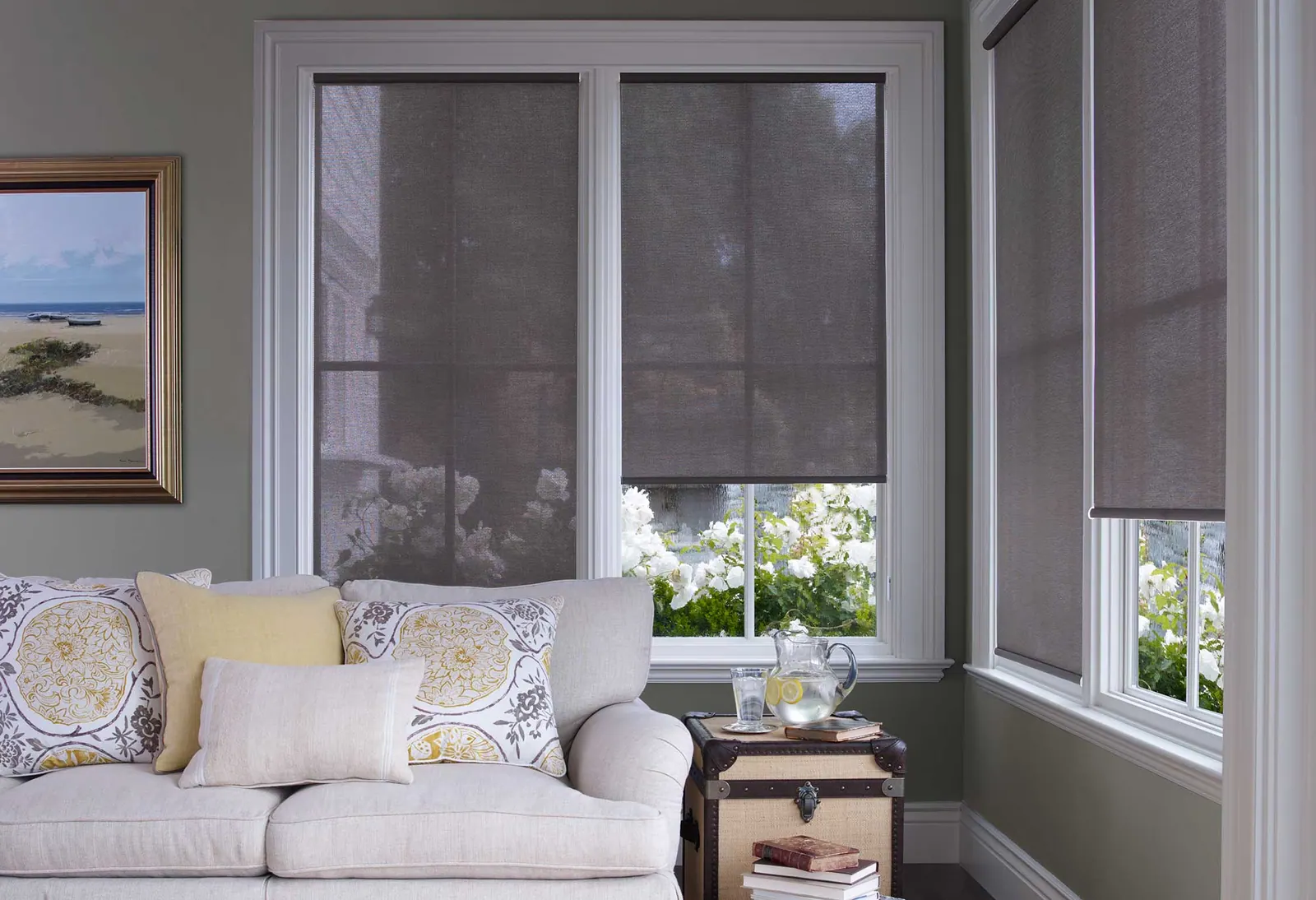
A solar screen is a roller shade made from an open-weave mesh instead of a solid fabric. It cuts glare, heat and ultraviolet light while you carry on seeing through it, which makes it the answer for windows where a conventional shade would solve one problem by creating another.
Openness factor is the whole decision
Solar screen mesh is specified by openness, the percentage of the weave that is open space rather than yarn.
- 1%: very tight. Maximum glare and heat control, minimum view. For west windows where the sun is genuinely punishing.
- 3%, the most-specified option and a sensible default. Blocks most glare and UV while leaving a clearly usable view.
- 5%: brighter and more open, with less glare control. Good for north and east exposures.
- 10% and 14%: maximum view, modest sun control. For windows where the view is everything.
Colour matters as much as openness. Darker mesh gives a better view out and better glare control, because the yarn absorbs light rather than scattering it into haze. Charcoal and bronze are what we specify most often; white looks good from the street and disappointing from inside.
Interior or exterior mounting
This is a genuine performance difference rather than a preference.
An interior screen hangs inside the glass. It cuts glare and UV effectively and is the easier, cheaper installation. But by the time sunlight reaches it, it has already passed through the window and become heat inside the room.
An exterior screen mounts outside and stops solar energy before it enters the building. For heat control specifically this is dramatically more effective, the difference between shading a window and shading a room. On a west-facing great room it can make a several-degree difference on an August afternoon.
The trade-offs are real: exterior screens face weather including Colorado hail, need robust housings and tracks, and cost more.
What solar screens do not do
No night-time privacy. During the day, when it is brighter outside than in, a solar screen reads as opaque from outside and transparent from inside. After dark with your lights on, that reverses completely. Plan for it on any ground-floor or street-facing window.
No insulation. The weave is open by design; there is no trapped air. For winter heat retention you want cellular shades.
No darkening. Even a 1% screen passes light. They are not a bedroom product.
The configuration we most often install on a serious view window is a solar screen for daytime plus a blackout roller on a second bracket for night: two shades, one window, each doing what it is good at.
Why they suit Colorado particularly well
Three local conditions push this product up the list. Elevation: UV intensity rises roughly 4% per 1,000 feet, so interiors here fade faster than most of the country experiences. Sun days, more than 300 a year, with no cloudy season to give your floors a rest. And views worth keeping: a very large share of homes here have an intentional view of Pikes Peak or the Front Range, and any product that blocks it to solve the sun problem has traded one problem for another.
Common questions
- Can you see through solar screens from outside?
- During daylight, largely not, from outside you mostly see the mesh. At night with interior lights on the relationship reverses and you can see in clearly. This catches people out regularly.
- Do solar screens reduce air conditioning costs?
- Exterior-mounted screens do so significantly, because they stop solar energy before it enters the building. Interior screens help with glare and UV but much less with temperature, since the heat is already inside by the time light reaches them.
- What openness percentage should I choose?
- 3% suits most Colorado Springs view windows. Drop to 1% if the window faces due west and the glare is painful; move up to 5% or 10% on north and east windows where you want the view more than the protection.