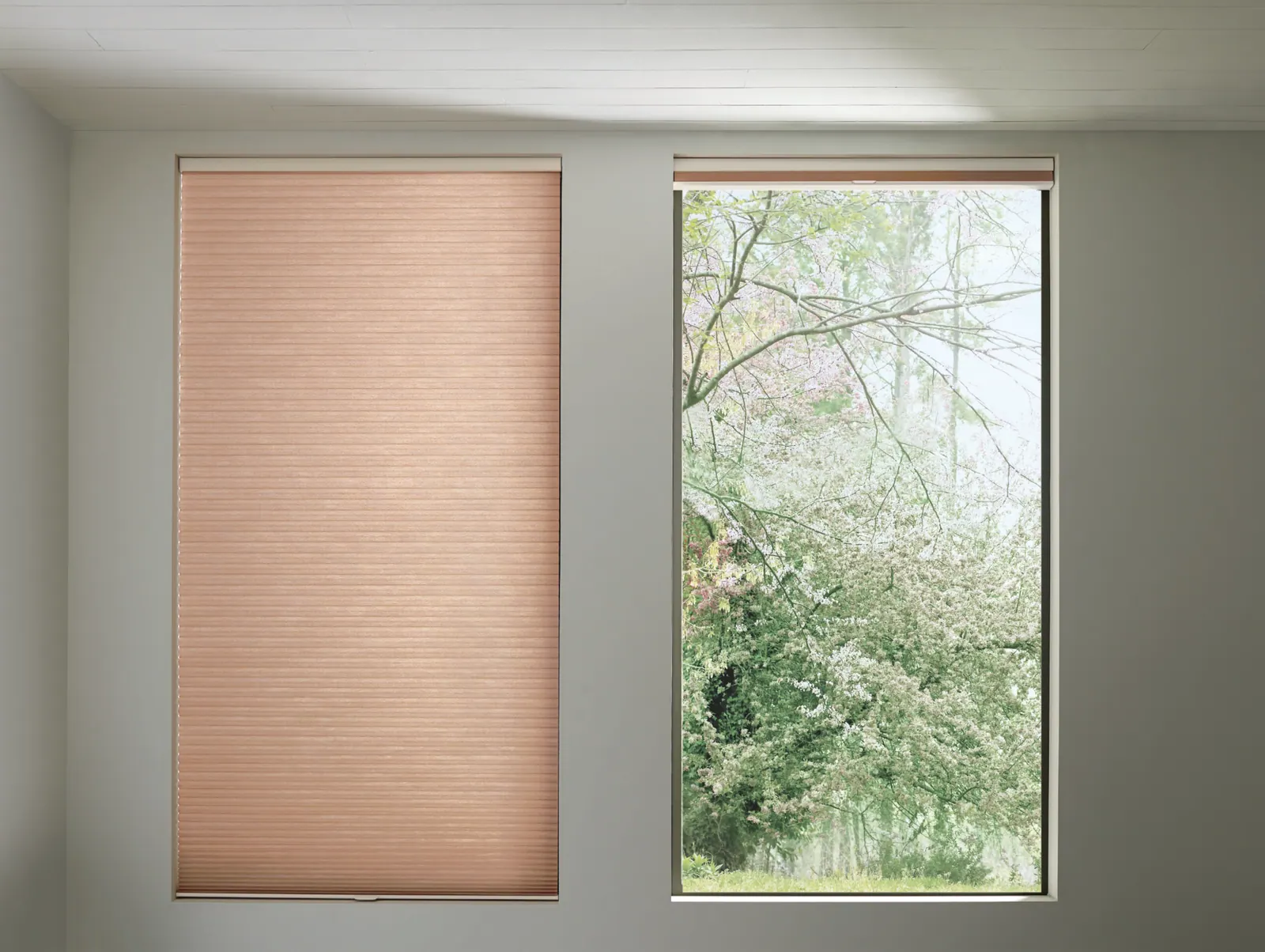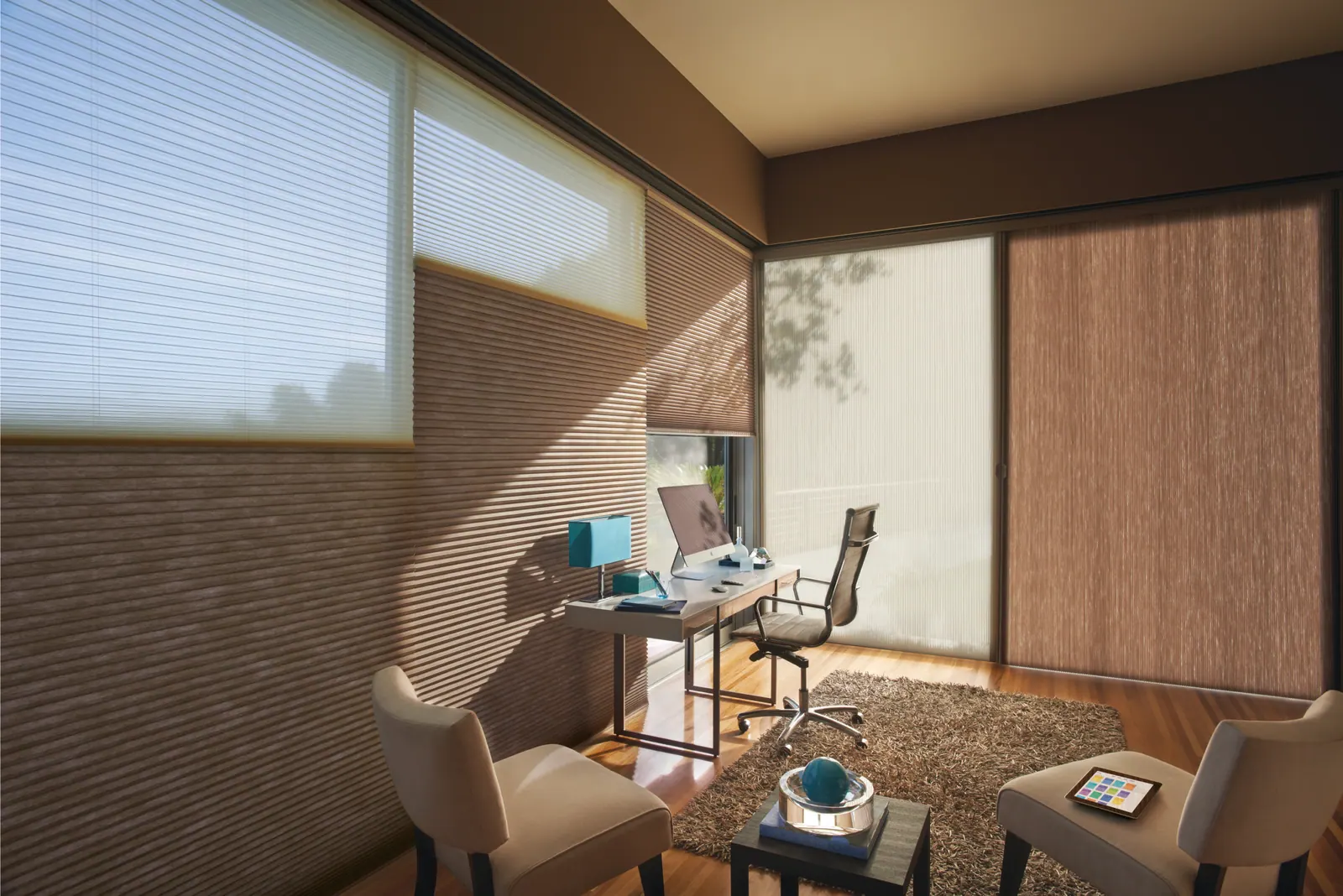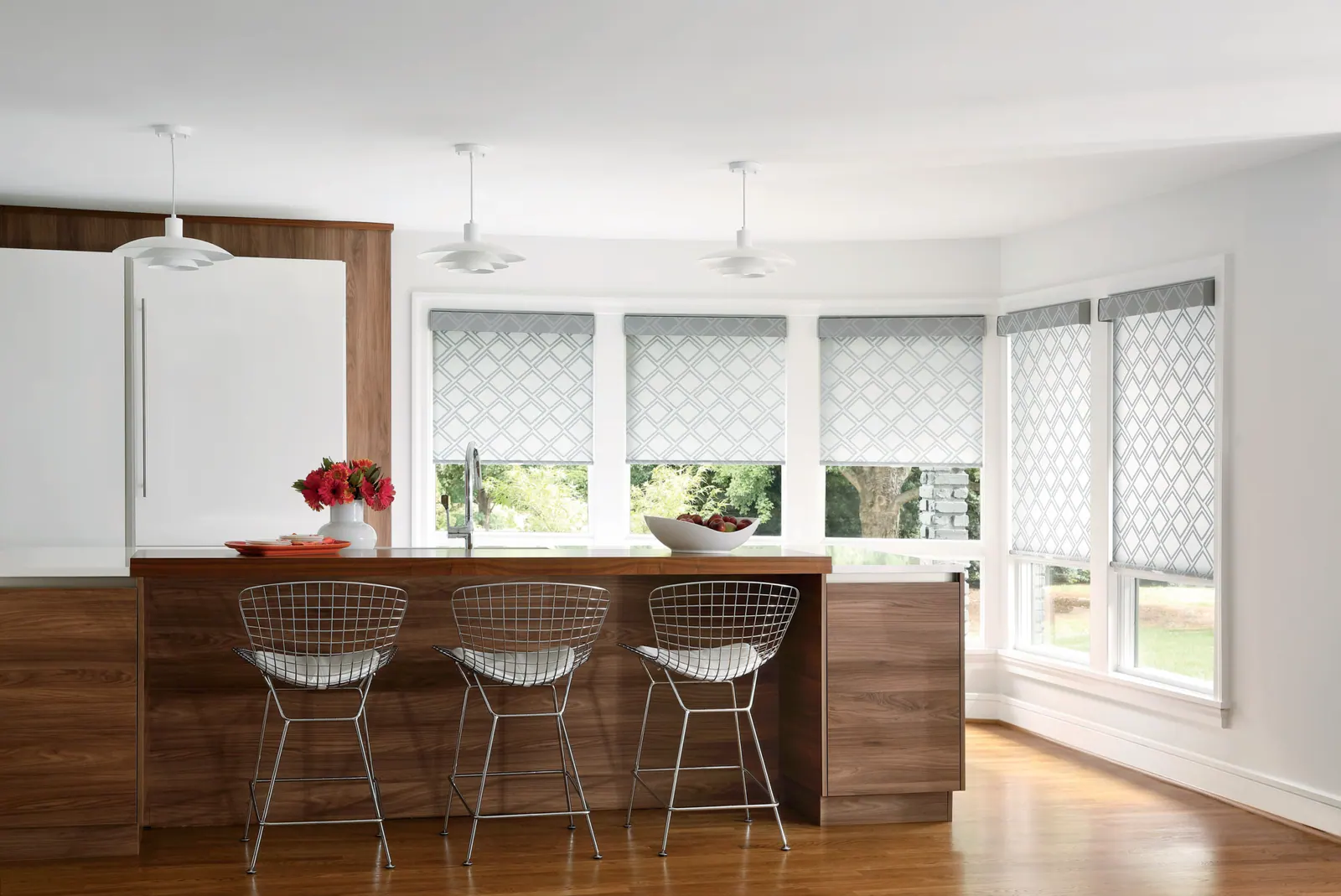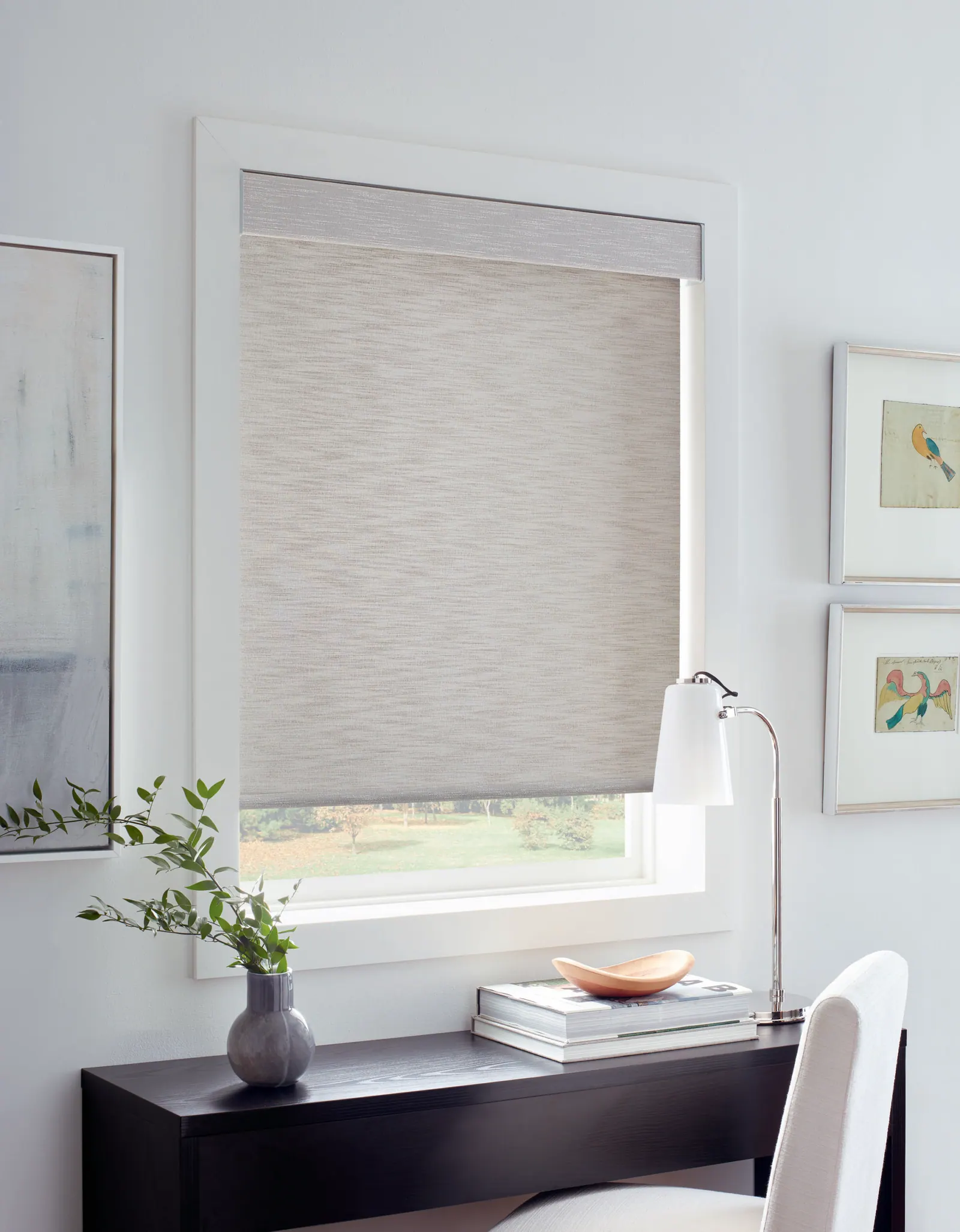
A roller shade is the most reduced window treatment there is: one panel of fabric on one tube. That simplicity is why it is reliable, why it scales well to large windows, and why the few decisions it does involve are worth getting right.
The lift mechanism
Fabric is attached to a tube, and the tube rotates to wind it up or unwind it down. How that rotation is controlled is the main variable.
Spring roller: a torsion spring inside the tube, the same principle as an old window blind. Tug and release to raise it. Simple and inexpensive, but the stop positions can be imprecise.
Continuous loop: a beaded chain over a sprocket. Precise positioning at any height and very durable. The loop must be secured to the wall with a tensioner, which is both a safety requirement and what stops it swinging.
Cordless: a spring mechanism balanced to the weight of the fabric, so the shade holds anywhere you leave it with nothing hanging. This is what we sell as standard.
Motorized: a tubular motor inside the tube. Roller shades are the easiest product to motorise well, because a single tube and a single fabric plane is exactly what a tubular motor is designed to drive.
Standard roll or reverse roll
Fabric can come off the back of the tube or the front. Standard roll brings it down the back, closest to the glass. Reverse roll brings it down the front, leaving a gap between fabric and glass.
Reverse roll is what you want when the window has a deep sill, a crank handle, or an obstruction the fabric would catch on. Casement windows with cranks are common in homes built through the 1990s and 2000s, and a standard roll will foul the handle every time.
Standard roll is what you want for light control, because the fabric sits tighter to the glass and leaks less at the edges. This is specified per window, not per order.
Open roll or cassette
An open roll leaves the fabric tube visible at the top: economical, with an honest simplicity that suits contemporary rooms.
A cassette or fascia wraps the roll in a headrail, hiding the mechanism and giving a clean horizontal line. On a run of several windows in one room, a cassette makes the whole wall look intentional.
There is a functional argument too: on blackout shades, a cassette paired with side channels closes the light gap at the top, which is where most of the leak comes from.
Openness factor
For solar and light-filtering fabrics, openness is the percentage of the weave that is open space. It determines how much you can see through the shade and how much glare it stops.
A 3% fabric cuts most glare while leaving a usable view; a 10% fabric preserves more view and blocks less. Below 1% you are into blackout territory. Darker mesh colours give a better view out and better glare control, because the yarn absorbs light rather than scattering it.
For a full treatment of this, see What Are Solar Screens for Windows?
Common questions
- Why does my roller shade roll unevenly?
- Usually the brackets are not level, or the tube is slightly out of square in the opening. Fabric telescopes toward the low side over repeated cycles. It is a mounting problem rather than a fabric problem, and it is fixable.
- Can roller shades be blackout?
- The fabric can be fully opaque, but light still leaks around the edges unless you address them. For genuine blackout you want an outside mount with generous overlap, or an inside mount with side channels and a cassette.
- How wide can a roller shade be?
- It depends on fabric and tube, but wide shades eventually risk fabric deflection and a heavy roll. Past that point we split the opening into two shades on a shared headrail, which operates as a pair and still reads as one clean line.